Ceremony Music
How to Choose Your Wedding Ceremony Music
Choose music for the ceremony you are actually having. The room, officiant, rules and pace of each moment matter just as much as a song you love.
Quick answer
List the moments that may need music, then check any rules with the officiant and venue. Choose pieces whose mood, words and length suit what will happen. Decide whether you want live or recorded sound, confirm equipment and cues, and give the responsible person one final running order plus backups.
Map the ceremony first
Common musical moments include guest arrival, each entrance, signing or reflection, and the exit, but the structure varies. Ask the person leading the ceremony which transitions need coverage and which should remain spoken or quiet.
Don't select a fixed number before the order is known. Music serves the ceremony, not the other way round.
Check setting and restrictions
Religious ceremonies may limit secular music or require approval; civil ceremonies have rules about religious content that should be confirmed with the registration service. Venues may restrict amplification or equipment positions.
Rules and local practice can change. Ask your actual officiant or registrar for current guidance rather than assuming another couple’s ceremony is a reliable template.
Listen to words as well as sound
A familiar melody may have lyrics that feel wrong for the moment. Read the full text and consider whether a shortened or instrumental arrangement changes the meaning.
Choose music you genuinely connect with, but think about the guests hearing it without your private associations. A brief programme note can help when a less familiar piece matters deeply.
Plan duration and cues
Time the real route and number of people entering. A musician can adapt a piece; a recording may need a natural fade point. Agree who gives the start cue and what happens if an entrance pauses.
Signing can take a variable amount of time, so have flexible music ready if you want it. Quiet is also perfectly acceptable; you do not have to fill every administrative moment because it feels unfamiliar.
Set up live or recorded sound
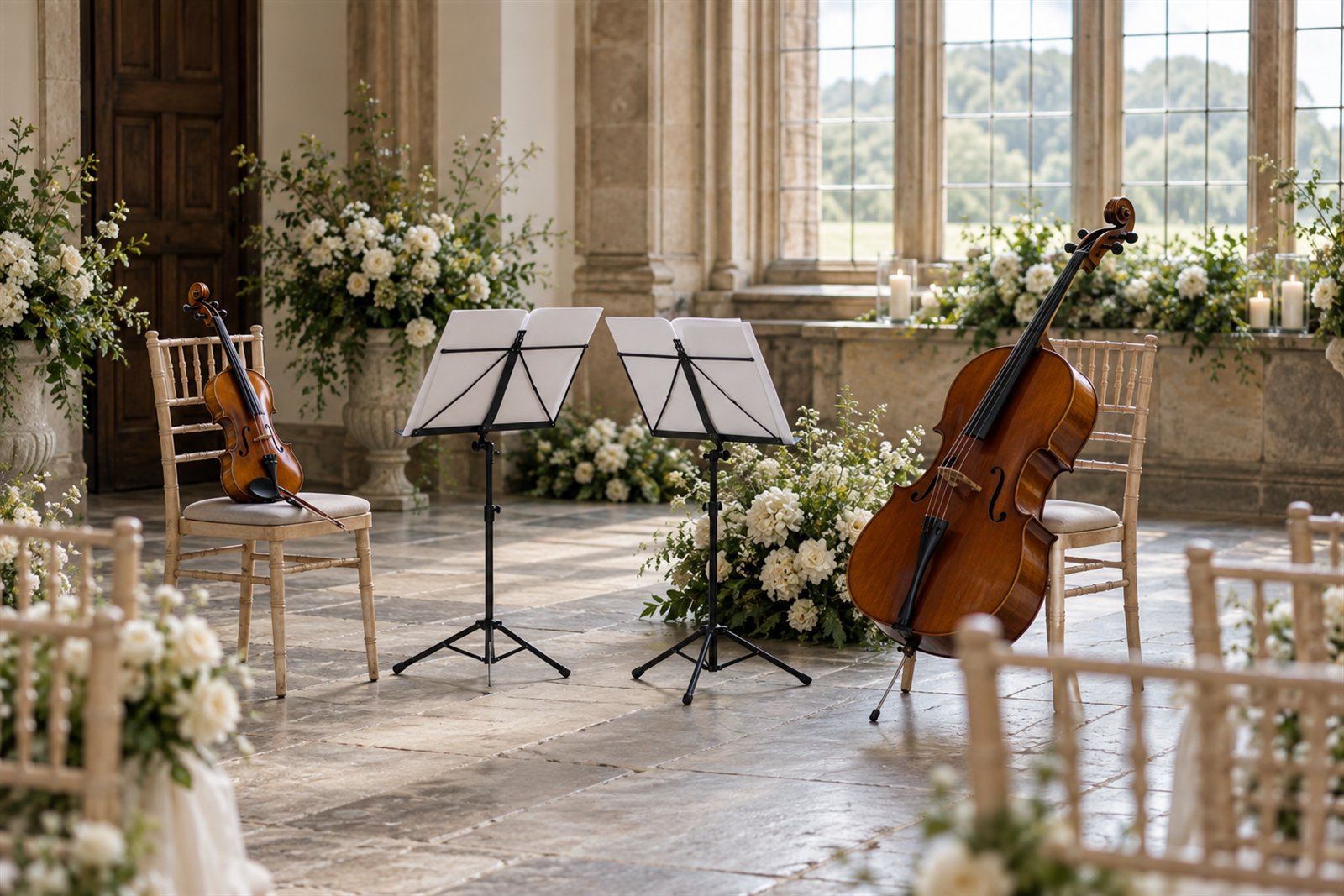
Live performers need access, chairs, power or shelter and sight of the cue giver. Recorded music needs tested speakers, an offline copy and a named operator who is not participating in the entrance.
Run a venue sound check at the correct volume. A phone placed on a table is not a reliable system for a large or outdoor ceremony.
Issue a final music sheet
List exact titles, artists or arrangements, versions, cue points and the moment each is used. Share it with the officiant, venue and performer or operator by their deadlines.
Keep lawful backup copies available offline where your music licences allow. Then try not to change versions close to the day unless everyone who needs the new cue has confirmed it.
Keep planning
Keep planning