Ceremony Planning
What Time Should Your Wedding Ceremony Start?
Your ceremony time sets the pace for the whole day. Work back from the meal and finish time, then check preparation, travel, daylight and how long you want guests to wait.
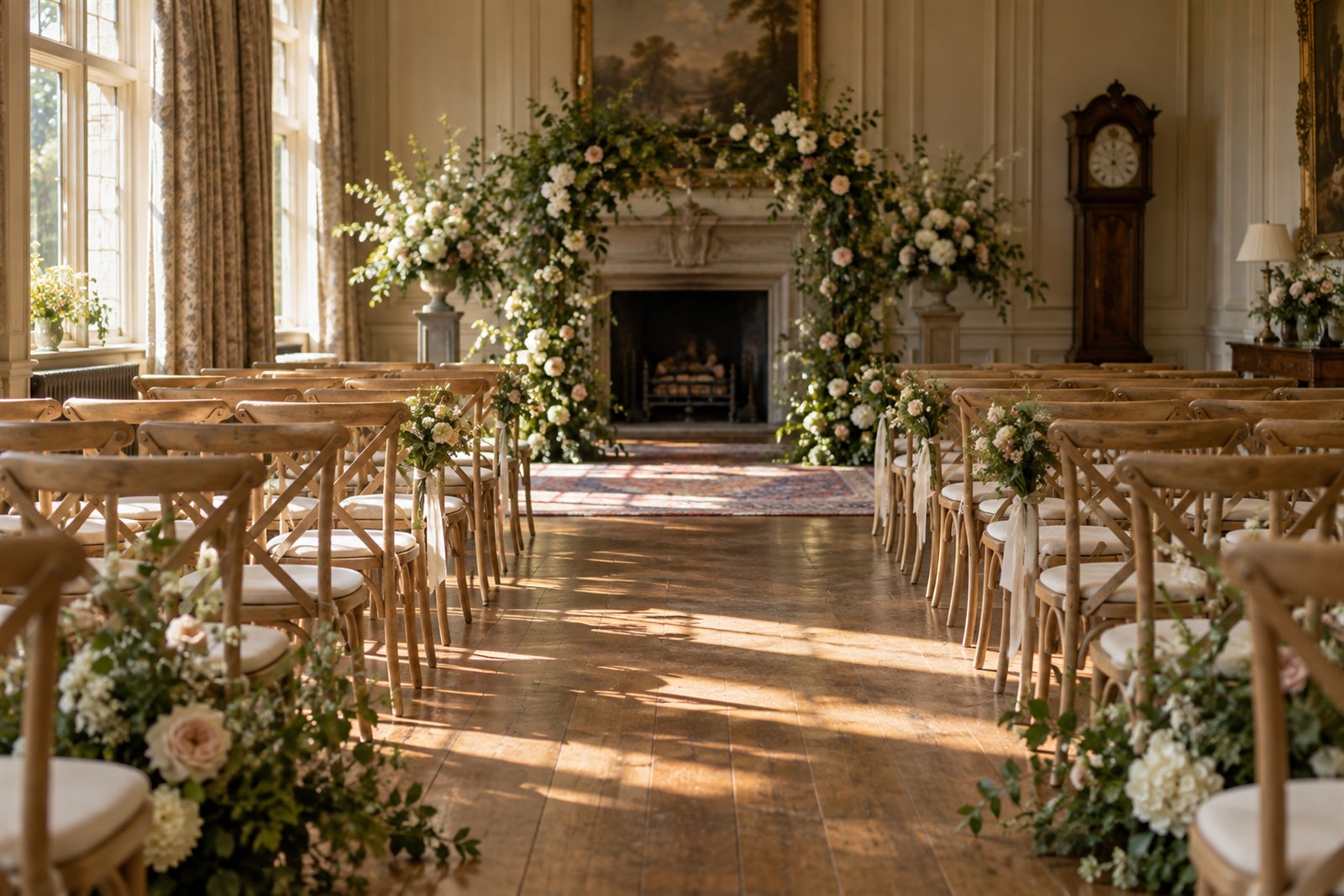
Quick answer
Begin at the other end of the day: when will the meal be served, and when must the venue finish? Then test what the ceremony time means for your morning, travel and daylight. Starting earlier gives you more celebration time but asks more of guests and your preparation team. Starting later can feel focused, with less room for photographs, delays or a leisurely reception.
Start with the experience you want
Picture the day before looking at a sample schedule. Do you want a long afternoon with lawn games and conversation, a winter candlelit ceremony leading quickly into dinner, or a compact evening celebration? The ceremony is the hinge between preparation and hosting, so its time sets the character of everything around it.
Write down your venue finish time and the amount of evening dancing that matters to you. A later ceremony may be entirely right, but only if it still leaves space for the meal, speeches and entertainment you have chosen.
Work backwards from food service
Ask the caterer when the wedding breakfast can be served and how long guests need to be seated beforehand. Then include the drinks reception, photographs, confetti, travel and ceremony duration. This produces a defensible start time rather than a guess.
Meal timing also affects guest comfort. If the ceremony overlaps a normal mealtime or there is a long gap before food, make the refreshment plan clear. Canapés and alcohol are not a substitute for enough food and water.
Check the preparation schedule
Hair, make-up, clothes, photographs and travel all need to be complete before the ceremony. Count backwards using timings from the people doing those jobs, and include breakfast, inevitable interruptions, a quick room tidy and a final buffer. A lovely time on the invitation is no help if it makes the morning unworkable.
Think about every person who must be ready, not only the couple. Parents, children and the wedding party may share stylists, transport or rooms. Sequence them so the people needed for early photographs are ready first.
Use daylight deliberately
In the UK, useful daylight varies dramatically through the year. A late winter ceremony may leave little or no natural light for confetti, family groups or couple portraits. In high summer, harsh midday light and heat may make a slightly later ceremony more comfortable.
Ask your photographer about the venue orientation and likely light, but treat the weather as variable. A good plan has attractive indoor options and doesn't depend on a guaranteed sunset.
Include travel and arrival patterns
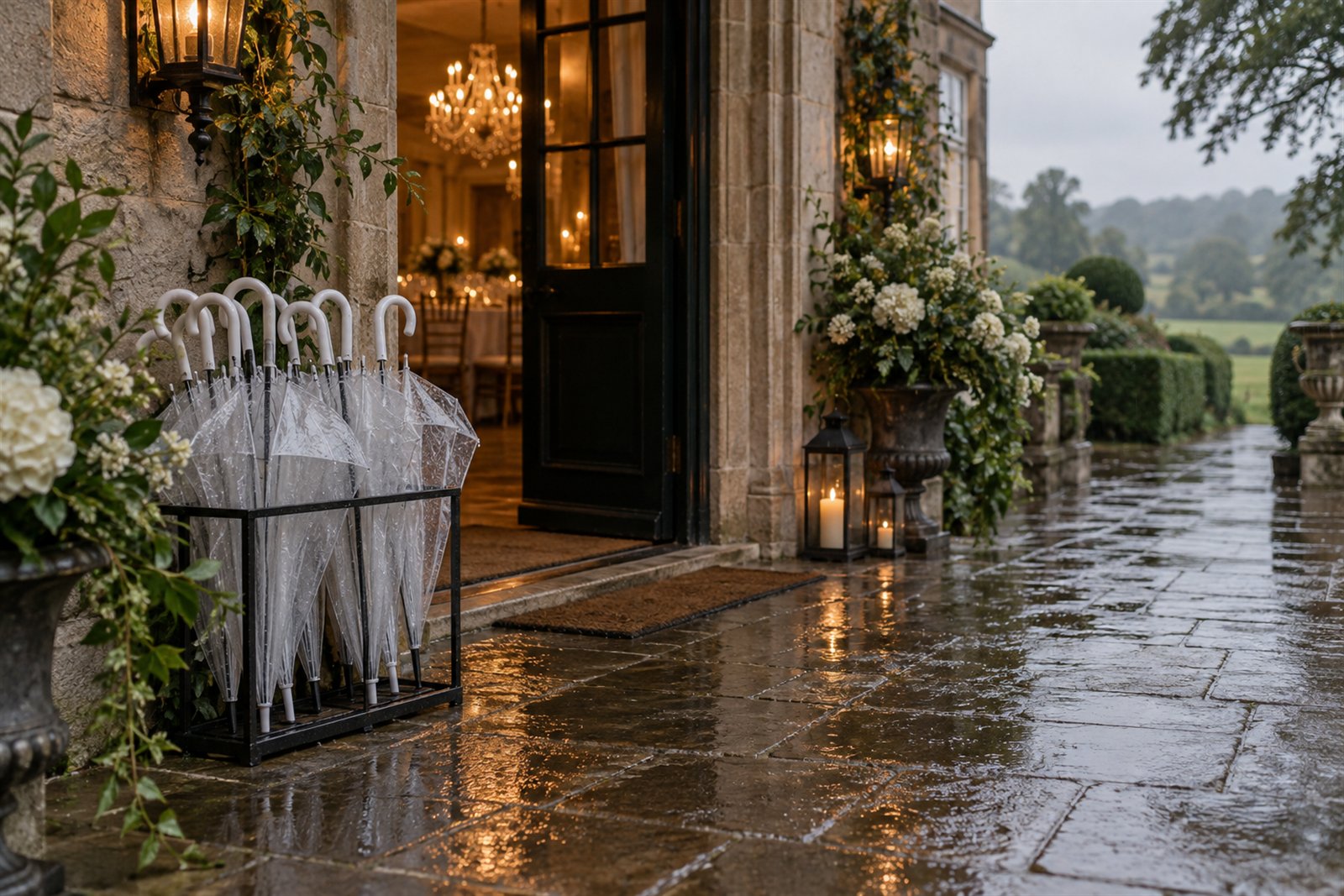
For separate ceremony and reception locations, include loading and the slowest planned transport. If many guests are travelling on the morning, a very early start may increase late arrivals. Build in venue access, parking and time for guests to find seats.
Put the actual ceremony start on the invitation. You can suggest an earlier arrival time in the supporting details, but do not disguise the start itself. Clear information helps considerate guests plan well.
Think about children and older guests
A ceremony near a young child’s usual meal or sleep time may need extra planning, while a late finish can be demanding for families. Older guests may value daylight travel, comfortable waiting areas and a shorter gap between ceremony and meal.
You don't have to optimise the entire wedding around one routine, but knowing where pressure points fall helps you offer food, quiet space, seating or early transport.
Check legal and venue constraints
Registrars, places of worship and licensed venues may offer specific appointment times. Ceremony length varies with readings, music, cultural elements and whether legal formalities happen within it. Check the real duration with the person conducting the ceremony.
Also ask when spaces become available and whether another ceremony is scheduled. The contract and officiant’s guidance take precedence over an online example timeline.
Test the whole day in both directions
Once you have a candidate time, work forwards to departure and backwards to wake-up. Look for an overly long fast, rushed photographs, an uncomfortably late meal or too little evening celebration. Adjust the ceremony rather than squeezing every surrounding task.
The right time works for you, makes sense to suppliers and is easy for guests to understand. That matters more than whether it looks traditional in print.
Keep planning
Keep planning
Related knowledge.
Explore the Planning Hub
Open resource →Ceremony PlanningWedding Order of Service: What to Include and How to Write It
An order of service should help guests follow along, not make them study a minute-by-minute script. Confirm the final sequence with your officiant before you print.
Read article →Ceremony PlanningHow to Choose Wedding Readings That Mean Something
Choose a reading that belongs in your ceremony and feels good spoken aloud. One thoughtful passage can do more than a stack of famous romantic extracts.
Read article →Ceremony PlanningHow to Write Wedding Vows That Sound Like You
The best vows sound like you speaking to your partner. Start with a few true details and promises you can keep, then read them aloud until they feel natural.
Read article →