Wedding Planning
DIY Wedding Decorations: What Is Worth Making Yourself?
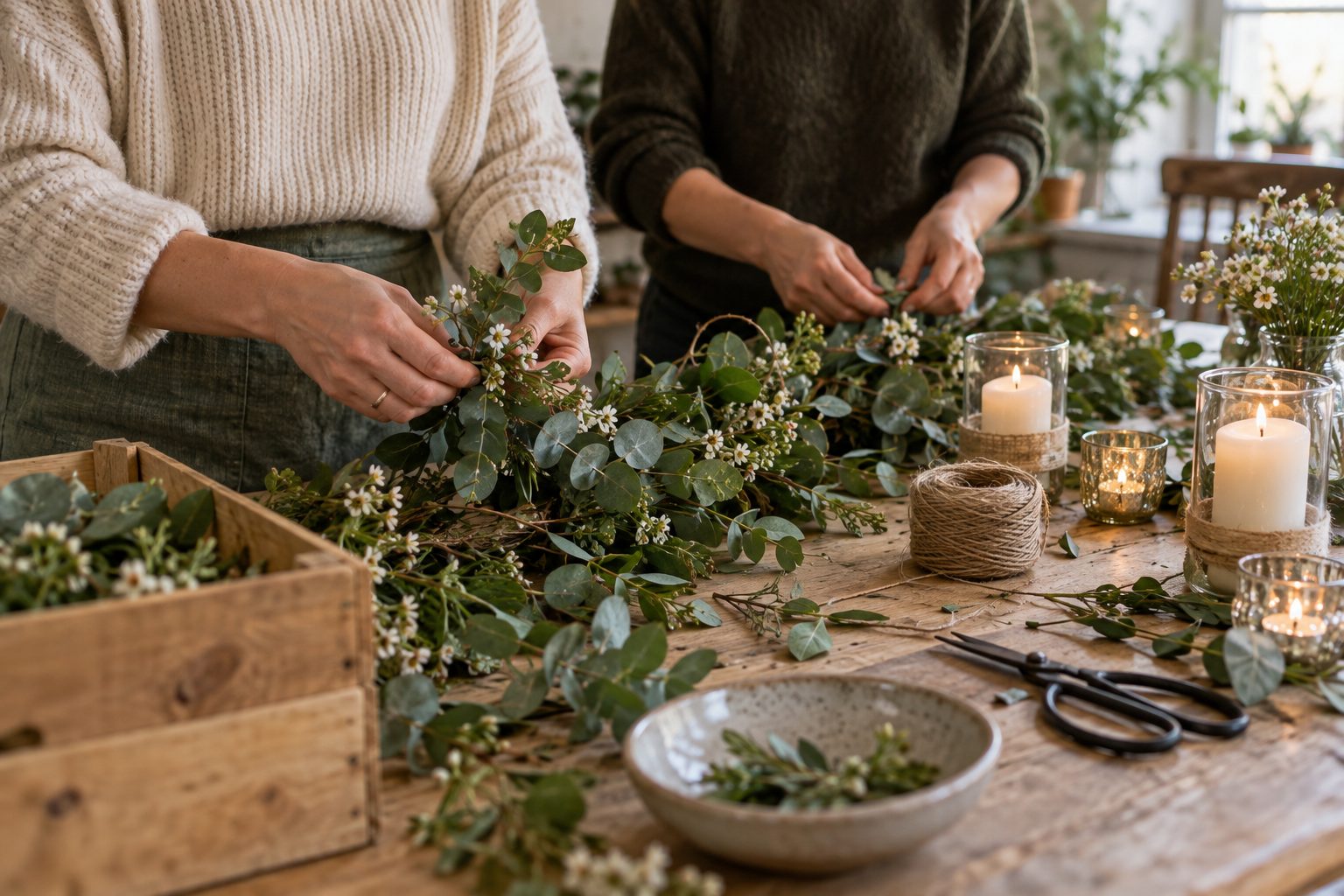
Make the details you will enjoy making and can set up safely. Count time, storage and venue rules as well as materials before turning a nice idea into a production line.
Quick answer
DIY pieces you can make well, store and install without taking over the wedding morning. Add tools, transport and your time to the material cost before comparing with hire or purchase. Ask about candles, fixings, access and collection first. Personal touches should support your day, not recruit guests as an assembly crew.
Choose a purpose before a craft
Ask what each item should do: guide guests, mark a table, make a space feel welcoming or become a keepsake. A decoration without a clear purpose can multiply quickly because it's enjoyable to make. Choose one or two details that feel personal, then let the venue’s existing architecture and lighting do some of the work.
A handmade table number or simple welcome sign may be practical. A room-sized installation with ladders, wiring or perishable flowers is a different kind of project. Don't treat every idea saved online as equally suitable for a real venue and timetable.
Price the complete project
List materials, tools, packaging, spare supplies, delivery, setup and disposal. Buy enough to make one prototype before ordering for every table. If a simple hired item includes delivery and collection, it may cost less overall than buying components you'll never use again. Time is a real cost too, especially near the wedding.
Keep a small contingency for damaged or missing pieces. Don't promise yourself you can make twenty identical items in one quiet evening without testing the process. A sample reveals whether the design is durable and how long assembly really takes.
Check venue restrictions early
Ask the venue about candles, confetti, wall fixings, hanging pieces, outside furniture and florists. Check when you can enter, where boxes go and whether staff will put anything out. Rules protecting historic surfaces or clear exits are worth knowing before you make the decorations.
If the ceremony and meal share a room, confirm who moves decorations during the turnaround. Your helpers may be needed for photographs or food at that moment. A design that requires a complex reset may not suit the room.
Make a setup and pack-down plan
Pack by location with a photo or simple diagram, not one large mixed box. Put table items for each table together and label the boxes clearly. Name a willing person who can supervise setup, and tell them which details may be omitted if time is short. Don't make the couple answer questions about ribbon lengths while preparing for the ceremony.
Plan what happens afterwards. Who removes fixings, collects hired containers and takes home leftover pieces? If you can't store or reuse an item, consider hiring or skipping it. Sustainability claims should reflect the actual afterlife of materials, not simply that something was handmade.
Keep flowers and food safe
Fresh flowers need conditioning, water, transport and cool storage. A few personal arrangements may be enjoyable to make; a whole venue’s flowers on the morning of the wedding can overwhelm a small team. Ask a florist which elements need professional installation and which can be kept simple.
For edible favours or table food, think about allergens, storage and the venue’s rules. Guests need accurate ingredients, not a pretty jar with an uncertain label. A non-food choice may be simpler, and no favour is compulsory.
Choose help without assigning unpaid jobs
Friends may offer to help because they care about you. Ask what they genuinely enjoy and how long they can give, then let them say no. A guest who arrives early to place one box is different from a guest expected to coordinate four suppliers and take decorations home after midnight.
For complex work, compare the cost of a decorator or coordinator. Paying for the part you can't deliver calmly can protect the pleasure of the DIY parts you keep.
Edit ruthlessly
If a project is not finished two weeks before the wedding, ask whether it can be simplified or dropped. Guests will not know about a missing garland that existed only on your planning board. They will notice if you're exhausted or the room is hard to navigate.
Choose a small set of details that look intentional, work within venue rules and can be packed away. That is a more satisfying handmade contribution than a long list of unfinished ambitions.
Prototype before buying for every table
Make and transport one finished sample, including its fixings and box. Time the complete setup, not just the making. Check venue rules before committing to dozens of pieces. If fresh flowers or delicate assembly would fill your final week, ask whether you will still enjoy it. Keep a hired or bought alternative until the sample survives a realistic rehearsal.
Keep planning
Keep planning
Related knowledge.
Explore the Planning Hub
Open resource →Wedding PlanningSummer Weddings in the UK: Heat, Light and Guest Comfort
Long summer days are lovely, but guests still need shade, water and somewhere to go if it rains. Plan for the weather people will experience, not the photograph you hope for.
Read article →Wedding PlanningWinter Weddings in the UK: A Practical Planning Guide
Winter gives you atmosphere if you plan for daylight, warm spaces and travel from the start. Build the wedding around the season instead of hoping for snow.
Read article →Wedding PlanningWeekday Weddings in the UK: Are They Right for You?
A weekday can open up dates and sometimes lower costs, but it asks more of guests. Compare the whole day and check whether the people closest to you can actually be there.
Read article →