Wedding Planning
Winter Weddings in the UK: A Practical Planning Guide
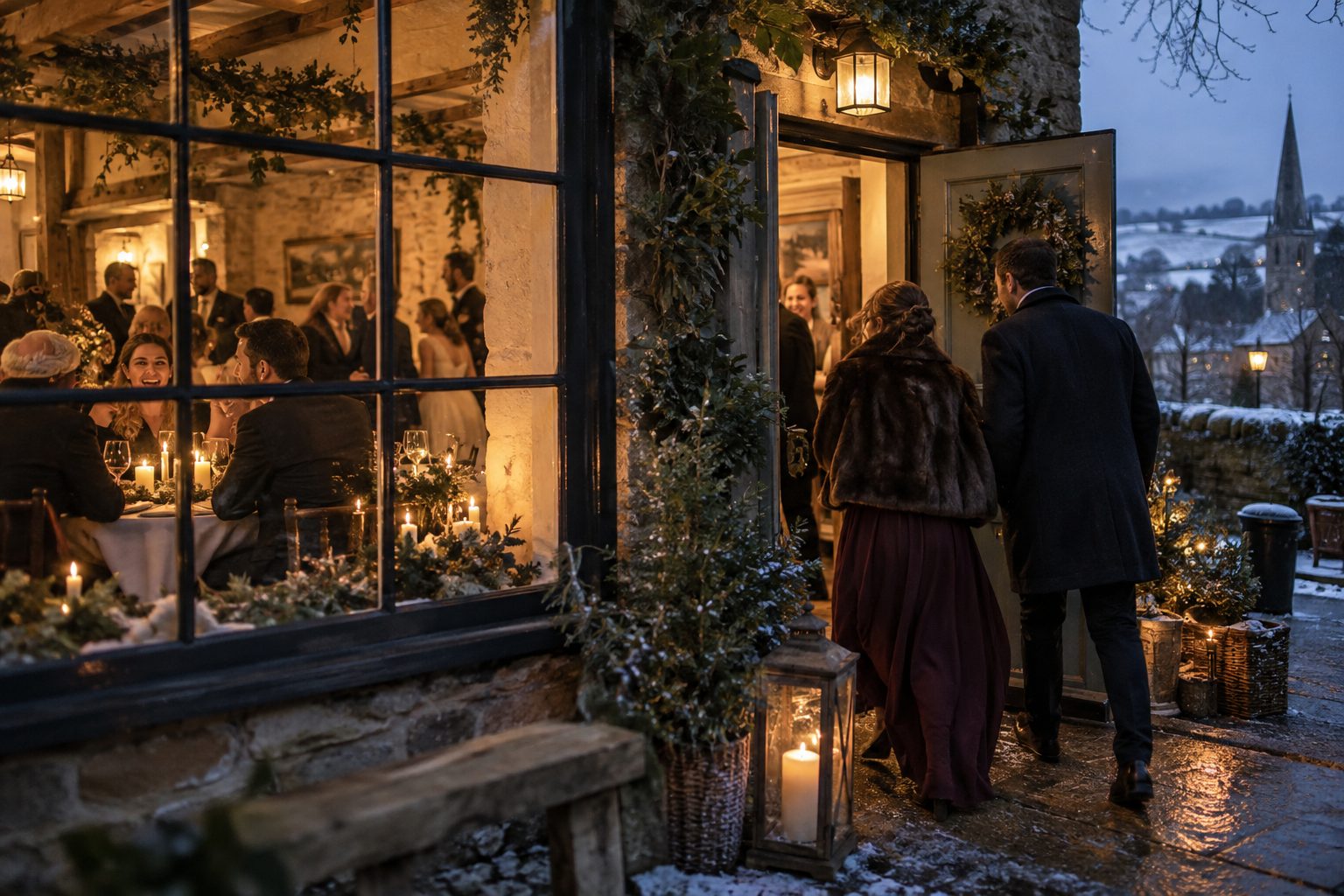
Winter gives you atmosphere if you plan for daylight, warm spaces and travel from the start. Build the wedding around the season instead of hoping for snow.
Quick answer
Check sunset and travel times for your date, then place outdoor photographs while there is usable light. Make the indoor route comfortable from arrival to departure and ask about heating, coats and wet-weather access. Have a travel contingency. The day can feel intimate without depending on a particular forecast.
Use real daylight times
Look up sunrise and sunset for the venue and date, then ask your photographer when they expect useful outdoor light. A ceremony in mid-afternoon can leave very little time for family groups before dusk. If daylight portraits matter, consider an earlier ceremony or a short pre-ceremony session, subject to the kind of day you want.
Don't base the whole timetable on a dramatic golden-hour image. Cloud cover changes light, and guests need food and warmth while photographs happen. Ask the photographer for an indoor portrait option that suits the venue. Good light planning means you have choices, not a weather-dependent promise.
Keep guests warm from the first step
Trace the route from parking and drop-off to ceremony, drinks, dining and toilets. Is there a heated place to wait if someone arrives early? Will guests carry coats through every room? Ask about a cloakroom, draughts, ventilation and accessible routes that remain safe when wet. A venue that looks cosy in photographs may have an exposed walk between buildings.
If drinks are outside, ask how long guests can comfortably stay and where they can move indoors. Blankets and heaters do not replace a room with enough capacity. Think about babies, older guests and anyone who gets cold quickly without asking them to justify it.
Plan travel for difficult conditions
Allow for dark roads, rain, frost and disruption to public transport. Ask the venue how it treats paths and parking areas and whether taxis can reach the entrance. Give guests the address, arrival advice and local accommodation options early. Avoid a schedule that depends on every car journey taking exactly the shortest route shown online.
If severe weather could stop a supplier or key guest travelling, decide who would make changes and how people would be contacted. Don't create an elaborate crisis plan for every remote possibility, but have one clear contact list and an accessible place to communicate updates.
Choose a venue that works indoors
Winter puts more of the day inside. Check the comfort and capacity of every room you'll use, including the space for guests during a turnaround. Ask where people can talk away from loud music and whether the dining room remains available once dancing starts. If the ceremony is elsewhere, the transition needs even more care.
Look closely at lighting, not only decorations. Guests should be able to read menus and move safely; a photographer needs to know the available light. Candles can add warmth, but venues may restrict naked flames and a room still needs practical illumination.
Make food and drink seasonal without assumptions
A warm meal or drink may suit the setting, but keep alcohol-free and lighter choices too. Ask the caterer how hot food reaches guests on time and how dietary needs will be managed. Leave room in the schedule for coats, greetings and moving to dinner.
Seasonal flowers and foliage can be beautiful, but availability varies. Ask your florist for a palette and shape rather than demanding a particular stem that may be costly or unavailable. Decorations shouldn't narrow already busy indoor routes.
Dress for the venue and journey
Wedding outfits need to work while walking between locations, not only during photographs. Think about footwear with grip, a warm layer and somewhere to dry or store coats. Suppliers may need extra time for outdoor installations in cold or wet conditions. Tell guests if the route includes grass or gravel so they can choose comfortable shoes.
You can still dress formally or lightly indoors; the aim is to plan the transitions. A spare pair of shoes and a weatherproof wrap are practical tools, not a concession that ruins the look.
Let winter be a choice, not a theme requirement
A winter wedding doesn't need fake snow, dark colours or a holiday motif. It can be bright, modern and simple. Choose the atmosphere you like and use the season as a planning constraint: daylight, warmth, travel and weather resilience. Once those are handled, the quieter light and longer evening can be an advantage.
Tell guests the useful details before they travel: parking, which parts are indoors and when they will eat. That will do more for their comfort than a perfect forecast.
Keep planning
Keep planning
Related knowledge.
Explore the Planning Hub
Open resource →Wedding PlanningDIY Wedding Decorations: What Is Worth Making Yourself?
Make the details you will enjoy making and can set up safely. Count time, storage and venue rules as well as materials before turning a nice idea into a production line.
Read article →Wedding PlanningSummer Weddings in the UK: Heat, Light and Guest Comfort
Long summer days are lovely, but guests still need shade, water and somewhere to go if it rains. Plan for the weather people will experience, not the photograph you hope for.
Read article →Wedding PlanningWeekday Weddings in the UK: Are They Right for You?
A weekday can open up dates and sometimes lower costs, but it asks more of guests. Compare the whole day and check whether the people closest to you can actually be there.
Read article →