Guest Planning
How Many Wedding Guests Should You Invite?
Forget the supposed “right” size for a wedding. Invite the number of people you can host comfortably, in a venue that fits, while keeping the atmosphere you both want.
Quick answer
Start with what you can afford to host well and what your venue can actually accommodate. Compare those limits with the people on your relationship-based long list and the feeling you want in the room. Do not invite extra people on the assumption that some will decline, or choose a number just because it sounds like a “proper” wedding.
Capacity means comfortable capacity
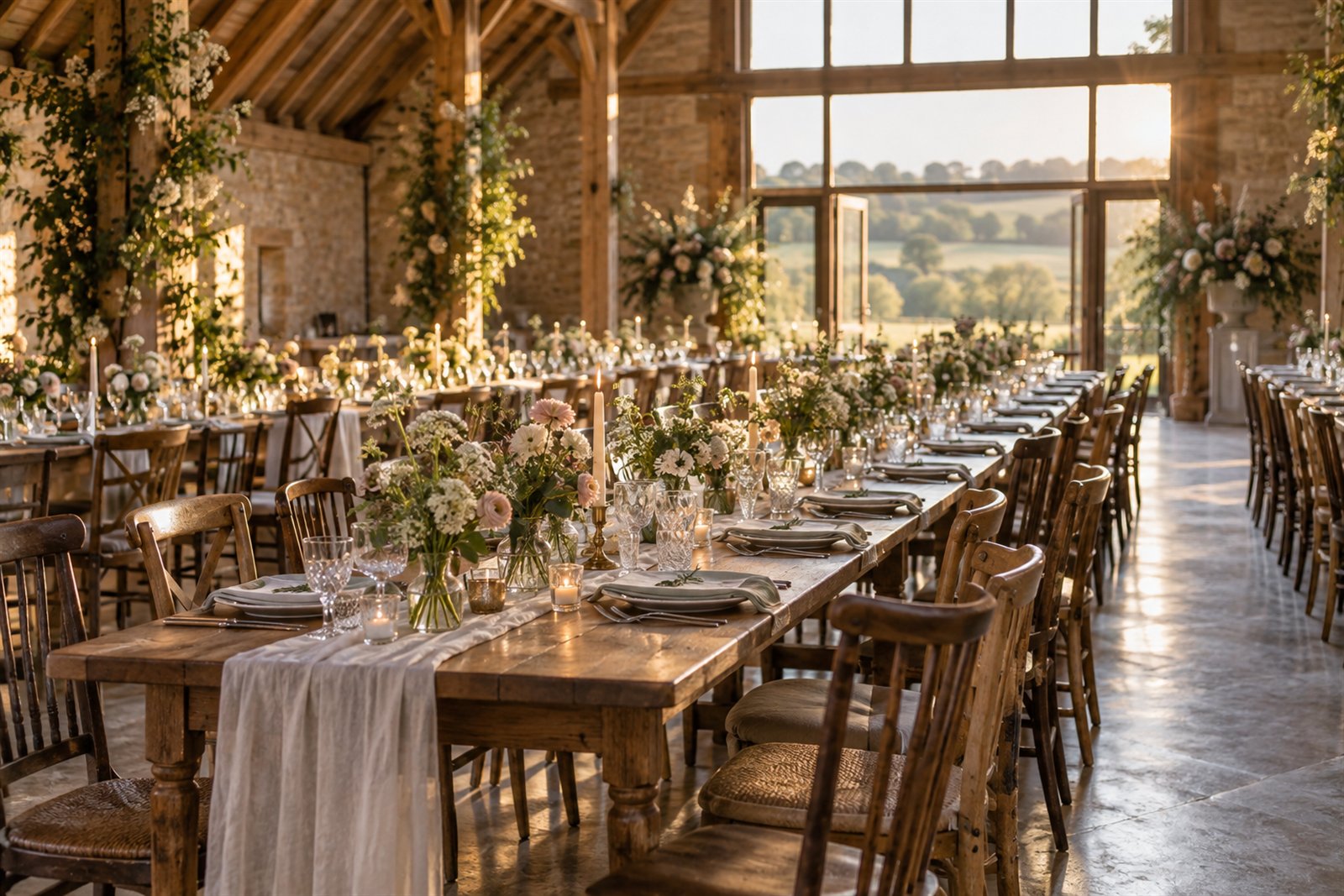
Ask venues for seated capacity in the layout you intend to use, including a dance floor, accessible routes, children’s equipment and any staging. A room that technically holds more people may feel cramped or require compromises you dislike.
Check separate figures for ceremony, meal and evening. The smallest relevant capacity is the limit unless you have a clearly managed change in attendance.
Calculate the whole cost per added guest
Food and drink are the obvious variable costs, but extra people can also change furniture, transport, stationery, favours, staffing and accommodation plans. Some supplier prices move in bands rather than per person, so ask what happens at your likely thresholds.
A guest is never only a plate cost. Use your overall budget and leave contingency rather than spending to the exact maximum before final invoices.
Match the number to the atmosphere
A small group can give you longer conversations and more flexible venue choices. A bigger celebration can bring its own energy and include wider communities. Neither is automatically warmer or more generous. Think about how you like to host and whether you want a real moment with every guest.
Think about the shape of your relationships. A large close family may make a modest total difficult without excluding people central to daily life, while a smaller network shouldn't be padded to fill a room.
Separate day and evening decisions
An evening invitation can be a genuine form of celebration when it offers enough time, hospitality and clarity. It shouldn't be used simply to fit people around an overcrowded daytime plan. Make arrival, food and transport information explicit.
If the venue is remote or guests travel far, a short evening invitation may be impractical. Think from their perspective before assuming it solves a number problem.
Don't rely on predicted declines
Some guests will be unable to attend, but the pattern is not dependable enough to exceed venue capacity. Destination, weekday and school-holiday weddings create different responses, and entire households may accept or decline together.
Inviting in rounds can work only if later guests still get fair notice and do not feel like a waiting list. Keep the process private, courteous and realistic about the time they need to make arrangements.
Plan partners, children and carers
Your policies can alter the count substantially. Decide how established partners, unknown companions, babies, children and necessary carers are handled before final totals. Named invitations reduce ambiguity.
Accessibility support is not an optional extra guest. Speak privately with anyone who may need a carer, interpreter or practical accommodation and plan the venue capacity accordingly.
Leave room for change
New partners, births, changed family circumstances and forgotten obligations can emerge between booking and invitations. A small numerical buffer gives you choices without forcing last-minute cuts.
The buffer is not a target to fill. Once invitations are sent, unexpected acceptances, supplier meals and seating constraints may use it.
Choose the people, then check the number again
Numbers create a boundary, but relationships decide the list. Review whether both partners feel represented and whether invitations reflect current connection, not only duty or reciprocity. You're hosting one specific day, not settling every family relationship.
When both the total and the names feel defensible, let the list settle. Record genuine changes carefully, but do not reopen the whole debate after every passing comment. You can move on to invitations and seating.
Keep planning
Keep planning
Related knowledge.
Explore the Planning Hub
Open resource →Guest PlanningHow to Plan a Child-Free Wedding Kindly and Clearly
An adults-only wedding is your choice, and parents need clear information early enough to decide whether they can come. Be kind, specific and prepared for some guests to decline.
Read article →Guest PlanningHow to Write a Wedding Weekend Itinerary for Guests
Give guests one clear plan for the events they are invited to. Keep supplier cues and private preparations in your own run sheet.
Read article →Guest PlanningWedding Guest Accommodation: How to Help Without Booking for Everyone
Help guests find a place to stay without taking on every reservation. Clear options, travel information and honest room-block terms are usually enough.
Read article →