Wedding Cake
How Much Wedding Cake Do You Need?
The right amount of cake depends on when you serve it, how many guests will want a slice and how your baker cuts it. Start there before choosing tiers.
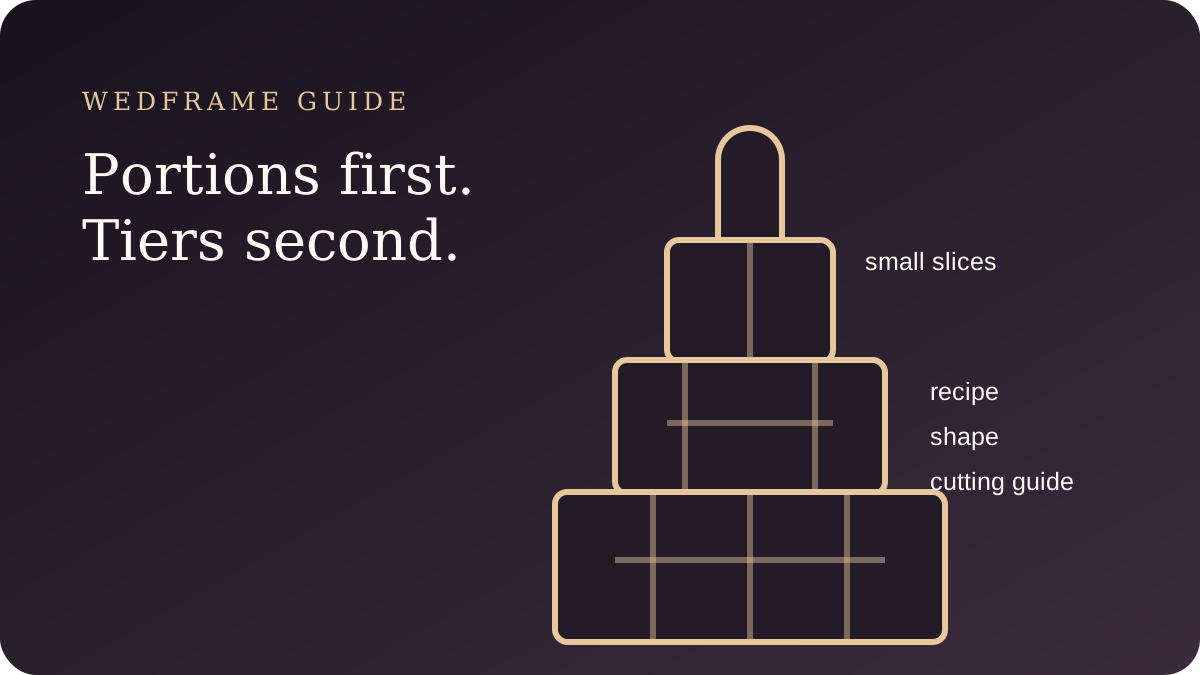
A cake chart can look wonderfully precise until two cakes of the same diameter produce different slice counts. Depth, shape, recipe and cutting method all change the yield. Before choosing the tier count you love, decide what job the cake is doing: dessert for everyone, an evening treat or a smaller ceremonial cake beside other puddings.
Is the cake dessert or an extra?
If wedding cake replaces the plated dessert, plan a portion for nearly everyone who will eat dessert and discuss a larger dessert-sized cut. Guests will be expecting it as a course. If cake appears later beside a full meal, dessert, sweets or evening food, a smaller proportion of guests may take a slice and finger portions are often appropriate.
Timing affects take-up. Cake cut immediately after dinner and served to tables is noticed. Cake placed quietly on a side table while the dance floor is busy may be missed. Ask who will cut, plate, label and announce it. Good service can reduce waste without changing the cake itself.
Build a realistic serving target
- Count day guests who will be present when cake is served.
- Add evening-only guests if cake remains available after they arrive.
- Reduce the target cautiously if another full dessert and several sweet options are served.
- Add separate dietary portions rather than assuming everyone can eat the main cake.
- Exclude any tier you intend to keep, unless your baker confirms it will still be cut on the day.
You will not always need a slice for every person on the invitation list. But if cake is the main dessert, planning for only half the room may leave people disappointed. Try a few realistic attendance and take-up options in the Wedding Cake Calculator, then show your baker the assumptions rather than presenting one result as an unquestionable order.
Why bakers' portion guides vary
A tall modern sponge can be cut into narrow rectangular portions; a shallower cake may be cut differently. Rich fruit cake is often served in smaller pieces than a light sponge. Square tiers usually produce more regular portions than round tiers of the same width. Some guides count small wedding portions, while others show dessert portions.
That is why an internet chart should never override the person making the cake. Ask your cake maker for the expected yield of the exact proposed design, including dummy tiers, separators and any tier reserved for keeping. Ask for a simple cutting guide for the venue if the cake maker is not staying to serve it.
Think beyond the number of tiers
Tiers are partly about appearance. A smaller wedding might use dummy tiers for height, while a bigger one can serve extra cake from a plain cutting cake behind the scenes. If you are offering several flavours, give the favourite enough capacity. And if a guest needs a separate cake for an allergy or dietary requirement, agree how it will be stored and served without cross-contact.
Allow for delivery, display and temperature
Portion planning is only one part of a successful cake. Buttercream, chocolate and delicate decorations may need protection from heat or direct sun. Check the delivery window, table strength, stand size, room temperature and who moves the cake if the weather plan changes. A venue may charge for cutting and plating, so include that in the practical conversation.
Plan for leftovers without over-ordering
If you would genuinely enjoy cake the next day, ask the venue to provide food-safe boxes and nominate someone to collect them. Don't assume every recipe can sit at room temperature overnight. Fresh cream, mousse and some fillings have stricter storage needs, while fondant-covered fruit cake behaves very differently. Follow the maker's written advice.
Favour boxes are only useful if someone has time to fill and distribute them. If take-home portions are important, include packaging and service in the plan. Otherwise, it's often better to order for the realistic service moment than to pay for an extra tier in the hope that guests will carry it away.
Make the final decision together
Use the calculator to start a conversation with your cake maker. Tell them your guest count, menu, serving time, evening numbers and whether cake replaces dessert. They can balance slice yield, design and budget; your venue can then explain how the cake will actually reach guests while it is at its best.
Plan the next step
Keep planning