Wedding Morning
A Realistic Wedding Morning Timeline
Give your wedding morning room for hair and make-up, food, dressing, photographs and travel. A useful timeline includes real buffers, not a perfect-minute fantasy.
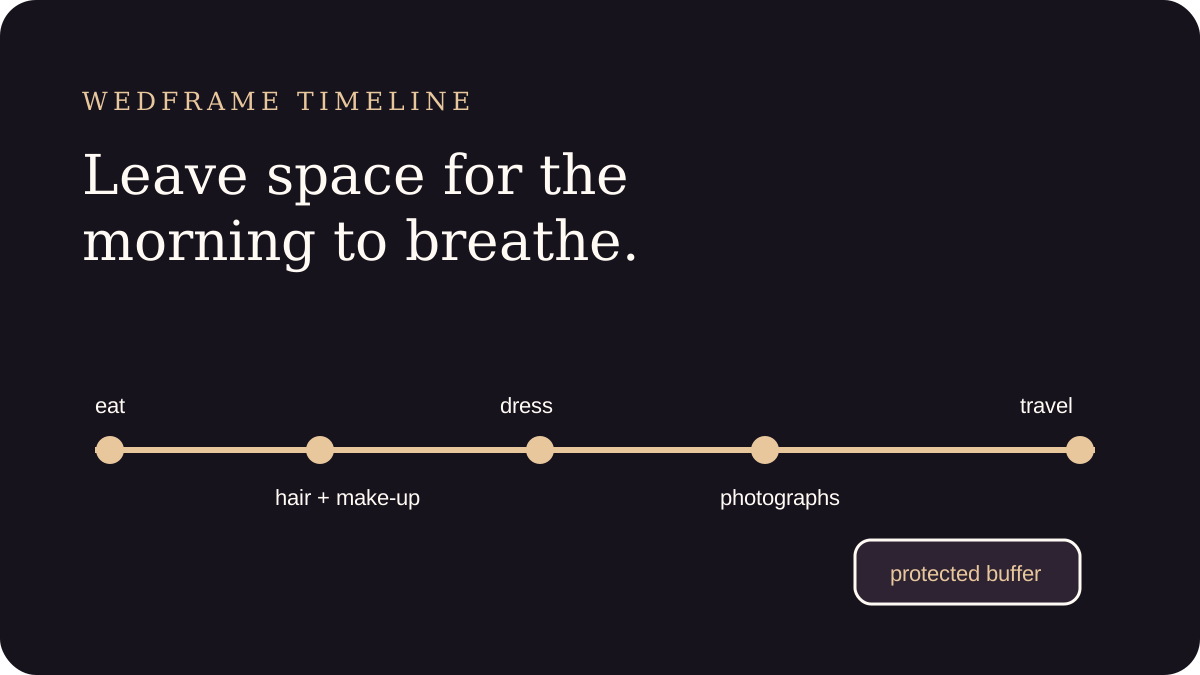
The morning can look wonderfully empty on paper until several people need showers, hair, make-up, breakfast, clothes, photographs and transport in the same few rooms. Your timeline does not have to control everyone. It should give professionals clear handovers and leave a bit of calm when an ordinary task takes longer than expected.
Check the fixed points
Start with the ceremony start, the venue's requested arrival time and the actual travel route. Ask whether parking, road access or a long walk is involved. If a registrar or celebrant needs a private meeting before the ceremony, include it. Your target is an arrival window, not the latest technically possible minute.
Sequence hair and make-up properly
Ask the beauty team how long each service takes, how many artists are attending and who should be ready first. The person getting married is not always best placed last: they need time to dress, breathe and be photographed. Build the schedule around the professionals' working method rather than dividing the available time evenly.
- Confirm start time, setup needs, light, mirrors, chairs and power sockets.
- List every person receiving each service and any trials or agreed style complexity.
- Give early slots to people needed for dressing, children or venue duties.
- Protect a finish buffer for touch-ups rather than booking services to departure time.
- Tell the team about extensions, accessories, veils or skin sensitivities in advance.
Make food and hydration part of the plan
Arrange an easy breakfast and water before the room becomes busy. Choose food that can be eaten in stages and doesn't require one person to cook for everyone. Check dietary needs the day before. Keep water visible once beauty services begin, and appoint someone other than the person getting married to handle tea, deliveries and tidying.
Prepare clothing and details early
Do the small practical jobs the night before: remove labels, steam suitable clothes, check fastenings and gather shoes, jewellery, rings, stationery, scent and meaningful details. Ask your photographer what they will want ready. A labelled tray or bag prevents a search through the room while hair and make-up are under way.
Allow real time for getting dressed
Getting dressed includes underwear, layers, fastenings, shoes, jewellery, bathroom breaks and adjustments—not simply putting on one garment. Buttons and lacing can be slow. Children may need changing twice. Ask the boutique or tailor for instructions and make sure the chosen helper has practised anything unfamiliar.
Set photographer arrival expectations
Preparation coverage usually works best when the photographer arrives for the final part of hair and make-up, with time for details and dressing. They don't necessarily need to document the whole morning. Share room size, light and the number of people present. If two locations are involved, discuss travel or a second photographer rather than hoping one person can be everywhere.
Keep the room calm enough to work
Too many visitors, bags and last-minute questions make a small room difficult for beauty teams and photography. Decide who genuinely needs to be present. Put one person in charge of phones, supplier calls and the emergency kit. Choose music if you enjoy it, but keep the volume low enough for professionals to communicate.
Build buffers in useful places
- A short buffer after hair and make-up for touch-ups.
- A dressing buffer before portraits or a first look.
- Extra loading time for flowers, bags and formal clothing.
- Travel contingency based on the real route and date.
- A quiet ten minutes that is not automatically reassigned if everything runs on time.
A buffer is there for delays, not as an invitation to add another job. If you are running on time, use it to eat, sit down or have a private word with someone important. If you are planning surprise gifts or reveals, tell the photographer and whoever is watching the clock before they appear in the schedule.
Give everybody the same version
Send a short final timeline to the people who need it: hair and make-up artists, photographer, transport, venue contact and the key members of the wedding party. Include addresses, parking or access notes and one contact who can answer practical questions. A shared version prevents five well-meaning people from working to different ceremony times.
Keep the document focused on decisions rather than minute-by-minute behaviour. The wedding party needs to know when to arrive, when they are needed for dressing or photographs and when transport leaves. They don't need a dense production sheet that makes a ten-minute change feel like failure.
Example structure for a 1 pm ceremony
A sample might begin beauty services around 7.30 or 8 am for a group, serve breakfast early, bring the photographer in around 10.30, finish the main hair and make-up by 11, dress from 11.10, take a few portraits around noon and leave with contingency before 12.30. This is only an example: group size, services, travel and ceremony requirements can shift it substantially.
Let the timeline support the day
The best morning plan prevents avoidable stress without pretending people run like clockwork. Protect food, dressing and travel first. Photographs and final touches can then fit around a calm departure instead of pushing it later.
Continue planning
Keep planning