Photography & Video
How Long Do Wedding Photographs Really Take?
Make room for the photographs you care about without turning your wedding into one long photoshoot. Here is how to plan groups, portraits, travel and changing light realistically.
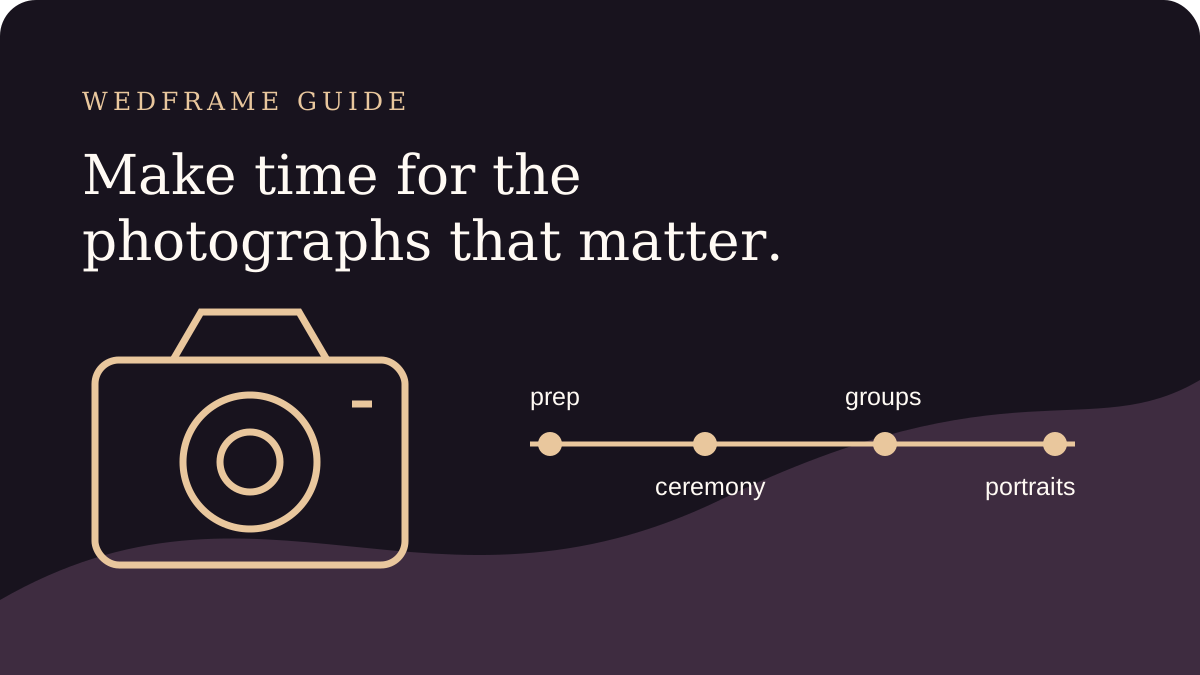
Photography takes the time your plans ask of it. A documentary approach with a handful of family groups can move quickly; formal portraits in several places need more space. The aim is not to keep the camera busy for every minute. It is to get the moments that matter to you while still having time to greet people, eat, travel and enjoy the day.
Preparation and detail photographs
Preparation coverage often begins during the final stages of hair and make-up rather than at the first appointment. The photographer may photograph clothing, stationery, jewellery or flowers before people get dressed. Gather meaningful details in one place and keep the room reasonably clear; searching for items can use more time than photographing them.
If both partners want preparation coverage in different locations, travel or a second photographer may be needed. Ask when the photographer should arrive and work backwards from the departure time, not the ceremony start. Getting dressed nearly always takes longer than it appears on paper, particularly with buttons, jewellery, children or emotional family moments.
Ceremony coverage and the moments immediately after
Ceremony length is usually set by the legal or celebratory format. Photography should fit around it without controlling it. Afterwards, allow time for guests to leave, offer congratulations and form any confetti line. Confetti itself is brief, but arranging people, checking permissions and moving everyone safely can take several minutes.
Family groups
Family groups are where a neat timeline often stretches. Keep the essential list short, ask a helper who knows the guests to gather them and agree one place to work. Around twenty minutes may be enough for a small, organised set, but a longer list can take much more once missing guests, mobility needs and rearranging are included.
- Write the combinations before the wedding and share them with the photographer.
- Start with the largest or least mobile group.
- Ask a confident helper from each side to gather people.
- Avoid near-duplicate combinations unless they genuinely matter.
- Tell the photographer about sensitive relationships and accessibility needs privately.
Couple portraits
Couple portraits don't need to become a lengthy production. Many photographers prefer one short window after the ceremony and another brief opportunity in better evening light. Twenty relaxed minutes with a clear nearby location can be more productive than a long session interrupted by travel and waiting.
If you dislike posing, say so. A documentary-minded photographer can keep direction light and use movement, conversation and the surroundings. If editorial portraits are a priority, protect more time and discuss styling, lighting and location in advance. There is no virtue in copying another wedding's schedule when your priorities differ.
Golden hour is a possibility, not a promise
The warm light near sunset can be beautiful, but the exact timing shifts with date, location, horizon and weather. It may overlap dinner, speeches or dancing. Ask your photographer for the likely sunset window and decide whether you would be happy to step out briefly. Build the plan so the day still works if cloud removes the effect.
Travel between locations
A second location adds more than its driving time on a map. Your photographer may need to park, carry equipment and speak to venue staff, while you are travelling in formal clothes. Put those real journeys into the plan. A portrait session scheduled the moment an optimistic journey ends is likely to start late.
Create buffers without losing the party
A useful timeline contains small buffers before departure, after the ceremony and before the meal. Those minutes absorb a late button, a long greeting or a missing relative. They shouldn't all become extra photographs automatically. Tell your photographer when you want to return to guests and which images may be dropped first if the day runs late.
Tell the photographer about mobility needs, family sensitivities and any important people who may leave early. That information can change the order without lengthening the day. It also prevents avoidable calls across the room for somebody who is uncomfortable being photographed or can't reach the chosen location quickly.
What can safely happen in the background
Skilled photographers often cover room details, candid conversations and dancing without pausing the event. The time-heavy parts are usually the photographs that require several people to be gathered, positioned and kept together. If your priority is documentary coverage, say so; if carefully arranged portraits matter, give them a realistic place in the schedule.
Ask how a second photographer would change coverage rather than assuming it halves every timing. Two people can cover simultaneous preparations or different angles at a ceremony, but formal groups still depend on guests assembling. The value is broader coverage, not necessarily a faster queue.
Agree the plan with the people doing the work
Show your photographer the venue schedule and invite them to challenge it. They can tell you where light, distance or group size needs more time; the venue can confirm access and meal service. When both teams agree on a realistic plan, photography can be part of your day rather than the activity that takes it over.
Continue planning
Keep planning
Related knowledge.
Explore the Planning Hub
Open resource →Photography & VideoWhat to Put on a Wedding Photography Shot List
A short shot list should protect the people and moments you cannot recreate. Give your photographer priorities and time to notice the rest of the day.
Read article →Photography & VideoQuestions to Ask a Wedding Photographer Before You Book
A beautiful portfolio is a starting point. Find out how your photographer will cover your particular day, work with the people in it and look after the images afterwards.
Read article →Photography & VideoQuestions to Ask a Wedding Videographer Before You Book
A wedding film needs good sound and thoughtful editing as much as lovely pictures. Watch complete work and understand how your day will be recorded before you book.
Read article →