Speeches
Wedding Speech Structure: A Simple Template That Sounds Natural
A good speech needs a clear point, a few stories and a kind ending, not professional-comedian timing. Write for the people listening and rehearse it aloud.
Quick answer
Choose the thought you most want the couple and guests to remember. Introduce yourself, share two or three short stories that support it and finish with a wish or toast. Write for listening, time the draft aloud and cut jokes that embarrass someone. You are celebrating people, not proving how many stories you can fit in.
Agree the role and time first
Ask the couple or coordinator when speeches happen, who speaks and roughly how long each person has. A five-minute slot needs a different plan from a long after-dinner address. If several people will speak, avoid repeating the same childhood story or thank-you list. A short conversation between speakers can make the whole block feel more varied.
You don't have to accept a speech invitation to prove affection. If speaking publicly is distressing, ask whether a reading, private letter or smaller toast would suit. A role freely chosen is easier to perform warmly.
Start by orienting the room
Give your name, relationship to the couple and a simple opening thought. You can thank the hosts or guests briefly if that is your role, but don't begin with a long apology about public speaking or a list of inside jokes. Most listeners need thirty seconds to understand whose perspective they are hearing.
An honest sentence often works better than a borrowed punchline: “I have known Sam since school, and the thing I have always admired is how they make people feel included.” That gives the stories a direction.
Choose stories for the couple, not the speaker
Pick moments that reveal something about the couple and give guests enough context to follow. If a story only proves you were at a wild night out, save it for later. Ask whether the person at its centre would be comfortable hearing it in front of family and colleagues.
Avoid private medical, financial, romantic or family details without permission. Humour can be affectionate without being a surprise disclosure. When in doubt, choose kindness; guests can still laugh at a story that respects the couple.
Move from past to present
A useful middle section shows how the couple have changed or what is strong about them together. Speak to both people, even if you know one much better. You don't need to claim knowledge you don't have; a small observation from a shared meal can be more convincing than a grand statement.
Keep transitions plain. “That same generosity is something I now see in their life together” is enough. Don't add a second unrelated story because the draft feels short. Pauses and a clear thought create more impact than extra material.
End with a wish and an action
Close by wishing the couple something specific and generous, then invite guests to raise a glass if a toast is part of the plan. Say their names clearly and stop. A good ending doesn't need three attempts, a final joke and a repeated thank-you. Write the last sentence in full so you don't trail off.
If the couple would rather skip a formal toast, a simple congratulations is enough. Check the microphone, where you will stand and who introduces the next speaker.
Edit for the ear
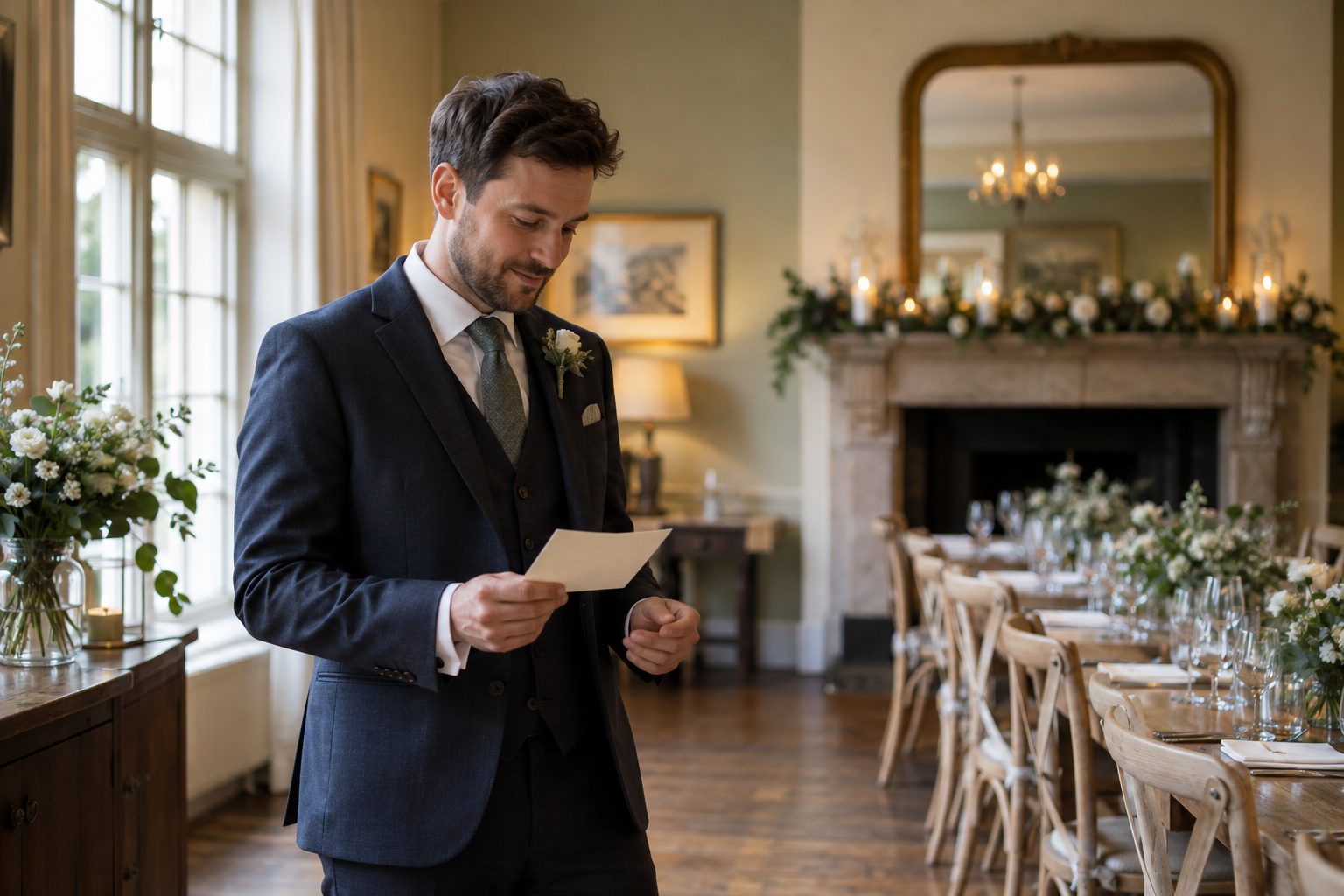
Read the whole speech aloud at a normal pace. Cut long sentences, unfamiliar quotations and names the audience will not recognise. Use brief notes or a printed page with large type. A phone can work, but test the screen and silence notifications. Time the speech with pauses; reading silently makes it appear shorter than it will be.
Ask one trusted person for feedback on clarity and tone, not ten people for competing rewrites. If a joke needs a long explanation or could hurt someone, remove it. You can be funny without being risky.
Rehearse enough to be present
Practise the opening, key transitions and ending until you know where they are. Don't memorise every word if that would make you panic about a missed phrase. Breathe, look up occasionally and speak slowly enough for the back of the room. A pause is not a mistake.
Give the final speech timing to the coordinator so the meal and band can plan around it. Then enjoy the celebration. Your warmth matters more than perfect delivery.
Rehearse with a real timer
Read at a natural pace, leaving space for laughter or emotion. A page can take longer than it looks. Check where speeches fit around the meal and whether you have a microphone. Bring a large-print copy or an offline device, practise awkward sentences and give yourself a definite ending so the next anecdote does not sneak in.
Keep planning
Keep planning
Related knowledge.
Wedding Speech Length Calculator
Open resource →SpeechesWho Normally Gives Speeches at a UK Wedding?
Tradition may suggest a parent, groom and best man, but you are free to choose the voices that belong at your celebration. Ask willing speakers and give each a useful brief.
Read article →SpeechesHow Long Should Wedding Speeches Be?
Your speakers need room for a good story and a real audience response, not a race against a stopwatch. Plan the whole speech block with pauses, laughter and the meal in mind.
Read article →