Wedding Timeline
How to Build a Wedding Day Timeline That Actually Works
Your timeline should help everyone know what happens next without making the day feel like a timed exam. Start with fixed commitments, allow for real transitions and leave space to enjoy it.

Quick answer
Put the immovable times on the page first: venue access, ceremony, meal service, evening licence and transport. Build outwards, asking each supplier how long their part actually takes. Leave visible breathing room between activities. A timeline works best when the people delivering it agree with it and know who can make a decision if the day shifts.
Start with fixed points, not decorative details
Write down contractual and legal timings before deciding when to cut the cake or take sunset portraits. Ceremony access, registrar or celebrant arrival, catering service, bar hours, music finish time and venue departure are the skeleton of the day. Treat confirmed supplier arrival and collection windows as fixed too.
Then mark which moments are genuinely important to you. A long drinks reception may matter more than an elaborate entrance; an early ceremony may be worth it if you want unhurried photographs in winter light. The timeline should express your priorities, not copy a generic schedule.
Ask suppliers for durations and dependencies
Your photographer knows how long group photographs take with your list; the caterer knows when guests must be seated for food to arrive well; the band knows its setup and sound-check requirements. Ask for ranges and what must happen immediately beforehand. “Speeches at 6.30” is incomplete if clearing dessert, moving equipment and gathering speakers also need time.
Share one working version early enough for conflicts to surface. If hair and make-up need the same room in which a photographer plans to photograph details, or the florist needs access while the venue is turning the ceremony space, resolve that before the final week.
Plan transitions as real events
Moving eighty people is not as quick as announcing that it is time to move. Guests finish conversations, visit the loo, fetch drinks and wait for relatives. Allow for those ordinary pauses between ceremony and confetti, reception and dinner, or speeches and entertainment.
Travel needs similar honesty. Use a realistic door-to-door journey, then add time for parking, unloading, putting on coats and finding the right entrance. If the ceremony and reception are separate, tell guests where to go and who can help if transport is delayed.
Protect the ceremony-to-meal window
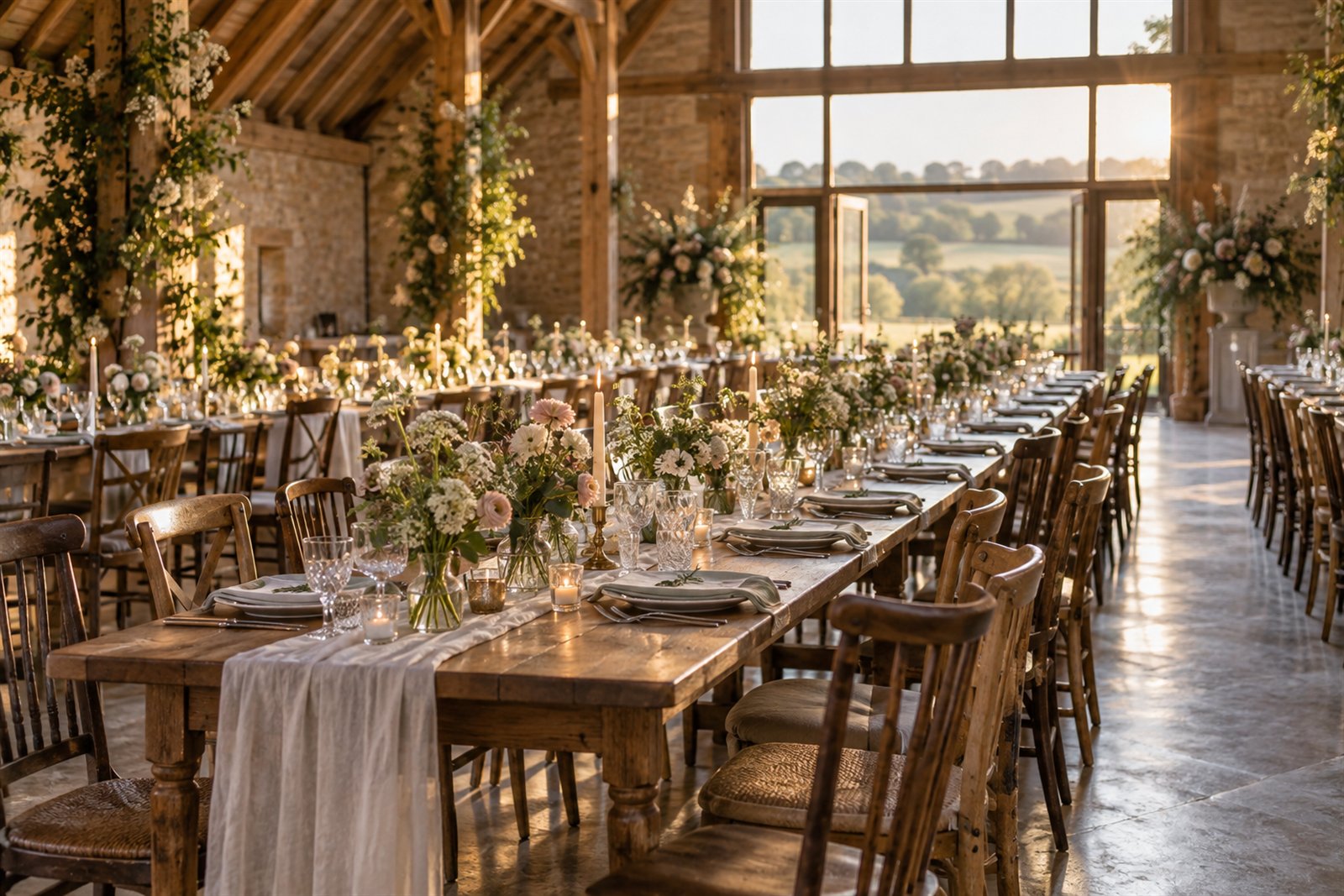
This part of the day often carries confetti, congratulations, group photographs, couple portraits, drinks, room changes and supplier setup. Trying to fit all of it into a short gap makes every small delay visible. Decide what belongs in that window and what can happen later.
Give catering a dependable seating time and allow a gathering period before it. A coordinator or confident member of the wedding party can start guiding guests while you finish photographs, rather than waiting until the last moment to move everyone at once.
Use buffers deliberately
A buffer is not wasted time. Place ten or fifteen minutes before critical handovers: leaving for the ceremony, being called to dinner, starting speeches and opening the evening room. For a complex move or large guest list, allow more. Keep some buffers invisible to guests so they experience a relaxed flow rather than an announced wait.
If you get ahead of schedule, you do not have to fill the gap with another job. Eat something, take a quiet photograph or sit down for a moment. The spare time is what makes your plan resilient.
Create one clear master version
Keep the master timeline concise: time, activity, place, owner and any dependency. Suppliers can hold their own detailed production schedules, but everyone should recognise the same public milestones. Date the document and remove old copies from shared chats when a revision is issued.
Add the mobile number of the day-of contact, venue contact and transport lead. The couple shouldn't be the switchboard. A named person can answer operational questions while protecting the couple from avoidable interruptions.
Plan for decisions, not every disaster
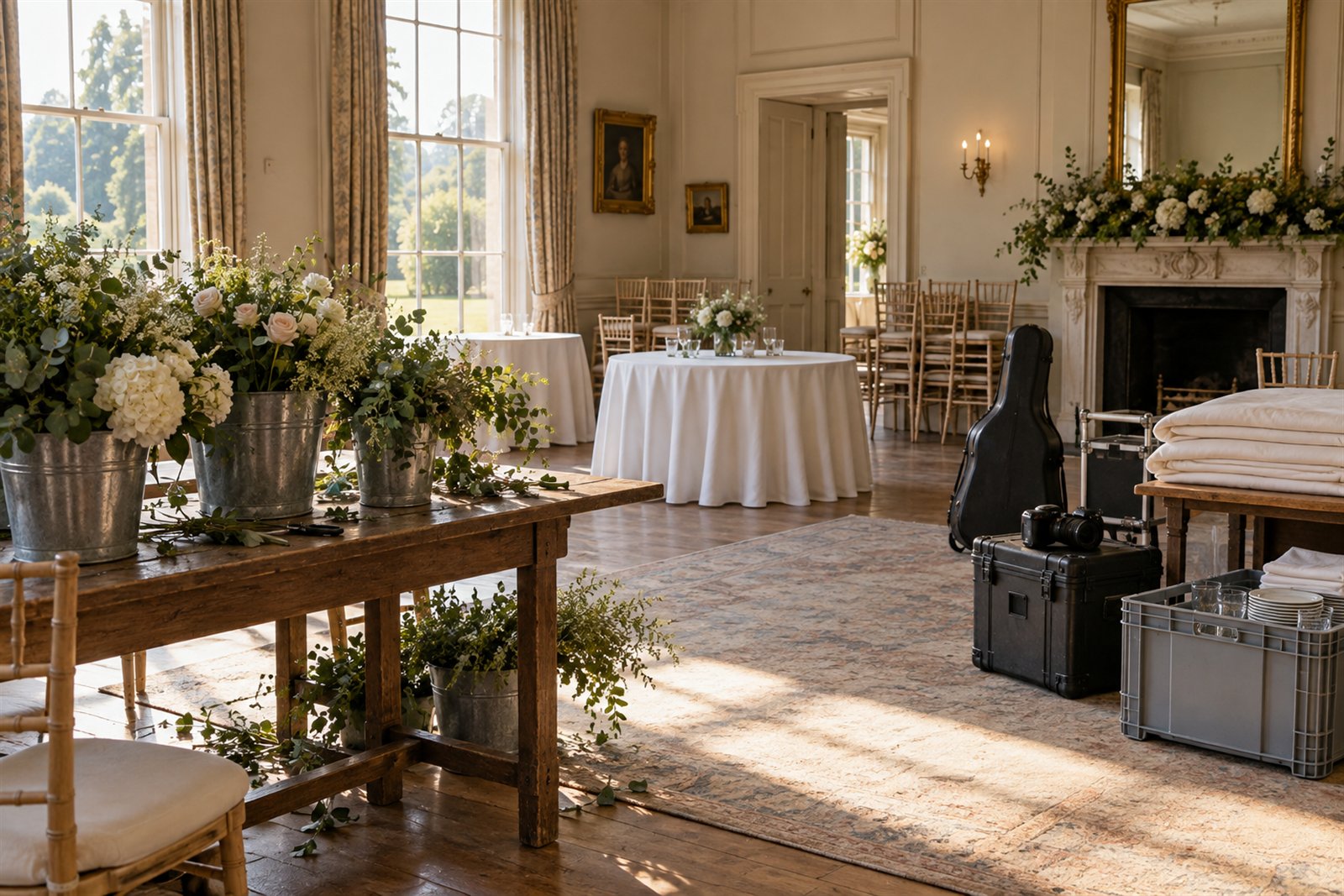
Identify the few choices that weather or delay could trigger: outdoor or indoor ceremony, confetti location, portrait time, transport fallback and whether a late item is shortened or moved. Write who decides and by what time. That is more useful than a huge catalogue of unlikely emergencies.
If the day slips, protect the legal ceremony, safe food service, essential travel and contracted finish. Shorten flexible gaps or simplify optional moments rather than asking suppliers to recover impossible time.
Do a final reality check
Walk through the schedule from the point of view of the couple, a guest, the venue and each key supplier. Look for simultaneous demands on one person, rooms that must change instantly, missing meals and journeys with no loading time. Check the final version close enough to the date to be accurate but early enough for questions.
On the day, let the timeline guide the team rather than police your guests. A good plan can absorb small changes while the celebration still feels like a celebration.
Keep planning
Keep planning
Related knowledge.
Explore the Planning Hub
Open resource →Wedding TimelineWedding Day Coordinator Checklist: Who Does What?
A useful run sheet says who owns each handover and what happens when a plan changes. Give your coordinator clear decisions to make, not just a long list of times.
Read article →Wedding TimelineHow to Keep Your Wedding Day Running on Time
A relaxed day can still run well. Give suppliers a realistic plan, protect the fixed moments and let one named person handle the little changes for you.
Read article →Wedding TimelineHow Much Time Should You Allow Between Your Ceremony and Wedding Breakfast?
The gap before the wedding breakfast has several jobs to do. Count travel, congratulations, photographs and room changes before choosing how long it should be.
Read article →