Wedding Outfits
Wedding Suits: Hire or Buy?
Hiring may suit a one-day look; buying may give you a personal fit and a suit you will wear again. Compare the complete cost, the actual fit and how much time you have to put problems right.
Quick answer
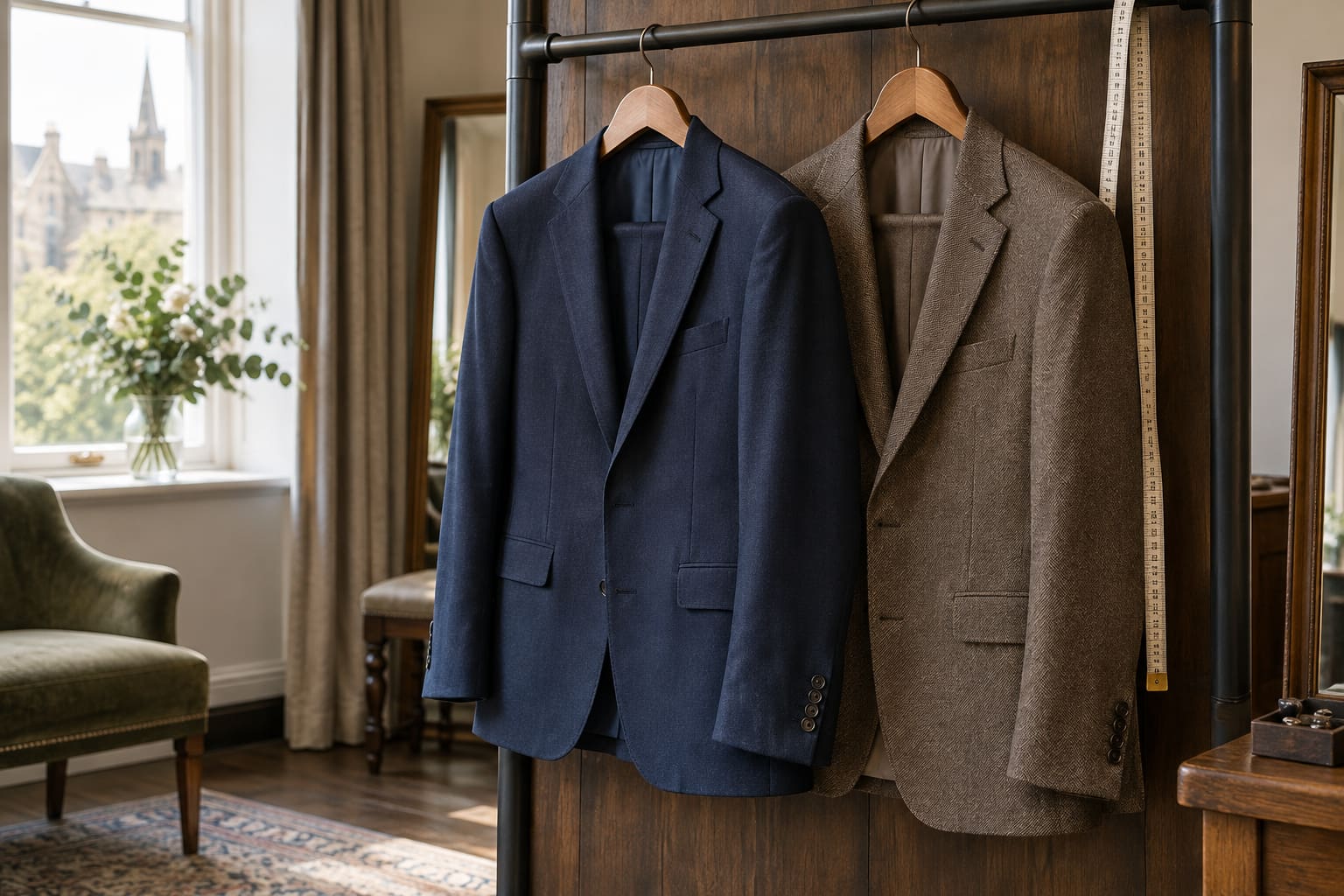
Hire if you want a particular formal look for the day and the shop can fit and deliver it reliably. Buy if you want it tailored and genuinely expect to wear it again. Compare jacket, trousers, waistcoat, shirt, shoes, alterations, cleaning, deposits and return fees. Try the actual garment or a truly equivalent size with your wedding shoes.
Decide what the suit has to do
Think about the ceremony setting, season, movement and dress code. A black-tie dinner, relaxed coastal ceremony and winter town-hall wedding don't require the same fabric or level of formality. Choose a look you can sit, walk, eat and dance in; wedding photographs capture much more than a standing fitting-room pose.
If several people will wear related outfits, decide whether exact matching matters. Coordinating colour and level of formality often looks better than asking everyone to fit an identical cut. Comfort, body shapes and budget differ.
When hire is useful
Hire can make sense for a formal style you're unlikely to wear again, especially when multiple sizes are needed for a group. Ask whether the quoted set is the exact collection you'll receive, when fittings happen and what substitutions are possible if a size is unavailable.
Check collection, delivery and return windows against travel and honeymoon plans. Understand deposits, damage and late-return rules before paying. If the shop is closed the day after the wedding, find out how the garment can be returned without asking a tired guest to drive across the county.
When buying is useful
A bought suit can be adjusted to your posture and worn again, but that future use needs to be real. Ask which alterations are included and which need a separate tailor. A cheap suit with several paid changes may not stay cheap.
Think about fabric weight, care instructions and whether a distinctive wedding colour will still suit your wardrobe. Made-to-measure or bespoke options need lead time and fittings; don't assume the final garment will arrive ready to wear the week before the ceremony.
Compare the whole cost
Write two itemised totals. Include the suit pieces, shirt, tie or neckwear, belt or braces, shoes, alterations, steaming, delivery, cleaning and return costs. For hire, include any refundable deposit separately so you understand cash flow and the conditions for getting it back.
Avoid invented national price averages: local shops, fabrics and packages vary widely. Get two or three current quotes for the look you actually want and compare the quality, fit and contract. A choice is only cheaper if it remains workable after all necessary extras.
Fit matters more than the label
Move through ordinary actions at a fitting: sit, raise your arms, hug someone and walk in the chosen shoes. Check trouser break, sleeve length, waist and whether the jacket pulls when fastened. Photograph front, side and seated views in natural light if permitted.
Tell the tailor about a mobility aid, seated fit or fabric sensitivity, and show the movements that matter. Comfort is not a compromise; it is part of a good fit. Leave time for changes and another fitting.
Plan for the rest of the party
Give people clear guidance on colour, formality and what is expected, including who pays. If you want uniform hire, arrange measuring deadlines for people who live away and a local try-on where possible. Children grow quickly; confirm when final sizes are taken.
Ask what happens if a member can't attend, a size changes or the weather requires a different layer. A spare shirt or simple accessory can solve more practical problems than a perfectly matched photograph plan.
Final-week handover
Collect or receive garments early enough to check every piece, try them on and resolve mistakes during opening hours. Hang them properly, follow the care label and agree who carries the return bag. Keep hire paperwork and garment-condition photos if the contract makes them relevant.
On the wedding day, wear the clothing you chose rather than constantly adjusting it. The successful suit is one that fits your life and the day, whether it came from a hire rail or your own wardrobe.
A simple decision example
Suppose you already wear a navy suit for work and would happily use another: compare a purchased, altered suit against hire with shirt and shoes included. If you want morning dress only for this ceremony, hire may make more sense. Neither answer follows from the number of weddings you attend; the fit and future use of this exact garment matter.
Put the comparison in writing and allow a little for alterations or replacement accessories. Ask who pays if hired clothes arrive in the wrong size and how quickly that can be fixed. For online orders, read the returns policy for altered or made-to-measure pieces before removing tags or arranging tailoring.
Keep planning
Keep planning
Related knowledge.
Explore the Planning Hub
Open resource →Wedding OutfitsHow to Choose Wedding Rings: Fit, Metal and Budget
A wedding ring should feel good on your hand and fit your life. Try real widths and profiles, ask about care and include future adjustments in the budget.
Read article →Wedding OutfitsWedding Shoes: How to Choose a Pair You Can Wear All Day
Choose shoes for the ground, outfit and hours you will spend in them. A comfortable pair helps you enjoy the day, not just the first photograph.
Read article →Wedding OutfitsWedding Dress Alterations: When to Book and What to Ask
A dress that looks right on a rail may still need a skilled fit. Book enough time to move in it, try it with your shoes and make the final adjustments calmly.
Read article →