Wedding Outfits
Wedding Dress Alterations: When to Book and What to Ask
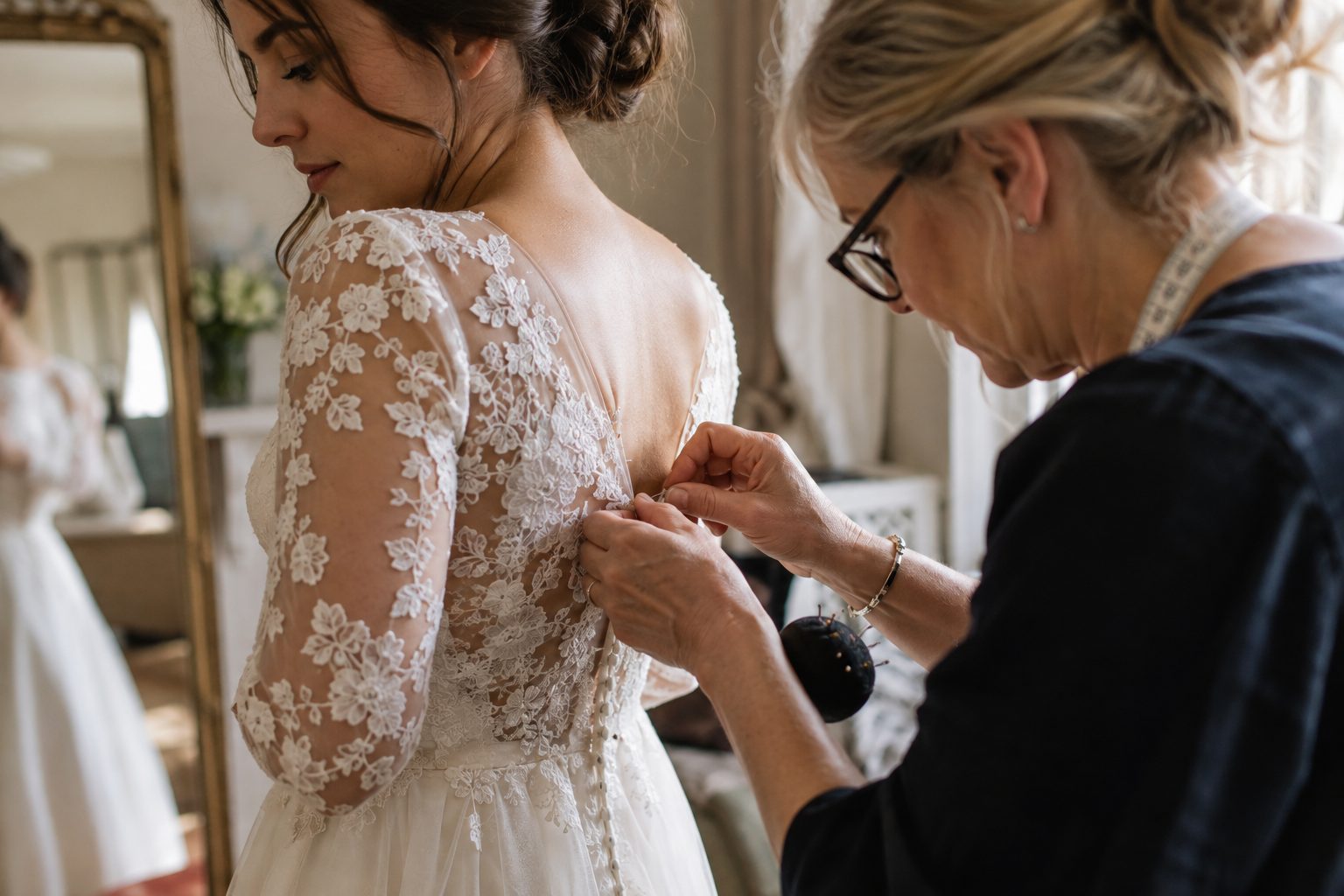
A dress that looks right on a rail may still need a skilled fit. Book enough time to move in it, try it with your shoes and make the final adjustments calmly.
Quick answer
Ask an alterations specialist to assess your actual dress well before the wedding, especially if the fabric or structure is complex. Bring the shoes and underlayers you expect to wear, show how you will sit and move, and get a written estimate for each change. Allow more than one fitting and a final collection check. The aim is comfort all day, not a perfect standing photograph.
Book around the garment, not a fixed rule
Alteration timing depends on when the dress arrives, how much work is needed and the seamstress’s diary. A simple hem can be different from reshaping a bodice or adjusting detailed lace. Contact an alterations specialist when you know the delivery date and ask when they need to inspect the garment. Don't wait until the last month because an online checklist says fittings are quick.
If you're buying second-hand or off the rail, take the dress for an assessment before assuming a size can be made to work. Some changes are technically possible but expensive or may alter the design you liked.
Bring the full outfit
Shoes change hem length. Underwear, shapewear, petticoats and any jacket or veil can change fit and movement. Bring the versions you realistically plan to wear to fittings, not a substitute pair that happens to be available. If you may change shoes later, discuss the height difference before the hem is finished.
Ask someone you trust to attend if you would value a second pair of eyes or help learning fastenings. The fitter’s job is to assess fabric and construction; your job is to say whether you can breathe, sit and move comfortably.
Prioritise fit and movement
Walk, sit, turn, raise your arms and try stairs where you can. The day includes hugs, food and dancing, not just a fitting-room pose. Tell the fitter about mobility or sensory needs and do not accept a shape that makes ordinary movement difficult.
Ask how the dress will be supported: straps, cups, waist structure and closures should work together. A bustle for a train may help in the evening, but someone needs to know how to fasten it. Practise that at the final fitting.
Ask for an itemised estimate
Get the proposed work, number of fittings, price and payment schedule in writing. Be clear about what happens if the fit needs further adjustment after a fitting or if you change shoes or underlayers. Delicate embellishment, handwork and multiple layers can change the labour involved. The dress purchase price is not the complete outfit budget.
If the estimate is high, ask which changes are essential for comfort and which are optional styling choices. A reputable fitter should explain the trade-offs without promising that every design can become a different dress.
Protect the final weeks
Agree when the final fitting and collection will happen, allowing time to address a problem. Ask how to store and transport the dress, whether steaming is recommended and who may do it safely. Keep the garment bag, accessories and any spare fastenings together. If the venue is far away, plan the journey rather than leaving the dress in a crowded car.
Please do not set dramatic weight-change goals around a fitting. Bodies change, and a sensible alterations plan allows some tolerance. Tell your fitter early about a significant change so they can explain what is still possible.
Plan for help on the day
Ask a willing person to learn buttons, lacing or bustle points. Take a photograph of the finished fastening if the fitter agrees. Keep a small repair kit suitable for the fabric, but don't attempt an irreversible fix without knowing what it will do. A coordinator can know who to call if a closure fails.
Choose where to dress with enough light, space and privacy. Complex outfits take time, so build that into the morning schedule before photography and travel.
Keep the outfit yours
Alterations should support how you want to look and feel, not enforce an imagined bridal silhouette. If a feature no longer works, ask whether it can be adjusted or whether a different outfit would be a better choice. Comfort and confidence are meaningful parts of the design.
At the final fitting, notice whether you can forget about the garment for a moment. That is often the clearest sign it's ready for the day you're actually planning.
Prepare for the first fitting
Bring the shoes and underwear you will wear, or an equivalent shape and height. Move in the dress and ask which alterations are possible, their cost and the final decision date. If your shoes or fit change, say so promptly. Plan where the finished dress hangs and how it travels; a missing fastening or awkward journey should not undo good tailoring.
Keep planning
Keep planning
Related knowledge.
Explore the Planning Hub
Open resource →Wedding OutfitsHow to Choose Wedding Rings: Fit, Metal and Budget
A wedding ring should feel good on your hand and fit your life. Try real widths and profiles, ask about care and include future adjustments in the budget.
Read article →Wedding OutfitsWedding Shoes: How to Choose a Pair You Can Wear All Day
Choose shoes for the ground, outfit and hours you will spend in them. A comfortable pair helps you enjoy the day, not just the first photograph.
Read article →Wedding OutfitsWedding Suits: Hire or Buy?
Hiring may suit a one-day look; buying may give you a personal fit and a suit you will wear again. Compare the complete cost, the actual fit and how much time you have to put problems right.
Read article →