Wedding Timeline
How Much Time Should You Allow Between Your Ceremony and Wedding Breakfast?
The gap before the wedding breakfast has several jobs to do. Count travel, congratulations, photographs and room changes before choosing how long it should be.
Quick answer
That interval is rarely just a drinks reception. Guests leave the ceremony, confetti happens, people congratulate you, family photographs begin, rooms may be reset and everyone must be seated for the meal. Add up those real jobs. A single-site wedding with a short photo list needs less time than a church-to-venue journey or many family groups.
List everything the interval must hold
Write a simple sequence from the ceremony ending to food service. Include signing or exit, confetti, greetings, travel, reception drinks, canapés, group photographs, couple portraits, room turnaround, the receiving line if you want one, and calling guests to their seats.
Put a duration beside each item and ask the relevant supplier to check it. Several activities can overlap, but not all of them: the couple can't greet every guest, take family photographs and travel at the same time.
Allow for the ceremony exit
Guests don't instantly appear in a neat confetti line. They may need instructions, collect belongings or wait while the couple completes formalities. At a church, there may also be photographs at the door and a short conversation with the officiant.
Choose one person to guide guests and one clear confetti location. Good coordination can keep the moment warm without turning it into a military exercise.
Be honest about the photograph list
A few organised family groups can fit comfortably into the drinks reception. A long list, missing relatives or a second location can use most of it. Talk through the combinations with your photographer and ask someone who knows the guests to help gather them.
Couple portraits don't all need to happen at once. You might take a short set after the ceremony and return outside for softer evening light, preserving more time with guests.
Treat travel as door to door
Map from the ceremony exit to arrival inside the reception, not car park to car park. Add loading, traffic, parking, walking and the time required for the last guest coach to arrive. Tell the venue how transport is organised so drinks and canapés are not served too early.
If guests drive themselves, provide a full address, parking notes and a contact who is not the couple. A small navigation problem repeated across dozens of cars can create a large seating delay.
Ask what the venue and caterer need
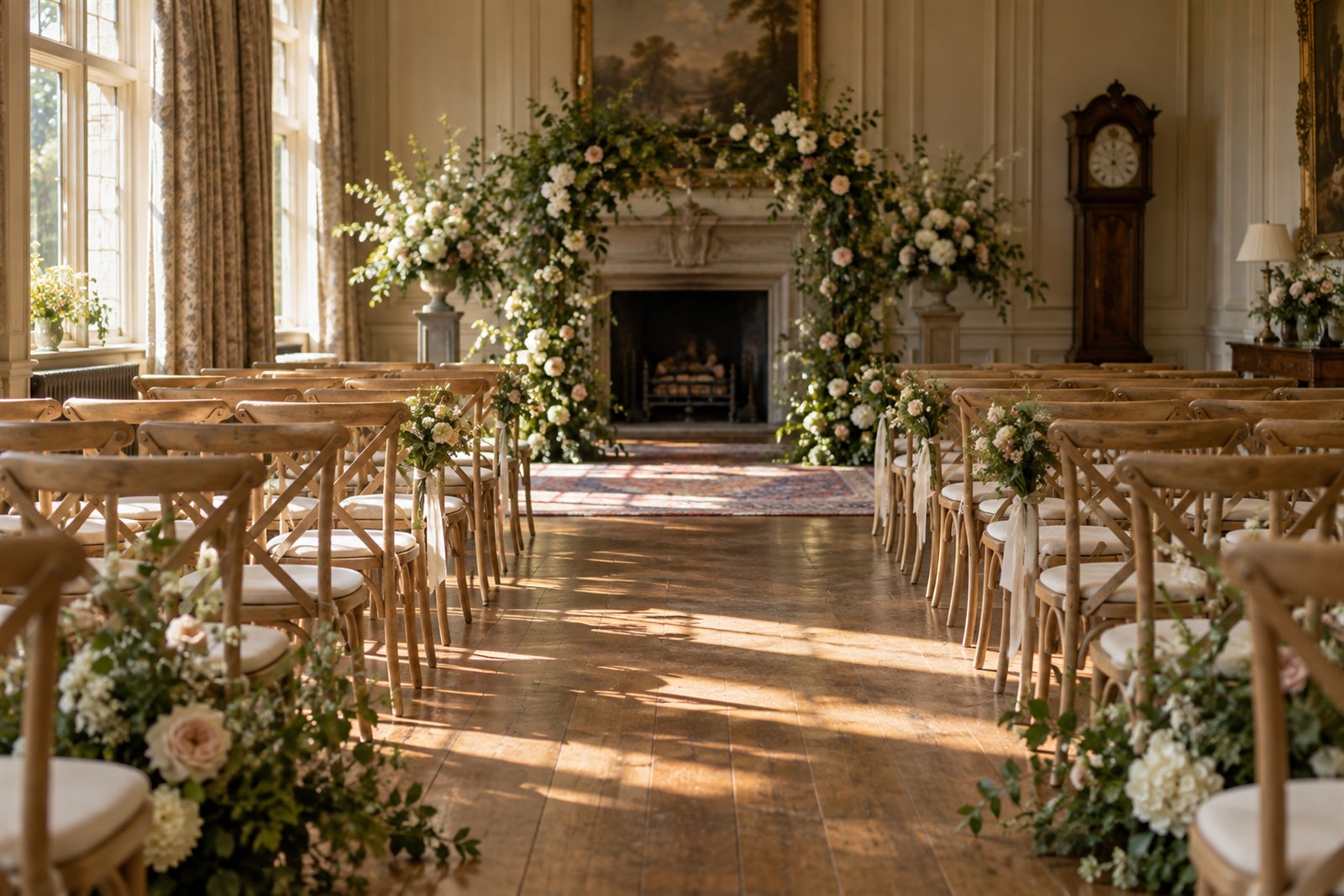
A room turnaround may set the minimum gap, especially when one space hosts both ceremony and meal. Catering also needs a reliable time to plate and serve. Ask when guests should begin taking seats, not only when the first course is due.
Leave a gentle call-to-dinner window. Fifteen minutes can disappear while guests finish a drink, find the table plan, visit the facilities and settle children.
Make the waiting time comfortable
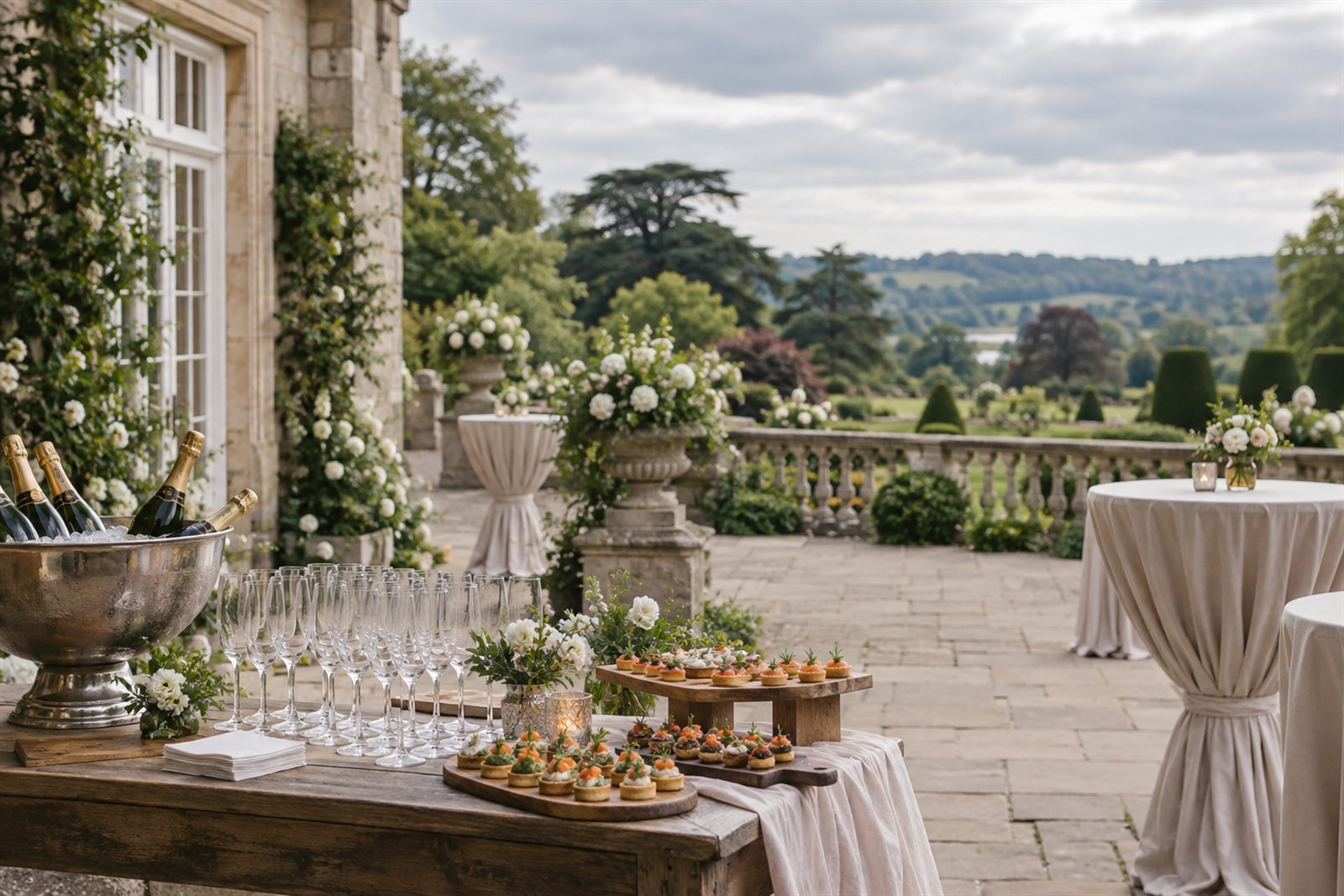
If the gap is generous, give guests places to sit, shelter, water and something appropriate to eat. Think about older guests, pregnant guests, small children and anyone who can't comfortably stand through a long reception.
Entertainment can add atmosphere, but it shouldn't compensate for missing basics. Clear information, seating and refreshments do more to make a longer interval feel intentional.
Adjust for season and daylight
Winter darkness may move portraits earlier; strong summer heat may make shade and water more important. Rain can slow travel and require indoor photograph positions. Ask the venue where guests will go if outside spaces are unavailable.
If sunset photographs matter, check the actual sunset time for the date and location. It may fall during the meal, in which case agree a short, realistic window with catering rather than delaying service unexpectedly.
Choose a gap you can explain
A final schedule should show what guests experience and what happens behind the scenes. If the interval is long because of travel or a room change, communicate that and provide a comfortable plan. If it's short, reduce the photograph list and optional formalities accordingly.
There is no perfect number of minutes to copy from another wedding. Choose the shortest gap that lets your actual sequence happen calmly and still gets the meal started when you promised.
Keep planning
Keep planning
Related knowledge.
Explore the Planning Hub
Open resource →Wedding TimelineWedding Day Coordinator Checklist: Who Does What?
A useful run sheet says who owns each handover and what happens when a plan changes. Give your coordinator clear decisions to make, not just a long list of times.
Read article →Wedding TimelineHow to Keep Your Wedding Day Running on Time
A relaxed day can still run well. Give suppliers a realistic plan, protect the fixed moments and let one named person handle the little changes for you.
Read article →Wedding TimelineHow to Build a Wedding Day Timeline That Actually Works
Your timeline should help everyone know what happens next without making the day feel like a timed exam. Start with fixed commitments, allow for real transitions and leave space to enjoy it.
Read article →