Seating Plans
How to Create a Wedding Seating Plan Without the Stress
Your seating plan is a way to help guests feel comfortable, not a test of how well you know everyone. Start with the room, confirmed names and genuine needs, then build tables that can talk.
Quick answer
Wait for most replies, get the venue’s real table layout and place essential access needs first. Then group people by relationships and likely conversation. Keep couples together unless they have asked otherwise, and do not expect a table plan to solve a family dispute. Give the venue, stationery team and coordinator the same final version.
Get the room facts before moving names
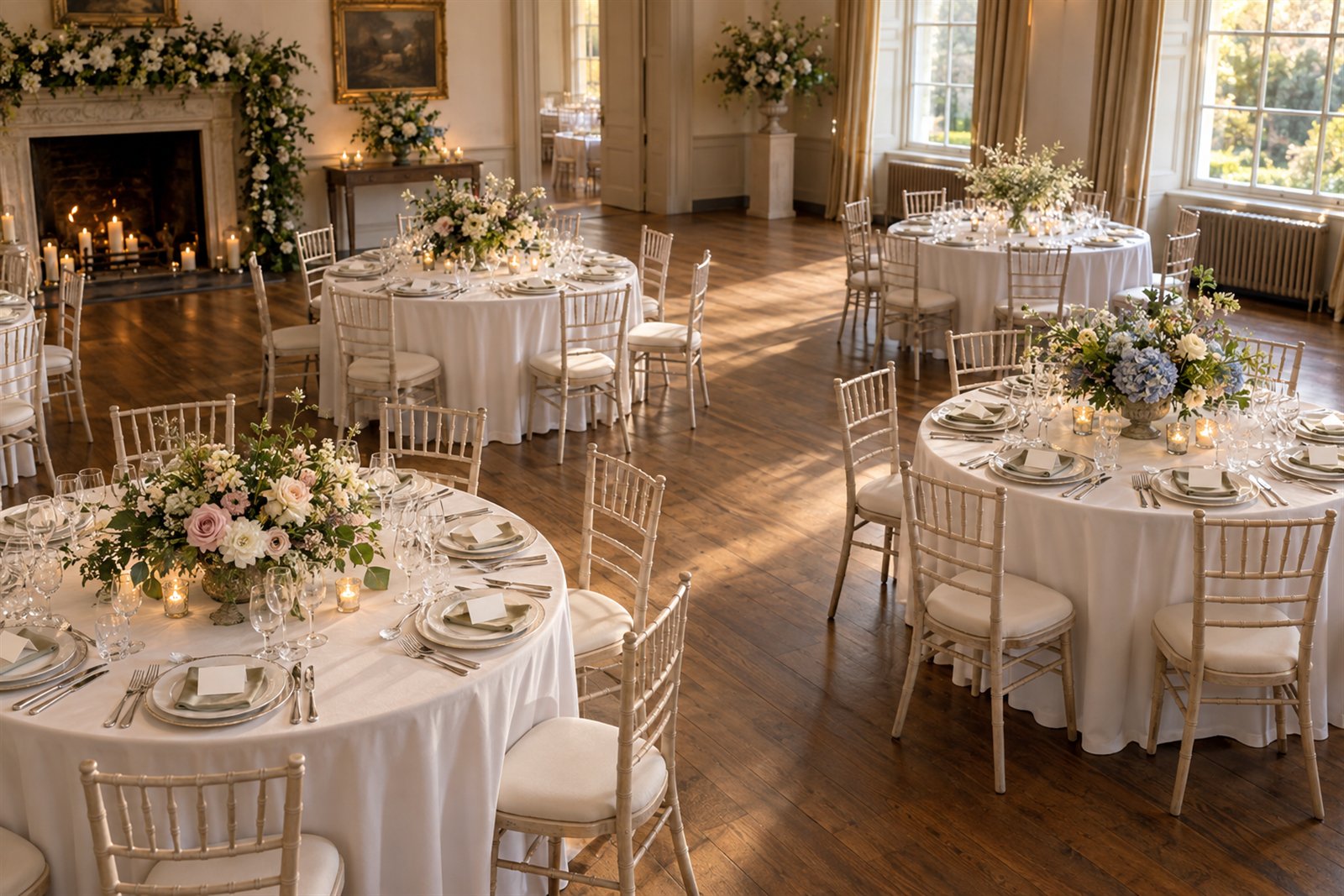
Ask for table shapes, usable capacities, aisle widths, pillars, doors, service routes, high-chair space and the positions of speakers or entertainment. A diagram based on an imagined room creates unnecessary rework.
Check whether the couple will use a traditional top table, a sweetheart table or sit among guests. There is no requirement to copy a family arrangement that doesn't fit your relationships.
Work only with current responses
Separate accepted, declined and unanswered invitations. Don't repeatedly redesign around people who have not replied; chase them, set a real final date and tell the venue what remains uncertain.
Put each named guest on the plan once. Include children, carers and any supplier seats the venue needs to allocate, but keep sensitive notes off the version guests will see.
Place practical needs first
Reserve step-free positions, room for mobility aids, suitable sightlines, hearing support and quick access to facilities where requested. Seat babies and young children with their responsible adults, with enough physical room for approved equipment.
Ask guests privately rather than guessing from age or appearance. The venue should confirm safe routes and evacuation arrangements; a seating chart can't solve an inaccessible room.
Build tables around connection
Start with natural groups, then mix only where there is a plausible bridge: shared interests, similar life stage or people who are comfortable meeting others. Keep at least two familiar connections at a mixed table so no one is placed among strangers alone.
Nobody wants to discover they are at the “whoever was left” table. If one group is awkward by a seat, look at neighbouring tables again rather than treating several guests as spare parts.
Handle conflict quietly
If two people shouldn't sit together, create distance without making the room layout announce the disagreement. Think about sightlines as well as table number, and brief the coordinator only on what they need to manage.
Don't use seating as punishment or force a reconciliation during dinner. A calm meal is a reasonable boundary; deeper family issues belong outside the wedding plan.
Freeze, share and version the plan
Give the venue a dated final plan with meal and access information through its approved process. Give the stationery supplier only names and table assignments. Keep one master so late changes are made consistently.
Save or print a backup and ask one person to answer seating questions on the day. If someone cancels late, an empty chair may be kinder and simpler than moving several groups at the last minute.
Keep planning
Keep planning
Related knowledge.
Explore the Planning Hub
Open resource →Seating PlansWedding Seating with Blended Families: A Calm, Practical Approach
Seat people where they can be comfortable and talk, not where a traditional diagram says they belong. Your plan does not have to announce a judgement about family relationships.
Read article →Seating PlansHow Many People Should Sit at Each Wedding Table?
The right number depends on the actual tables, chairs and room, not a generic chart. Check the measured layout and leave everyone enough space to eat and move comfortably.
Read article →