Seating Plans
Wedding Seating with Blended Families: A Calm, Practical Approach
Seat people where they can be comfortable and talk, not where a traditional diagram says they belong. Your plan does not have to announce a judgement about family relationships.
Quick answer
Start with guests who need a particular distance, seat or route for comfort, access or a difficult relationship. Ask close family privately about real constraints without handing over the room. Build tables around conversation and practical needs. Seating is a hosting tool, not a public ranking of relatives.
Set priorities before names move
Know the room layout, table capacities, accessible routes and final RSVP list. Then identify true constraints: people who can't be seated together, guests needing a quieter location, children who need a parent nearby and anyone who can't manage a distant table. Write these down privately; don't tell the wider family that one person has been classified as a problem.
Distinguish discomfort from inconvenience. You may want to accommodate a serious conflict without allowing every minor preference to determine the plan. The couple should agree a boundary together before asking relatives for advice.
Ask without making people negotiate publicly
A short private question can help: “Is there anyone you would feel uncomfortable sitting beside?” Give people room to answer and don't promise a specific table until you understand the whole room. You can ask a trusted family member for context, but be cautious about passing on somebody else’s private history.
If one relative makes a demand that would isolate another guest, return to your priorities: safety, comfort and basic respect. You're hosting a meal, not adjudicating the past. It's acceptable to set a calm limit.
Rethink the top table if needed
A traditional top table can put blended-family decisions under a spotlight. Sit together at a smaller table, among friends, or use several equally prominent family tables. You do not need a formal top table at all. Choose the arrangement that makes the meal easier for you.
Don't redesign every table solely to avoid a photograph that might look unconventional. A seating plan that works for the people present matters more than a symmetrical diagram. Ask the venue where speeches and service will happen so guests can still see and hear.
Build tables around conversation
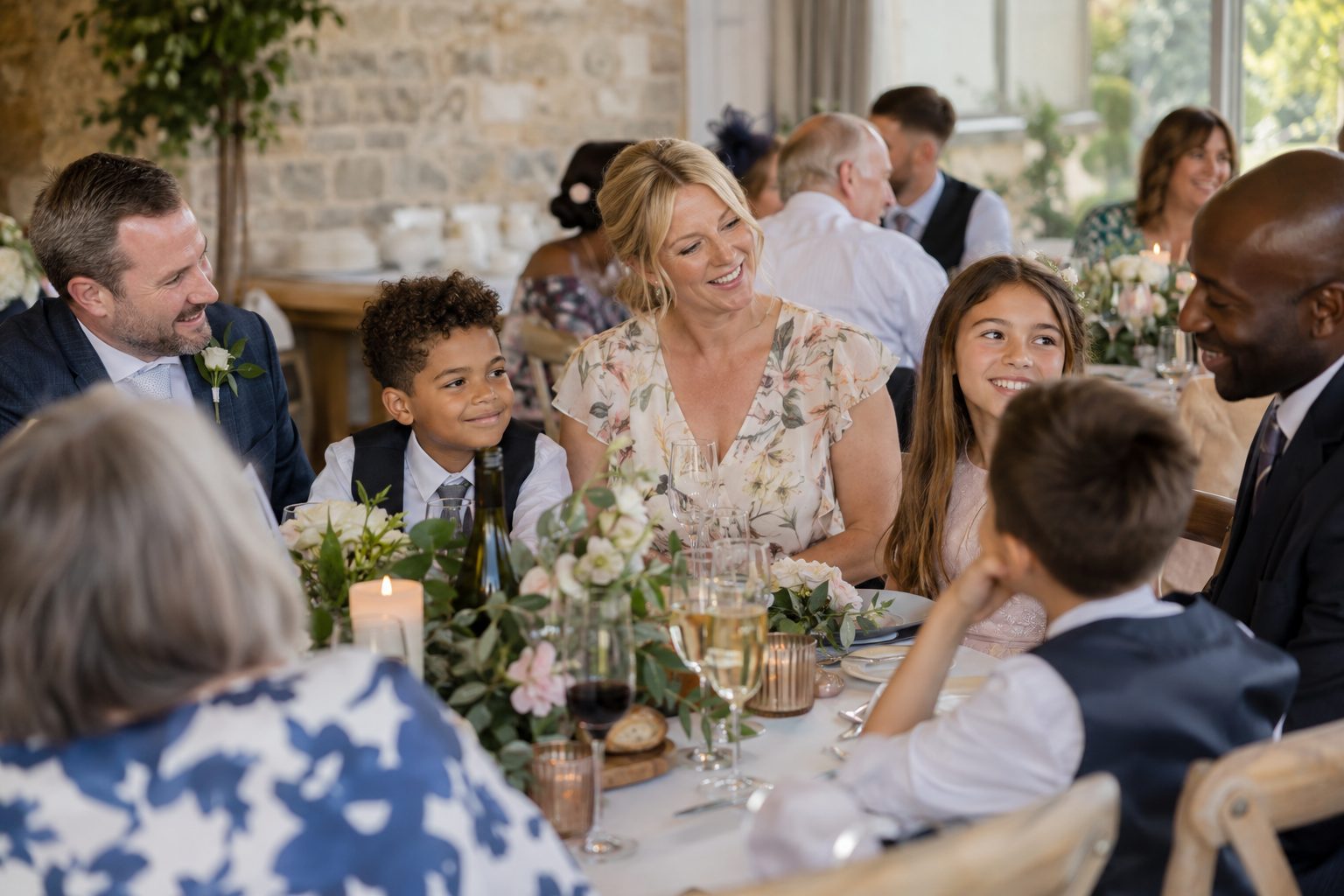
Give each guest at least one familiar or comfortable person where possible, then consider age, interests and language. Avoid creating an “awkward relatives” table by grouping people only because they are hard to place. A blended family may include close relationships across households that formal labels don't capture.
Ask how many people fit comfortably around each table once place settings and mobility aids are considered. The maximum number printed in a brochure can make conversation and service difficult. Use the room’s real dimensions.
Handle children and access separately
Seat children with the adults responsible for them unless those adults prefer a different arrangement. Check high chairs, pushchairs and whether a parent can leave the room easily if needed. Don't make a teenager supervise younger children simply because the tables look balanced.
Check routes to toilets, exits and service for people with access needs. Ask privately what helps rather than assuming an older guest wants quiet or a disabled guest wants the table by the door.
Communicate only what guests need
A public table plan should show names and table numbers, not notes about relationships, allergies or conflicts. Keep a private operational version for the caterer and coordinator. If a family member asks why they are not next to someone, a simple answer about conversation and room balance is enough. Don't explain another guest’s boundary without consent.
Brief the host or coordinator on any issue likely to arise, including a last-minute seat request. They can respond discreetly so you don't spend the meal moving place cards.
Leave room for the day to be human
People move around after dinner. Seating creates a comfortable starting point, not a permanent separation. If you can give everyone a dignified place to eat and talk, the plan has done its job. Focus on the relationships you want to nurture rather than proving that every family branch is equal on paper.
Finish the plan from actual RSVPs and resist a final round of speculative reshuffling. A calm, workable arrangement is better than a supposedly perfect one that exists only until the first guest stands up.
Test the room from a guest perspective
Look at the actual table positions, not just names. Check sightlines, access and whether anyone would be surprised to sit beside a former partner. Do not appoint a family intermediary without asking. A familiar friend or neutral host can help someone settle in. Keep a discreet alternative for a late absence without making family dynamics the centre of the room.
Keep planning
Keep planning
Related knowledge.
Explore the Planning Hub
Open resource →Seating PlansHow to Create a Wedding Seating Plan Without the Stress
Your seating plan is a way to help guests feel comfortable, not a test of how well you know everyone. Start with the room, confirmed names and genuine needs, then build tables that can talk.
Read article →Seating PlansHow Many People Should Sit at Each Wedding Table?
The right number depends on the actual tables, chairs and room, not a generic chart. Check the measured layout and leave everyone enough space to eat and move comfortably.
Read article →