Wedding Timeline
How Long Does a Typical UK Wedding Day Last?
There is no useful standard-length wedding day to chase. Plan the hours that give your guests comfort, your suppliers workable handovers and you enough time to enjoy the celebration.
Quick answer
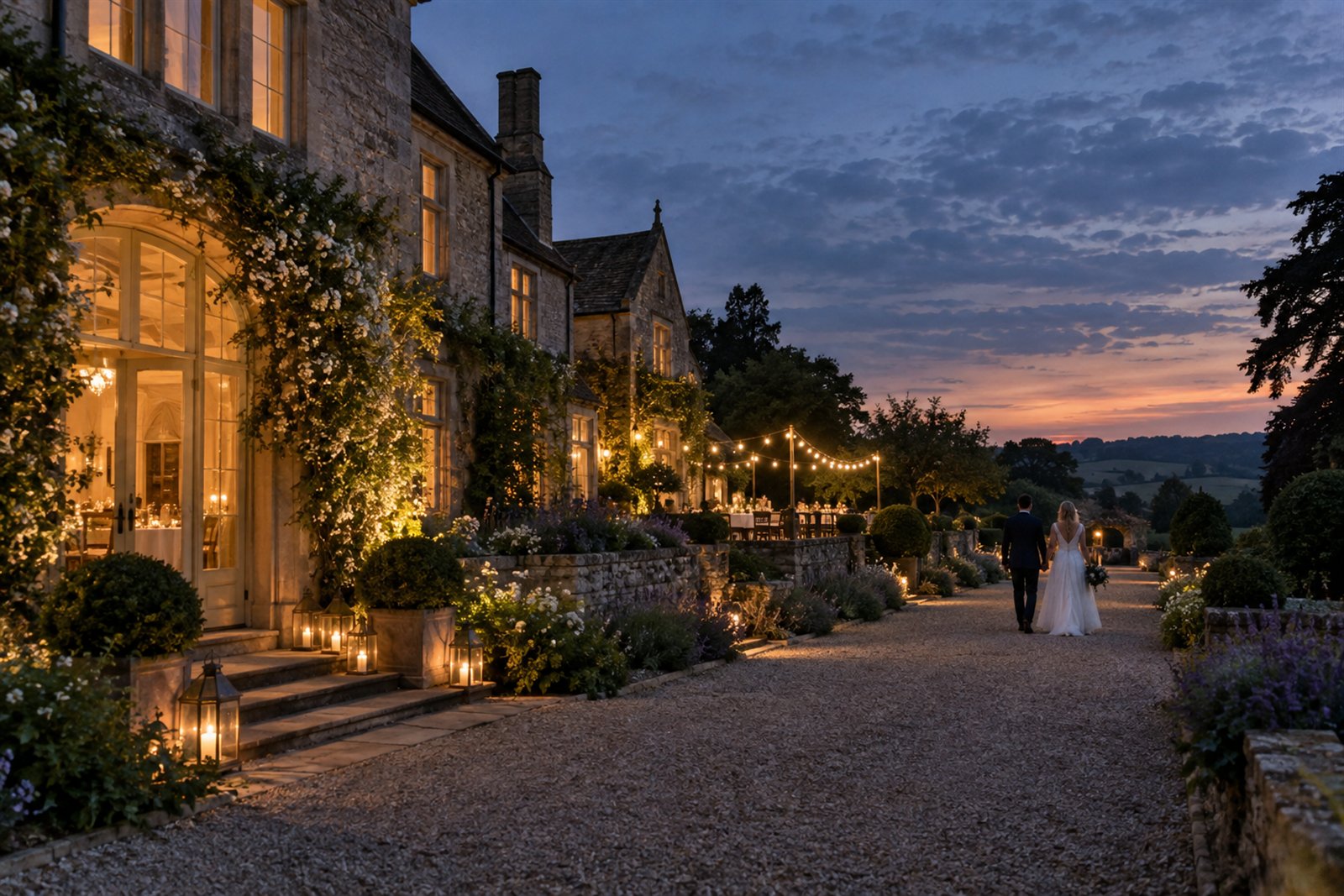
A UK wedding can fill most of a day, but not everyone is there for the same hours. Your preparations may start in the morning, daytime guests arrive before the ceremony, evening guests join later and suppliers need setup and pack-down time. Venue access, ceremony availability, meal service and licensing set the outside edges.
The day starts before guests arrive
Hair and make-up, dressing, supplier deliveries, room setup and photography can begin several hours before the ceremony. That doesn't mean every person should be present from the first appointment. Staggering starts protects energy and keeps rooms workable.
Eat a normal breakfast and plan a simple lunch or substantial snacks. A long day feels much longer when the wedding party has been awake since dawn without enough food or water.
The ceremony sets the public start
Guest arrival often begins thirty to forty-five minutes before the stated ceremony, depending on parking, venue access and seating. The ceremony itself may be concise or include readings, music, worship or cultural traditions. Check its likely length with the officiant.
Allow time for the exit and immediate congratulations. Even without formal confetti, guests naturally pause, greet one another and take photographs before moving on.
The reception has several distinct phases
A drinks reception lets guests talk and enjoy canapés while photographs happen and the venue prepares for the meal. The wedding breakfast then needs time for seating, courses, service pauses and perhaps speeches. Counting only the minutes people spend eating will make both phases look shorter than they are.
Room changes and guest movement add quiet minutes between the headline events. Good hosting makes those transitions clear without announcing every operational detail.
Evening celebrations need a realistic runway
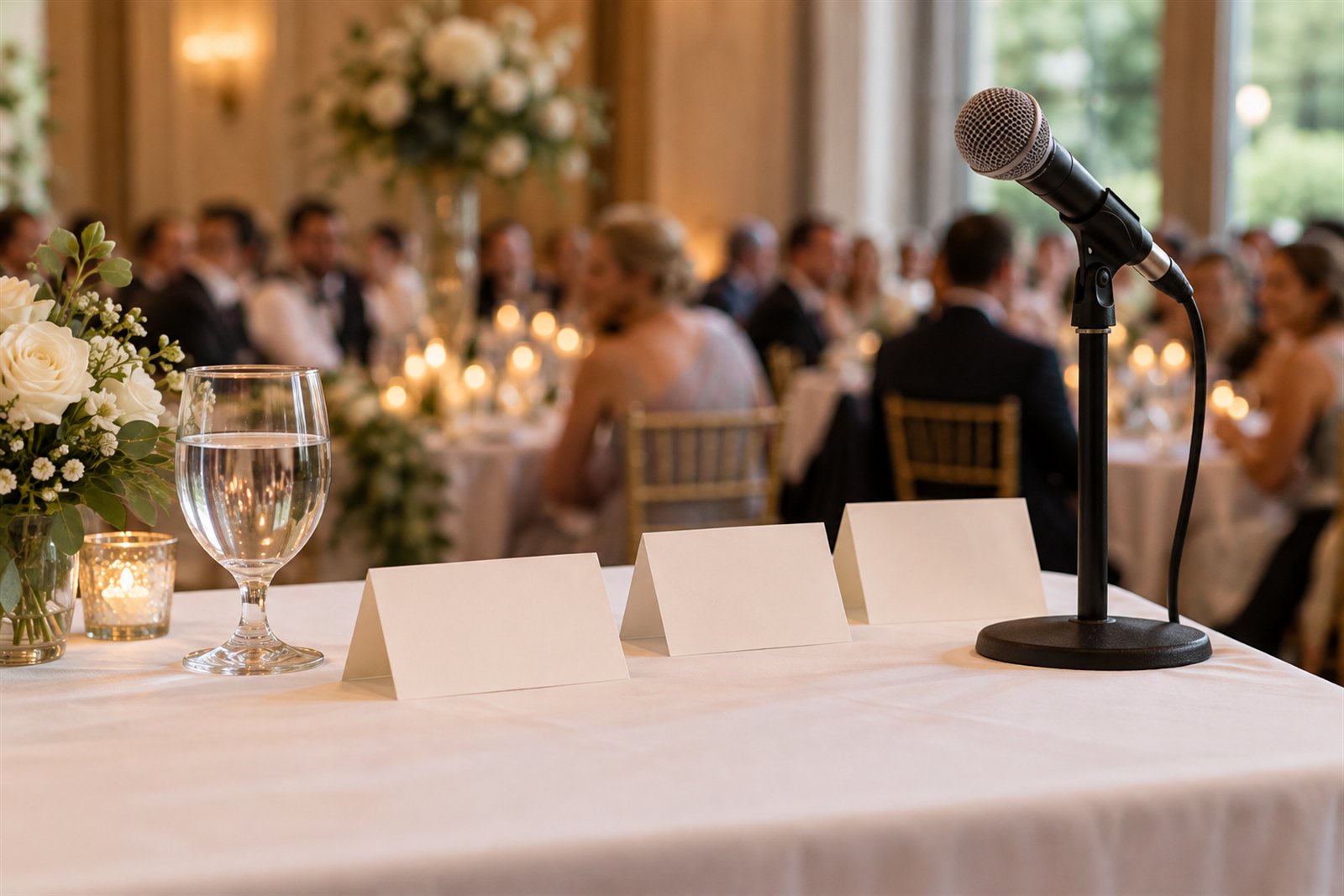
After dinner, a room may need to be cleared or reset before the first dance and live entertainment. Bands normally play agreed sets with breaks; DJs need setup and sound-check time. If the venue has a firm music finish, work backwards to protect the amount of dancing you want.
Evening food, cake service and transport can interrupt or support the flow. Place them deliberately rather than adding them to the same half-hour because it appears empty on paper.
Different guests may have different days
Day guests may be with you for ten hours or more, while evening guests attend a shorter celebration. Children, older relatives and guests with health needs may leave earlier. Offer clear transport information and avoid making a late exit feel compulsory.
If a religious ceremony ends well before the reception begins, tell guests what they can do in the gap. Food, somewhere to sit and usable facilities matter. Otherwise a long celebration can contain a surprisingly uncomfortable stretch of waiting.
Supplier hours are not all the same
Photographers and videographers may offer coverage for a set number of hours; musicians, stylists and coordinators have defined arrival, performance or support windows. Extending one part of the celebration can affect fees or mean choosing which moments are covered.
Ask about overtime terms before the wedding. Don't rely on a supplier being able to stay because the day started late; they may have staff transport, licensing or another booking to honour.
Longer is not automatically better
An earlier ceremony creates more time, but it can also require a punishing morning and a larger food and entertainment plan. A compact day can feel energetic and generous when transitions are smooth. Focus on pace, comfort and priorities rather than maximising hours.
Build short quiet moments for the couple. Ten minutes alone after the ceremony or before evening guests arrive can make a full day feel more present and less like a sequence of performances.
Define your own practical finish
Check last orders, music finish, guest departure and supplier collection times. They may be different. Arrange enough transport for the final wave and tell guests whether there is an informal continuation elsewhere.
Your day is long enough when the important moments have room, guests are looked after and everyone knows how the evening ends safely. Put that shape into one master timeline.
Keep planning
Keep planning
Related knowledge.
Explore the Planning Hub
Open resource →Wedding TimelineWedding Day Coordinator Checklist: Who Does What?
A useful run sheet says who owns each handover and what happens when a plan changes. Give your coordinator clear decisions to make, not just a long list of times.
Read article →Wedding TimelineHow to Keep Your Wedding Day Running on Time
A relaxed day can still run well. Give suppliers a realistic plan, protect the fixed moments and let one named person handle the little changes for you.
Read article →Wedding TimelineHow to Build a Wedding Day Timeline That Actually Works
Your timeline should help everyone know what happens next without making the day feel like a timed exam. Start with fixed commitments, allow for real transitions and leave space to enjoy it.
Read article →