Food & Drink
How Much Alcohol Do You Need for a Wedding?
Wondering how much to buy? Plan drinks around your guest list and the different parts of the day, with plenty of appealing alcohol-free choices and no pressure to over-order.
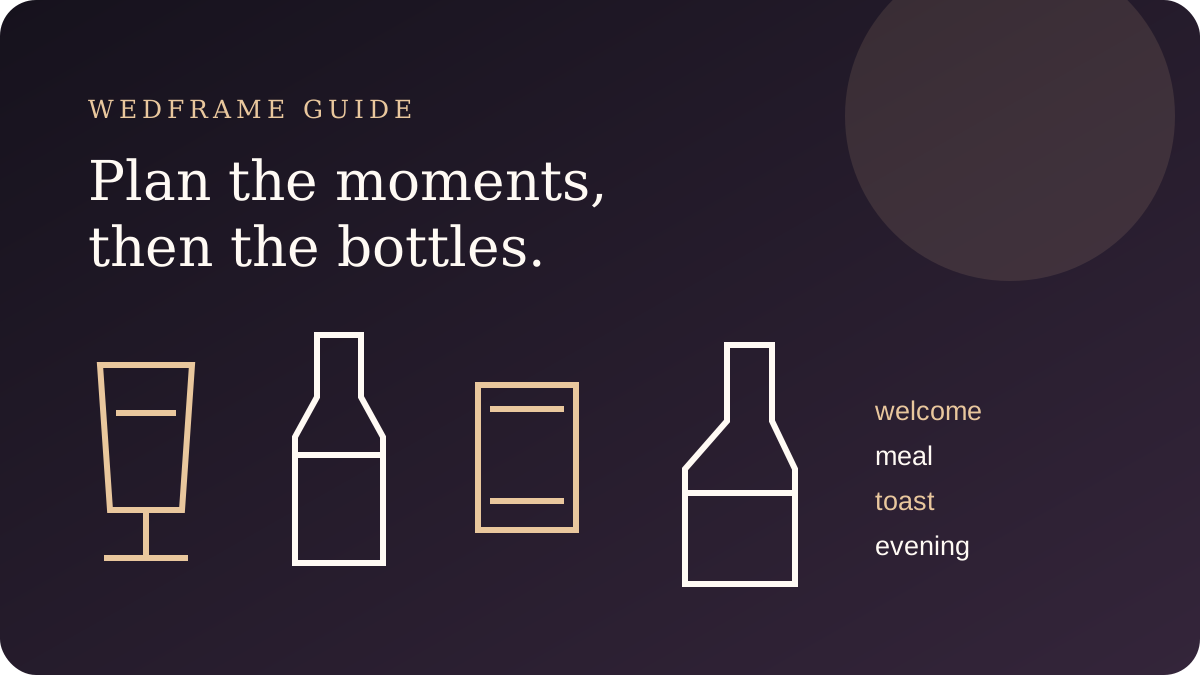
Drinks can feel like the wedding maths question with a costly wrong answer. Too little and the bar runs short; too much and you may be left with cases you cannot return. Start with the day you are actually planning, not a headline number per guest. Lunch with table wine and a long summer reception with a free evening bar need very different orders.
Start with the people, not the bottles
Start with the adult guest count, then separate people who are unlikely to drink alcohol: designated drivers, pregnant guests, people taking medication, guests who don't drink for religious or personal reasons, and anyone who simply prefers an alcohol-free option. Don't treat that group as an afterthought. Good sparkling alternatives, adult soft drinks, water and genuinely appealing zero-alcohol choices make the plan more welcoming for everyone.
You don't need to ask guests intrusive questions. Invitations can offer broad drink preferences, or your caterer can help you plan a balanced mix. If your crowd is mixed, avoid assuming every adult drinks at the same pace. The aim is enough choice and sensible availability, not a target for consumption.
Break the wedding into service periods
- Welcome drinks: usually a short, defined period while photographs and greetings happen.
- The meal: table wine, water and alcohol-free options should be considered together.
- The toast: decide whether everyone receives sparkling wine, chooses their own drink or uses an alcohol-free alternative.
- The evening: duration, bar type and the arrival of evening-only guests all change demand.
- Late-night and departure: water and soft drinks matter, particularly for drivers and anyone travelling.
A six-hour reception does not mean every guest takes a new alcoholic drink every hour. People eat, talk, dance and choose at their own pace. A long gap before the meal, though, may call for more welcome drinks and water. Estimate each service moment separately, then ask your venue or bar team whether your assumptions fit the way they serve.
Allow for the shape of the day
Warm weather may increase total fluid demand, but much of that should be chilled water and soft drinks rather than extra alcohol. In colder months, red wine, stout or warm alcohol-free drinks may be more popular than chilled beer or fizz. A formal seated meal tends to make wine service easier to predict; food stations, outdoor celebrations and roaming guests can make service less even.
Transport matters too. A rural venue with limited taxis may have more drivers. A city venue beside hotels and public transport may have fewer. Bar pricing changes behaviour: an open bar, a limited hosted tab and a fully paid bar create different patterns. Check what is included before ordering anything separately.
Plan the mix, not just the total
Build a manageable menu: wine or an alternative with the meal, something sparkling if you want a toast, perhaps beer, cider or a modest spirits range, plus mixers, soft drinks and easy-to-find water. You need not stock every possible preference. A shorter list is simpler to chill, display and serve, and usually leaves less behind.
- Ask the venue what the package already includes.
- Confirm bottle sizes, glass sizes and standard measures.
- Check corkage, licensing, storage, chilling and who may serve the drinks.
- Ask whether unopened stock can be returned and under what conditions.
- Keep a modest contingency rather than buying an extra supply for every category.
Use a calculator as a planning conversation
WedFrame's calculator separates drinking adults, non-drinking adults and children, then estimates common UK buying units from the reception length and chosen drink mix. Treat the result as a first draft. Your venue, caterer or mobile bar should refine it around serving style, licensing, storage and the experience of your guest list.
Before you place an order
Write one final schedule showing when each drink is served, who supplies it and who chills, opens and clears it. Check delivery windows and storage with the venue. If you're planning a sparkling toast, calculate that separately because pour size has a large effect on bottle numbers. A clear service plan is more valuable than a generous-looking pile of bottles.
Check the arithmetic again when the final attendance number is known. Reduce quantities for declined invitations rather than keeping the original estimate by habit, and update the balance if the guest mix has changed. If the supplier accepts returns, keep eligible bottles unopened and store the receipt where the person managing the next day can find it.
Give the service team the agreed numbers and a little context. Which bottles are for the meal or toast? When may they open contingency stock? Which alcohol-free choices should appear alongside the other drinks? That handover is much more useful than a stack of sealed cases with no instructions, and it protects your budget as well as your guests.
Plan the next step
Keep planning
Related knowledge.
Wedding Drinks Calculator
Open resource →Food & DrinkHow to Plan Alcohol-Free Wedding Drinks Guests Will Actually Enjoy
Give alcohol-free drinks the same thought as the rest of your bar. Guests should be able to order something appealing without explaining why they want it.
Read article →Food & DrinkWedding Cake Alternatives: Desserts That Suit Your Day
You can skip a tiered cake and still give everyone a lovely dessert. Decide when guests will eat it, how much is edible and who will serve it.
Read article →Food & DrinkEvening Wedding Food: What to Serve and How Much to Plan
Plan your evening food for the people who will actually be there and the meal they have already eaten. You do not need to order another full dinner for everyone.
Read article →