Food & Drink
Evening Wedding Food: What to Serve and How Much to Plan
Plan your evening food for the people who will actually be there and the meal they have already eaten. You do not need to order another full dinner for everyone.
Quick answer
Count your day guests and evening arrivals separately, then think about when the earlier meal ends and how long the party lasts. Ask your caterer what portions make sense and choose a service guests can reach without a huge queue. Include named dietary options and water. Evening guests should know whether food is coming, even if day guests need only a smaller snack.
Start with the guest timeline
A wedding breakfast at 4pm followed by dancing until midnight creates a different need from a late dinner that ends at 10pm. Mark when evening guests arrive, when the bar opens and when food will be served. Estimate who will still be present; children and early leavers may not take a portion, while people arriving after work may be hungry.
Don't simply add day and evening invitation totals. The caterer may have a sensible way to estimate demand based on the format, but ask what assumptions sit behind the number. Decide how much waste you can accept as a buffer rather than ordering a second meal for everyone by habit.
Tell evening guests what to expect
An evening invitation should state the arrival time, location and whether food will be served. This lets guests decide whether to eat before leaving home. Avoid describing a light snack as a substantial meal. Clear information is kinder than trying to make a modest offering sound grand.
If evening guests are joining after a long journey, consider serving food soon after they arrive. A buffet opened just as they are leaving will not do its job. If there are speeches or a first dance, place food where those moments will not create a queue that blocks the room.
Choose food that suits the room
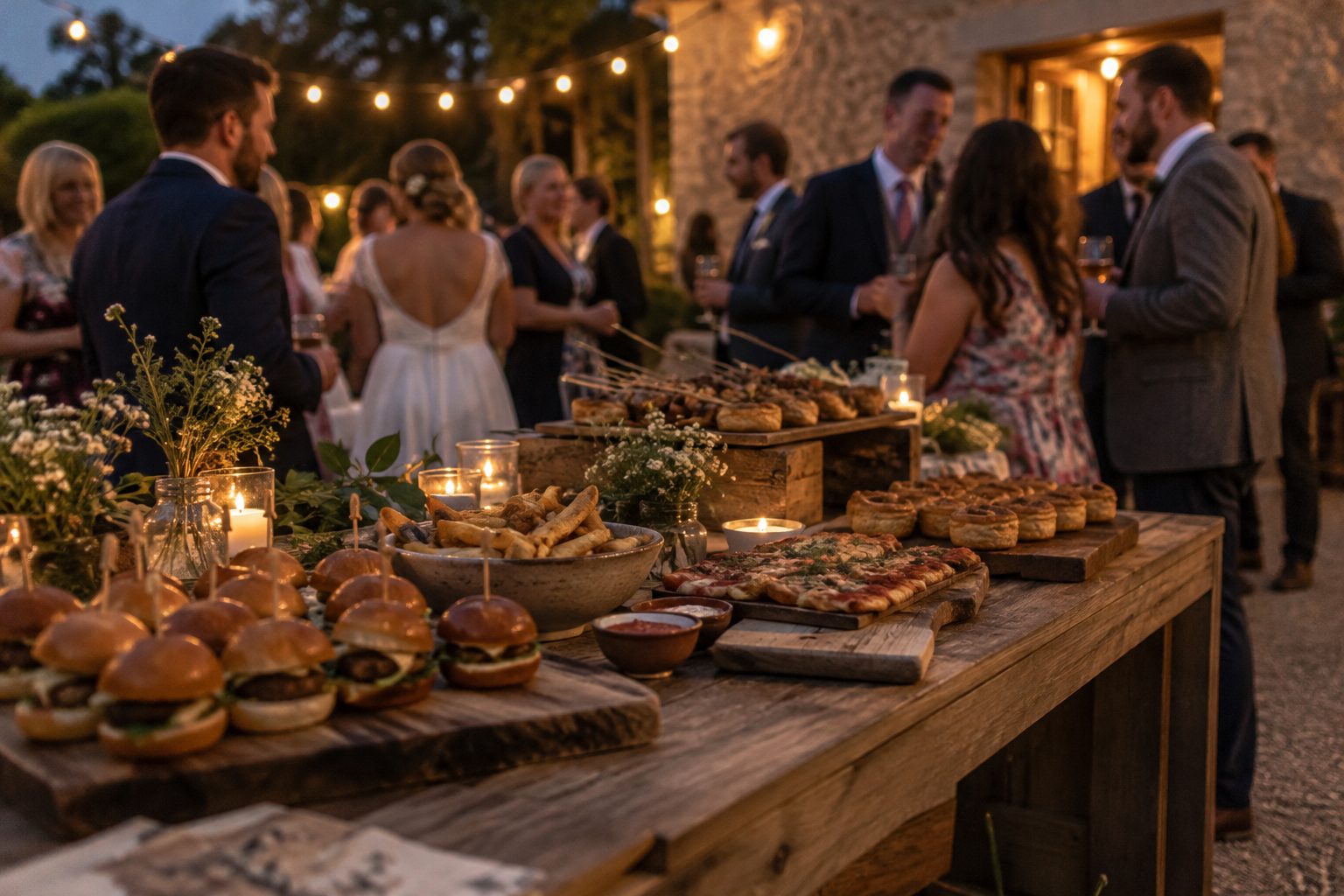
Pizza, hot rolls, pastries, grazing tables and street food need different equipment and service time. Ask where food is made, how it stays safely hot or cold and how people collect it. For a large group, several modest serving points may beat one impressive stall with a long line.
Check the venue’s rules for outside caterers, waste, power and late-night access. A food truck needs a safe place to park and serve; a buffet needs table space and people to replenish it. Don't book a trend before checking the site.
Handle dietary needs properly
Evening guests may have allergies or dietary requirements that were not on the day-meal list. Ask about them in the RSVP process and give the information to the evening caterer. Label food accurately and explain any cross-contact risk rather than guessing. Keep suitable alternatives available for people who arrive later, not only at the moment the buffet opens.
If children are attending, think about access and portions rather than assuming they will eat whatever is left. Think about guests who can't stand in a long queue; staff can help serve them discreetly.
Budget the entire service
Ask for food, staff, equipment, delivery, travel, power, cleanup, VAT and service charges in one quote. A cheap per-person item can become expensive if it needs a separate kitchen or minimum booking fee. Compare it with offering a slightly more substantial main meal and less evening food.
Ask whether leftovers may safely be taken away and who provides containers. Do not promise leftovers as the only food for evening arrivals; the caterer cannot know exactly what will remain.
Make timing flexible but controlled
Tell the caterer when speeches, band sets or venue room changes happen. If the ceremony runs late, decide who can shift evening service and by how much. A coordinator can make that call if the contract and kitchen allow it. Food served while guests are elsewhere may go untouched.
Put water and alcohol-free drinks near food. A late service can help people pace an evening, but it doesn't replace responsible bar planning. Ask staff how they will manage any food that must stay chilled or hot during a delay.
Choose a generous fit, not a magic number
There is no universal rule that every guest needs one slice, two rolls or a full plate. Use the actual meal and attendance pattern, then sense-check the caterer’s estimate. A simple choice served well is usually more useful than many options that run out unevenly.
After the event, guests are more likely to remember feeling welcome than the exact number of trays. Clear invitations, accessible service and food at the right time create that feeling without forcing waste into the budget.
Use the actual evening guest count
Tell the caterer how many people ate earlier and how many arrive later. Match portions to dinner and dancing times rather than total invitations. Count dietary meals and agree labels, service and clearing with the venue. Food works best when guests still want it and transport home has not already begun.
Keep planning
Keep planning
Related knowledge.
Wedding Drinks Calculator
Open resource →Food & DrinkHow to Plan Alcohol-Free Wedding Drinks Guests Will Actually Enjoy
Give alcohol-free drinks the same thought as the rest of your bar. Guests should be able to order something appealing without explaining why they want it.
Read article →Food & DrinkWedding Cake Alternatives: Desserts That Suit Your Day
You can skip a tiered cake and still give everyone a lovely dessert. Decide when guests will eat it, how much is edible and who will serve it.
Read article →Food & DrinkHow to Plan a Wedding Breakfast Menu Your Guests Will Enjoy
Choose food that your guests can enjoy and your caterer can serve well at scale. The best sample dish is not much help if the room cannot receive it safely and on time.
Read article →