Food & Drink
Wedding Cake Alternatives: Desserts That Suit Your Day
You can skip a tiered cake and still give everyone a lovely dessert. Decide when guests will eat it, how much is edible and who will serve it.
Quick answer
A plated dessert, small cutting cake, pastries or dessert table can all work. Decide whether it replaces dessert at the meal or appears later, then ask about portions, storage and service. Give guests with dietary needs clear ingredient information. Choose something you enjoy that can be served without a queue or a mountain of waste.
Decide what job dessert is doing
If the wedding breakfast already includes a substantial pudding, a large cake may be an extra rather than the main dessert. If cake is the only sweet course, portions and service become more important. Ask whether you want a ceremonial cutting moment, food for guests, something to take home or simply a visual focal point. One option doesn't have to do all four jobs.
This distinction helps avoid ordering too much. A small cake for a photograph can sit beside another dessert, but tell the caterer which part will be served and when. Don't rely on guests eating a second full sweet course without checking the timeline.
Compare formats honestly
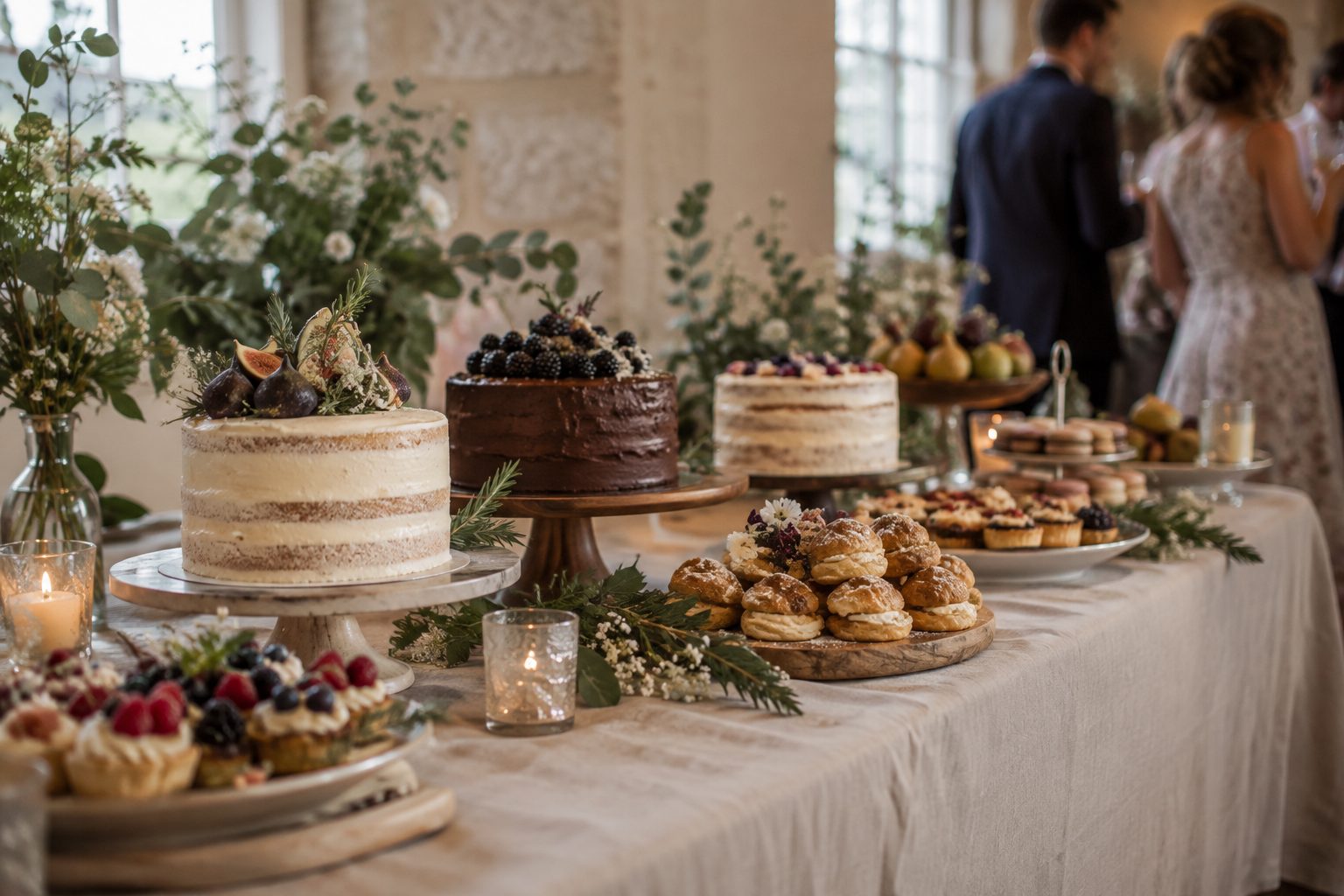
A dessert table offers variety but needs display space, replenishment and staff to keep it tidy. Mini pastries may be easy to pass around but less suitable as the only pudding. A plated dessert can simplify portions and dietary service but removes the casual grazing feel. Think about the room and meal style before choosing from a photograph.
If you want an alternative such as cheese, fruit or a regional speciality, ask how it will be portioned and held safely. The answer may be a combination: a small cutting cake plus a well-served main dessert.
Count the right guests and portions
Count people expected when dessert appears, not everyone invited. Children, evening arrivals and guests who skip pudding change demand. Ask about realistic serving sizes and allow choice without expecting everyone to take one of everything.
If guests are taking cake home, count packaging and staff time separately. A slice waiting on a table in a warm room may not be the best takeaway plan.
Check storage and food safety
Some desserts need refrigeration, a shaded location or service soon after delivery. Ask who receives the order, where it's stored and whether the venue allows an outside baker. A delicate display may not survive several hours near a window or dance floor. Find out who cuts, plates and clears it; bakers and caterers don't automatically include the same tasks.
For allergies, use the supplier’s accurate ingredient and cross-contact information. A gluten-free sign or vegan label should mean something specific and reliable. Don't ask guests to guess from appearance.
Cost the complete choice
Compare the total including design, delivery, display stands, hire deposits, cutting, service, plates and leftovers. A cheaper collection of separate desserts can become expensive when each supplier has a minimum order or delivery fee. A venue’s included pudding may leave budget for a smaller personal cake.
Pick a flavour and presentation you would still like without a wedding tradition attached. A spectacular display that nobody has room to eat is not much of a dessert plan.
Fit dessert into the timetable
Decide whether the cutting happens before dessert, after speeches or later with evening food. Tell the photographer if the moment matters. Allow staff to move or cut the cake without blocking a room turnaround. If guests need to choose from a table, provide a clear opening time and enough space for a queue.
If there is no cutting, that is fine. A ceremonial moment is optional; a dessert service still needs planning. The event can move smoothly without an announcement for every plate.
Make the alternative feel intentional
A simple display can be lovely when it suits the venue and is kept fresh. Use labels that guests can read, with accurate dietary information, and avoid arranging food only for a photograph. If you want a family recipe or cultural dessert, talk to the caterer about scale and safe service rather than assuming a relative can cook for a crowd.
Cake or no cake, the decision is successful when dessert tastes good, guests know what is available and nobody is left managing a mountain of leftovers.
Check the serving plan before choosing a display
Tell guests when they may take dessert and decide whether it replaces the meal’s pudding, accompanies evening food or is mainly decorative. Ask how long items can safely sit out, who replenishes them and what labels or cross-contact controls are needed. Display pieces may be larger than edible portions, so ask for a serving diagram.
Keep planning
Keep planning
Related knowledge.
Wedding Drinks Calculator
Open resource →Food & DrinkHow to Plan Alcohol-Free Wedding Drinks Guests Will Actually Enjoy
Give alcohol-free drinks the same thought as the rest of your bar. Guests should be able to order something appealing without explaining why they want it.
Read article →Food & DrinkEvening Wedding Food: What to Serve and How Much to Plan
Plan your evening food for the people who will actually be there and the meal they have already eaten. You do not need to order another full dinner for everyone.
Read article →Food & DrinkHow to Plan a Wedding Breakfast Menu Your Guests Will Enjoy
Choose food that your guests can enjoy and your caterer can serve well at scale. The best sample dish is not much help if the room cannot receive it safely and on time.
Read article →