Wedding Guests
How to Plan an Accessible and Inclusive Wedding
An inclusive wedding is built from practical choices across the whole day, not from ticking an accessibility box. Ask guests what helps, test the routes and give everyone clear information.
Quick answer
Ask guests privately what would help them take part, then follow the whole journey from invitation and travel to ceremony, meal, toilets and leaving. Visit the venue rather than relying on an “accessible” label, agree workable adjustments with suppliers and explain arrangements accurately. In Great Britain, the Equality Act 2010 places duties on service providers; Northern Ireland has a separate disability-discrimination framework. Plan with people, not as their medical gatekeeper.
Ask without demanding disclosure
An invitation or RSVP can say, “Is there anything we can arrange to help you take part comfortably?” and provide a private contact route. Some people will want to describe step-free access, hearing support, a quiet area or dietary needs; others will not. Write down only what is needed and share it only with the people providing that support.
Don't assume age, appearance or a diagnosis tells you what someone needs. Offer choices without making one guest responsible for educating the whole wedding party. If a request is unclear, ask about the practical barrier rather than seeking medical details.
Walk the full venue route
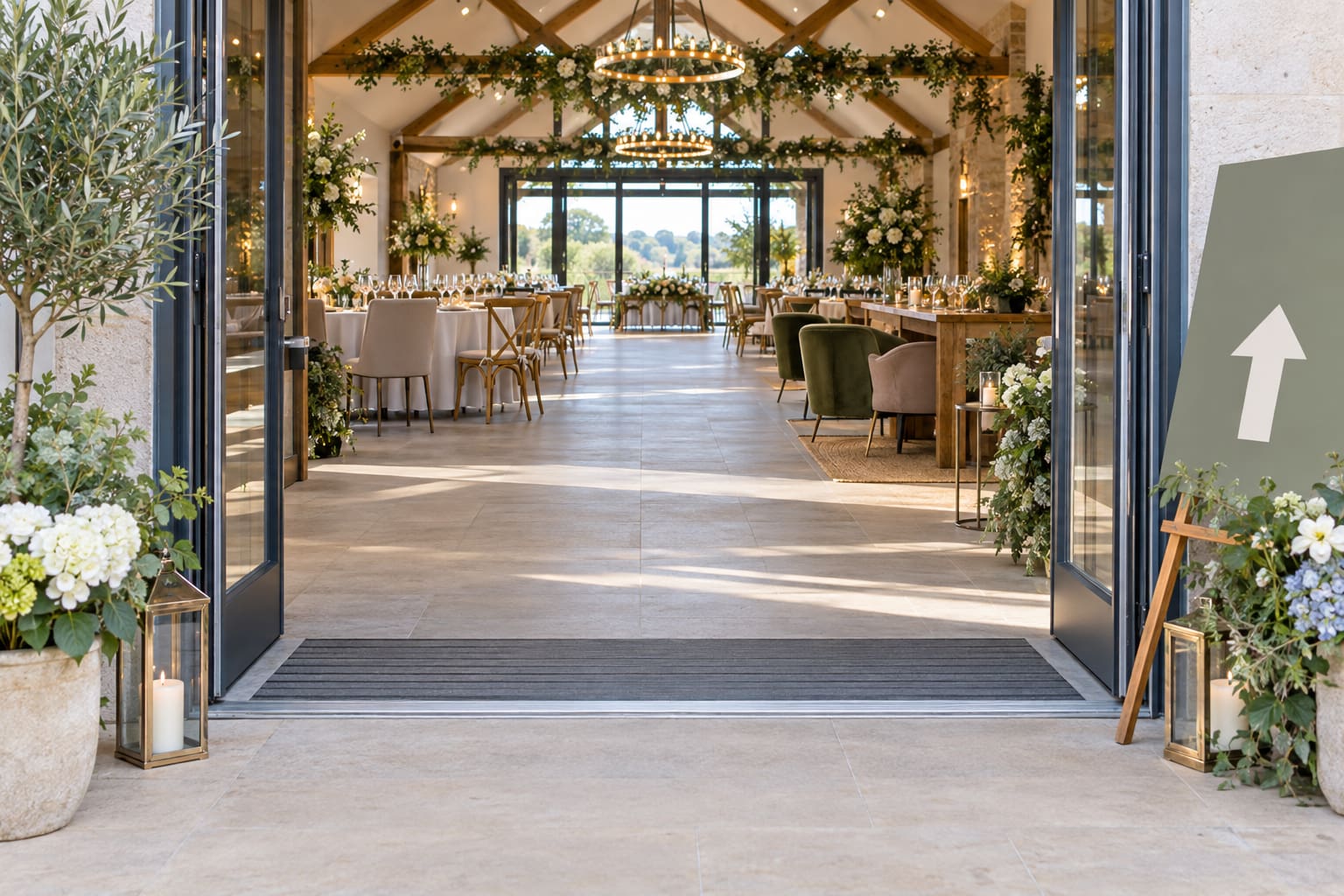
Check parking and drop-off, the entrance threshold, lifts, door widths, surface changes, toilets, ceremony sightlines, meal space and an exit after dark. An accessible front door is not enough if the dining room is upstairs or the only suitable toilet is locked during evening service.
Ask the venue what adjustments it can make and who will own them on the day. Great Britain service providers must consider reasonable adjustments under the Equality Act; in Northern Ireland the relevant disability-discrimination law is different. Legal duties don't replace a practical site visit or an agreed written plan.
Design a ceremony people can follow
Could everyone hear and see the ceremony comfortably? Ask about microphones, lighting, captions or interpretation where needed, and offer an order of service in a usable format. Someone who lip-reads needs a clear view; someone with low vision may prefer large print or a spoken description.
Ask the officiant what is permitted in the legal ceremony and how any requested adjustment will be arranged. Leave room for carers or companions where appropriate without isolating people at the back. Check that camera positions and floral structures don't block sightlines.
Make food and seating workable
Collect dietary requirements by named guest and pass exact wording to the caterer. Ask how allergy information is controlled in preparation and service; don't promise a kitchen is allergen-free unless the professional confirms it. Give people a private way to discuss complex needs.
Seat guests where they can reach the route, table, toilet and quiet space they need. Leave turning room and a sensible service path. Avoid publishing health or disability information on a seating chart. Ask before moving someone’s companion, interpreter or mobility equipment away from them.
Think about time, sensory load and rest
A long ceremony-to-meal gap, loud sound system or flashing lights can create barriers. Give guests the likely schedule and make a quiet room or lower-stimulation area available if the venue can support one. Check that it's actually quiet, accessible and not a supplier store.
Let guests sit during photographs, leave early or rejoin without making it a fuss. Give your photographer a short priority list so no one has to stand for an hour. If the music gets louder later, tell guests when and where a quieter space is available.
Plan travel and communication
Share exact addresses, entrance details, parking, public-transport options and whether arranged vehicles have wheelchair space or step access. A standard coach is not automatically accessible. Check with operators, including return journeys and late-night collection.
Make essential information readable without a specific app or device. Give a named contact who can answer questions privately, and tell that person what they are authorised to arrange. Test the route under the weather and lighting conditions likely on the day.
Include people without token gestures
Use names and pronouns correctly, avoid assuming every family follows a traditional structure, and check how people wish to be introduced. Give participants a genuine choice about readings, procession, photographs and speeches rather than assigning symbolic roles to demonstrate inclusivity.
A useful final test is to imagine each invited person moving from home to the ceremony, meal and home again. Where the plan depends on someone quietly improvising, agree a better option. Inclusion is often invisible when it works: people can simply enjoy the wedding.
Write an access note guests can use
Instead of “fully accessible”, give concrete facts: which entrance has no steps, where the nearest drop-off is, whether a lift serves the meal room and whom to contact about seating or communication support. Describe uneven outdoor paths or a change of floor honestly. A guest can then decide what works for them and ask a specific question.
Have the venue confirm your access note before it goes out. Where a barrier cannot be removed, agree a real alternative with the guest and supplier rather than advertising a plan nobody has tested. Recheck it if rain changes the route.
Sources and references
Keep planning
Keep planning
Related knowledge.
Explore the Planning Hub
Open resource →Wedding GuestsHow to Have a Small Wedding Without Upsetting Your Family
A small wedding may disappoint someone you love. You can still choose it kindly: agree your guest-list rule together, explain it clearly and resist promising a second event you do not want.
Read article →