Food & Drink
How to Plan a Wedding When Some Guests Have Dietary Requirements
Ask your guests privately what they need, give that information to the right catering staff and agree how each meal reaches the right person. Nobody needs their health announced to the room.
Quick answer
Ask each named guest privately about allergies and dietary requirements, keeping their own wording. Share the answer only with your venue, caterer and staff who need it. Check what the kitchen can safely provide and how the correct plate will reach the correct guest. Do not promise an allergen-free environment unless the caterer has explicitly confirmed it can deliver one.
Ask a clear, open question
Use the RSVP to invite requirements rather than a narrow list that misses an issue. Keep attendance, menu choice and dietary information attached to the named individual, especially within households.
Provide a private contact route for guests who need to explain cross-contamination risk, religious practice or a complex medical diet.
Don't interpret the answer
Pass the guest’s description accurately to the caterer. “Dairy-free”, milk allergy and lactose intolerance are not interchangeable, and a couple shouldn't make clinical judgements.
If an answer needs clarification, you can connect the guest with the professional preparing the food. Ask only what helps that conversation, and keep personal health details out of group chats.
Test the caterer’s process
Ask how requirements are recorded, ingredients checked, cross-contact reduced, plates identified and service staff briefed. Understand any limitations of the kitchen or shared equipment.
If the caterer can't safely meet a serious requirement, discuss an agreed sealed meal or another suitable option with the guest rather than improvising.
Include every food moment
Canapés, welcome drinks, the main meal, cake, evening food and next-day breakfast may come from different suppliers. A safe main course doesn't make the whole event safe.
Ask the catering team to check sauces, garnishes, shared platters and even alcohol-free drinks, not just the main dish. Ingredient and supplier details should be available to the people serving the meal.
Serve discreetly and reliably
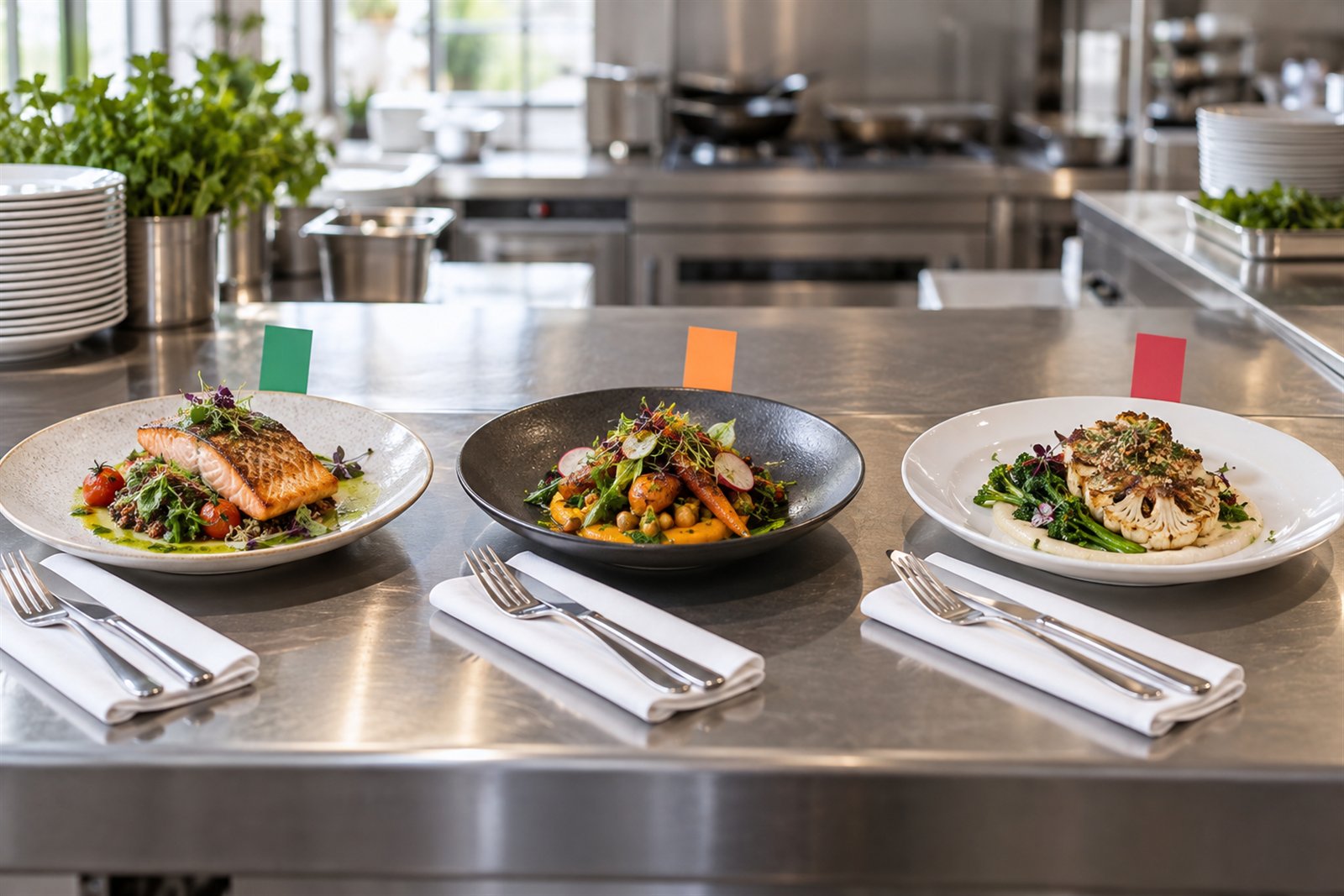
Use a private coded service plan or direct confirmation rather than a conspicuous sign on the table. Brief staff to verify the person and meal without asking the whole table to identify an allergy.
Seat planning can help service, but don't publish health details on the public table plan. The coordinator should know whom to contact if anything is uncertain.
Check changes at the final deadline
Reconcile the RSVP list, seating plan and caterer schedule by name. Late guest additions need explicit catering approval before you promise they can be accommodated.
A guest with prescribed emergency medication should follow their own medical guidance about keeping it available. Your wedding plan can support safe service, but it is not a substitute for a clinician’s advice.
Keep planning
Keep planning
Related knowledge.
Wedding Drinks Calculator
Open resource →Food & DrinkHow to Plan Alcohol-Free Wedding Drinks Guests Will Actually Enjoy
Give alcohol-free drinks the same thought as the rest of your bar. Guests should be able to order something appealing without explaining why they want it.
Read article →Food & DrinkWedding Cake Alternatives: Desserts That Suit Your Day
You can skip a tiered cake and still give everyone a lovely dessert. Decide when guests will eat it, how much is edible and who will serve it.
Read article →Food & DrinkEvening Wedding Food: What to Serve and How Much to Plan
Plan your evening food for the people who will actually be there and the meal they have already eaten. You do not need to order another full dinner for everyone.
Read article →