Legal Weddings
Registry Office Weddings in the UK: Costs, Rules and What to Expect
A register-office wedding can be simple and personal, but the process and price depend on your UK nation and local authority. Ask the office for its current rules and a complete itemised quote.
Quick answer
Choose the registration area and room, then ask that office about notice, dates, the ceremony and every fee. A legal ceremony at the register office differs from having a registrar attend another venue. Notice and ceremony charges may sit alongside room hire, extra time or certificates. England and Wales, Scotland and Northern Ireland have different rules, so follow the authority where you will marry.
What a register-office wedding includes
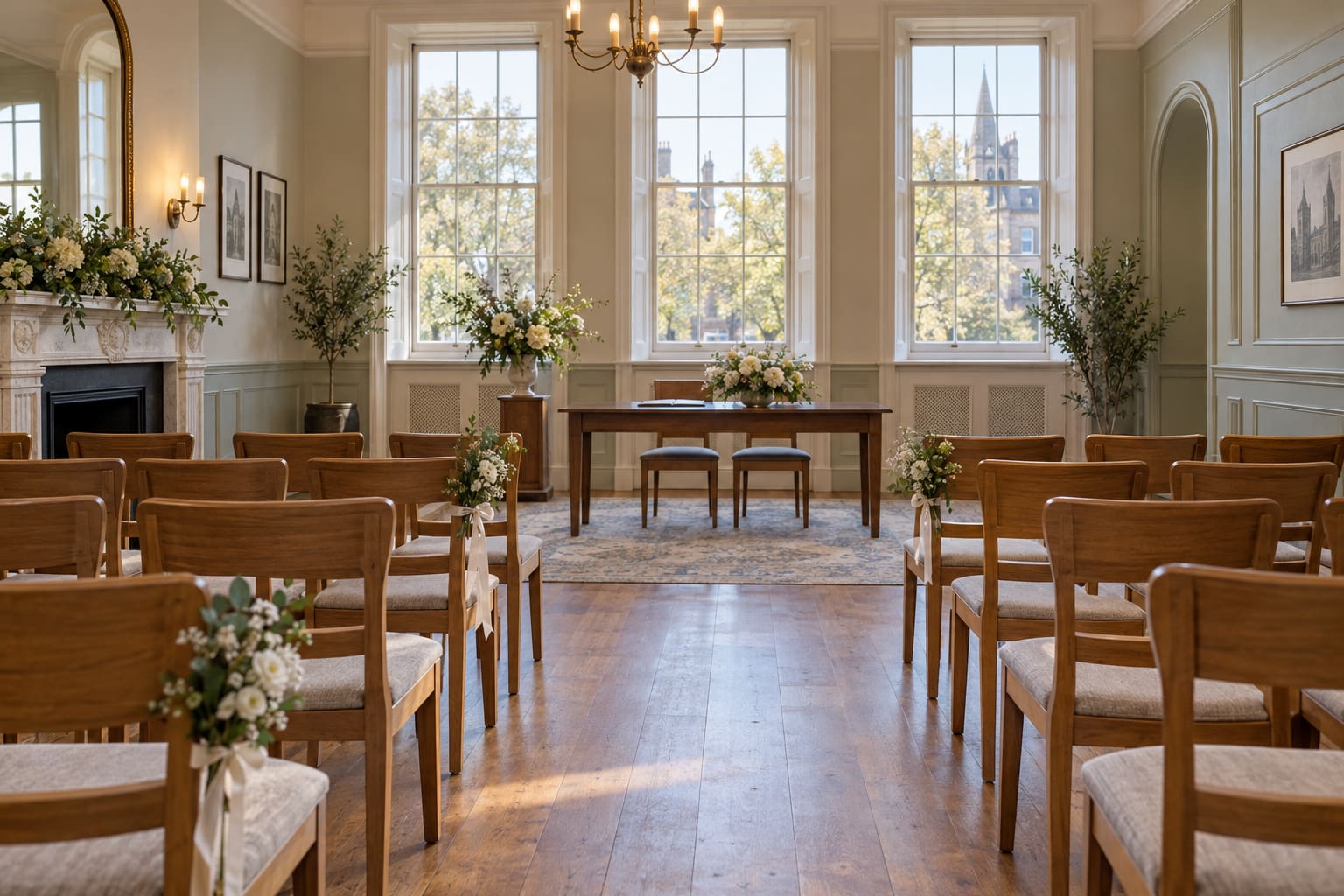
At its simplest, a register-office wedding is the legal civil ceremony with the couple, an authorised registrar or officiant as required, and witnesses. A modest statutory room may have limited seats and fixed times; a council may also offer larger rooms and enhanced ceremonies at different prices. Ask to see the exact room and guest limit before assuming the brochure photographs show the option you have booked.
Civil ceremony wording and music are subject to local rules. In England and Wales, a civil ceremony must not contain religious material, and two witnesses are required. Ask about photography, arrival times, accessible entry, language or communication support and whether guests can move between the room and a later meal.
England and Wales: notice and ceremony
You generally give notice at the register office for the district where you live, after living there for the required period. Government guidance says to give notice at least 29 days before the ceremony, and the marriage must take place within 12 months of notice. Some immigration cases have a longer investigation period; Anglican weddings can follow different preliminaries. Check your personal circumstances with the registrar.
As checked in October 2026, standard notice is £46.50 per person and the statutory registrar charge for a register-office ceremony is £62. That is not the whole wedding bill. A council may charge for room hire, a preferred time, certificates or changes; attendance at approved premises is priced differently. Ask for the current written schedule before paying.
Scotland: use the local registrar
Scotland allows civil, religious and belief marriages, but a civil marriage conducted by a registrar is the relevant route for a register-office wedding. Each party submits marriage notice forms and supporting documents to the registrar for the district where the ceremony will happen. National Records of Scotland advises giving plenty of time; check its current minimum and recommended notice window when you set a date.
The local council sets out available rooms, ceremony charges and how certificates are ordered. Don't copy England and Wales fees or witness wording into a Scottish booking. If you're considering a belief or religious celebrant instead, verify that the person is authorised for your particular legal ceremony.
Northern Ireland: notice and district charges
In Northern Ireland, both people send marriage notice forms and documents to the registrar for the district where they will marry. Official guidance says notice must be within the 12 months before the wedding and recommends allowing about eight weeks; the minimum is 28 days and leaving it that late risks postponement. Different documents or extra time can apply in particular cases.
At the October 2026 check, nidirect lists £22 per notice form and £36 for solemnisation by a registrar. The district council adds room-hire or approved-venue charges. Ask that council for the final total and for any conditions on guest numbers, music, photography and arrival.
Build an honest cost comparison
Request a quote with both notice fees, the ceremony, room, certificates, weekend premium if any, deposits and rearrangement or cancellation charges. Compare the same guest capacity and time. A low statutory fee does not make every Saturday ceremony room equally priced.
Then add the meal or reception, transport between locations, outfits and photographs only if you want them. Some couples choose a small legal ceremony and a later celebrant-led gathering. That can be lovely, but it's two bookings with two sets of costs, not a free alternative to the legal step.
On the day and afterwards
Follow the registrar’s instructions about arrival, identity documents and witnesses. Give guests the precise address and room name; large civic buildings may have several entrances. Keep a short, realistic interval before any restaurant booking or travel and check where photographs are permitted.
After the legal ceremony, the signed schedule or documents are processed under the applicable registration system. Ask when and how to order a marriage certificate; don't assume a keepsake given on the day is the official certificate. Keep copies of your booking correspondence and final invoice.
Before you pay a deposit
Ask the register office to confirm in writing the room, date, arrival time, guest capacity, total price and what happens if you need to move or cancel. Ask whether a booking fee is separate from the statutory notice fee and whether notice must be given again if the venue changes. This is particularly important if you're booking a meal elsewhere immediately afterwards.
Talk to the office early about step-free access, hearing support or an interpreter if anyone needs them. A short civil ceremony still deserves to be comfortable and understandable for the people in it.
Sources and references
Keep planning
Keep planning