Wedding Flowers
Seasonal Wedding Flowers in the UK: How to Brief Your Florist
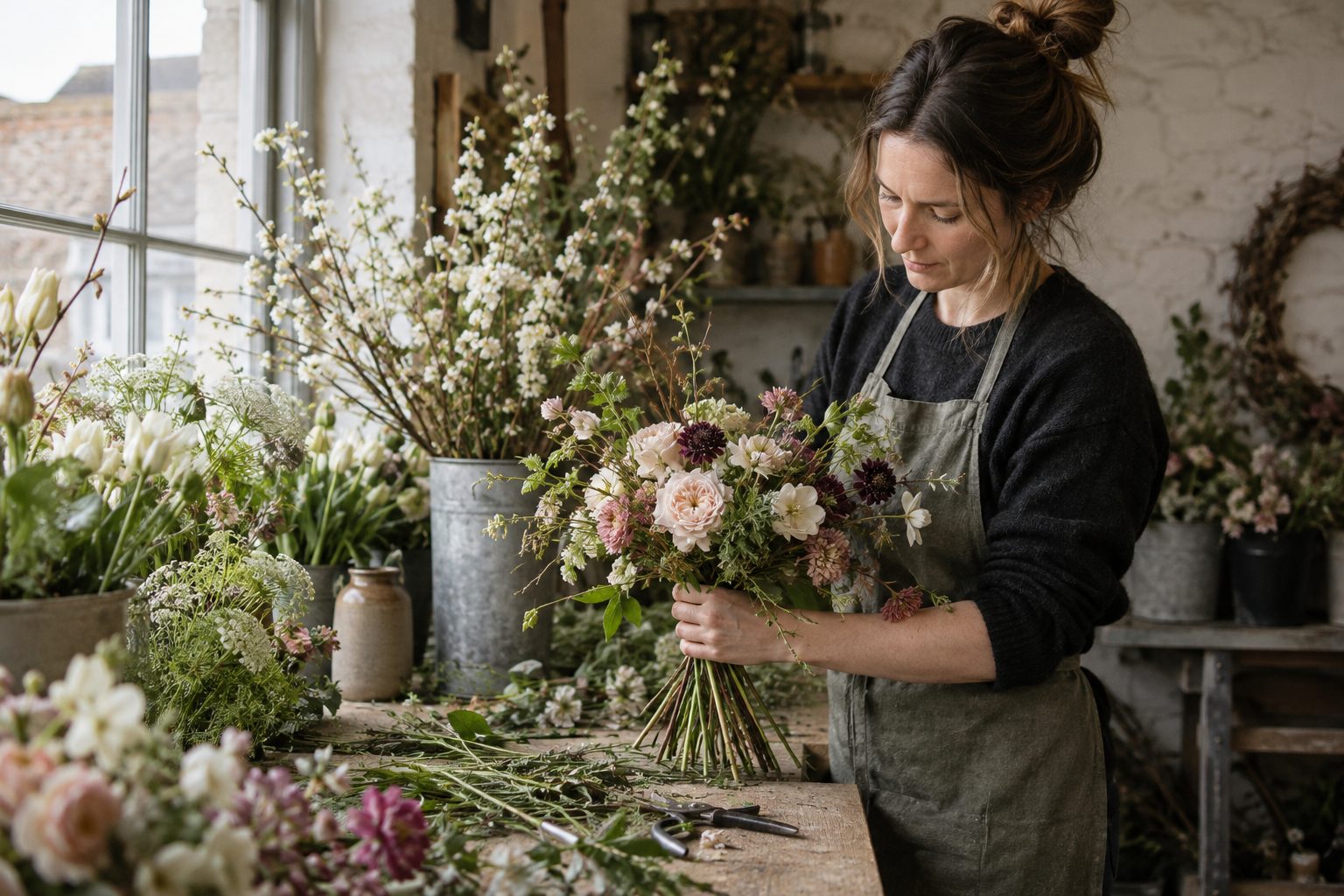
Give your florist the feeling you want, not a rigid shopping list of blooms. Colour, shape, purpose and a sensible substitution plan make a stronger seasonal brief.
Quick answer
Tell the florist your date, venue, budget and where flowers will be seen. Show examples of mood, colour and shape, then ask what is likely to be available and what could replace a missing stem. Seasonal supply still depends on weather and growers. Spend on pieces that matter to you and plan setup, reuse and removal.
Start with the role of the flowers
Make a list of personal flowers, ceremony focal points and reception arrangements you genuinely need. A bouquet may be important to you; a large installation may not be. Think about which pieces can move between locations without being damaged or delaying the timeline. Ask the venue where flowers may be placed and who will move them.
Share the room’s colours and scale with the florist. A low arrangement that allows conversation can work better than a dramatic centrepiece that blocks faces. Think about guests with allergies or scent sensitivities too, particularly in small indoor rooms.
Use season as a guide, not a guarantee
UK growing seasons vary by region and weather. A flower that is often available in June may be early or late in a particular year. Ask your florist which locally grown options are realistic for your date and which imported flowers may be used. Avoid describing a bouquet as sustainable solely because it looks like a meadow.
Talk about substitutions in advance: what colours, textures and overall shape must remain, and which specific stems can change? A flexible brief protects the design when supply changes. Your florist should be able to explain how they will keep the look coherent.
Bring useful inspiration
Bring a few pictures and say what you like: loose shape, height, colour, greenery or atmosphere. Photographs can hide scale and cost, so ask what a similar piece would take in your venue. A flower from another climate or season is inspiration, not a purchase order.
Tell the florist about outfits and ceremony backdrop without demanding an exact colour match. Natural materials vary. If flowers have family or cultural meaning, explain that clearly so they can be prioritised and handled respectfully.
Budget by impact
Ask for a written quote showing design, stems or broad composition, containers, delivery, installation, moving pieces, collection and any hire deposits. Compare the total with your budget. If it's too high, reduce the number or size of installations before asking for a cheaper imitation of every item.
Focus spending where guests will actually see flowers: the ceremony, personal arrangements or dining tables. A small, well-placed design can do more than flowers spread thinly across every corridor. Ask whether the venue’s existing greenery or decoration can be used.
Plan installation and movement
Check when the florist can access the venue, who carries arrangements between spaces and whether water or refrigeration is available. A ceremony arch may not fit through a dining-room door. If flowers must move while guests are present, assign a route and a person; don't assume venue staff will do it.
Ask how wind, heat or rain will affect outside arrangements. Delicate flowers may fade early and tall structures may need extra protection. Agree a practical alternative with the supplier before the ceremony morning.
Ask about materials and afterlife
If environmental impact matters to you, ask about growing sources, imported stems, foam, reusable mechanics, packaging and what happens after collection. A locally grown flower can still require resources; an imported stem is not automatically the wrong choice. Ask for transparent options and decide which trade-offs matter most.
Decide whether guests may take arrangements home, whether containers are hired and who returns them. Offerings to care homes or charities need agreement in advance and safe transport; don't assume any organisation can accept them at short notice.
Let the florist do the craft
A good brief gives boundaries and freedom. Check the essential colours, size, budget and any non-negotiable flower, then let the florist propose a seasonal interpretation. Agree how changes will be communicated and what counts as an acceptable substitution. Keep one final written version.
The result should suit your space and date, not reproduce a photograph perfectly. When the practical plan is strong, seasonal variation becomes part of the character rather than a last-minute disappointment.
Build a flexible flower brief
Talk about colour and overall look rather than insisting on one bloom in one week. Explain which pieces will be photographed and which can be simpler. Ask what happens if flowers arrive damaged or unavailable, and how local stems or foliage change cost and appearance. Check delivery access and bouquet storage. Flexibility lets the florist protect the result you actually care about.
Keep planning
Keep planning