Ceremony Planning
Wedding Order of Service: What to Include and How to Write It
An order of service should help guests follow along, not make them study a minute-by-minute script. Confirm the final sequence with your officiant before you print.
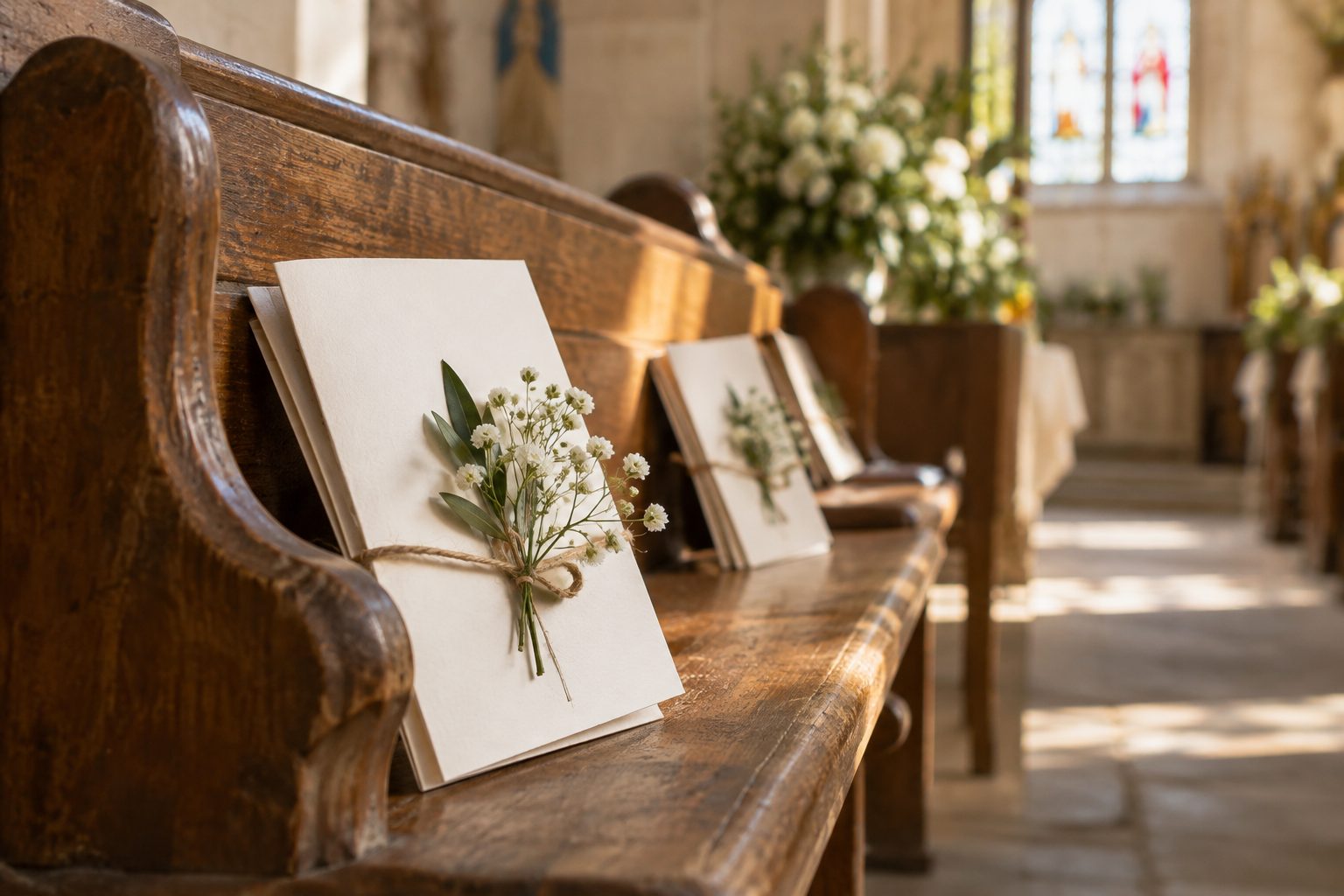
Quick answer
List what guests need to follow: welcome, music, readings, vows or other moments, signing where relevant and exit. Add people’s names when they help explain who is speaking. Ask your registrar, minister or celebrant to confirm the order and required wording. Make the page readable and offer an accessible version; keep provisional timings on the supplier run sheet.
Decide whether you need one
An order of service is useful when guests will sing, respond, follow an unfamiliar tradition or recognise several readers and musicians. A short civil ceremony with no group participation may need only a welcome sign or a brief spoken introduction. Don't print booklets because they appear on every wedding checklist; print them because they will help your particular guests take part.
Ask the officiant how they usually guide the room. Some provide their own ceremony sheet or require approval of printed wording. If you're combining languages or traditions, a concise explanation can be more helpful than a long account of each custom.
Build the sequence from the real ceremony
Start with the officiant’s draft order, not a template from another wedding. The sequence might include a processional, welcome, reading, legal declarations, personal vows, rings, signing, music and recessional, but not every ceremony has all of these or places them in the same order. Religious and belief services can have their own required elements.
Simple headings such as “Reading” or “Signing of the schedule” are enough. Guests do not need every minute marked out. A booklet should still make sense if the ceremony changes slightly on the day.
Name people with care
Check how readers, musicians and family members want to be named. Pronouns, surnames and relationships may not be obvious, especially in blended families. You can introduce a reader by name without explaining their family role. Check spellings directly rather than copying an old address book or social profile.
If someone has a part but prefers not to be singled out, respect that. The booklet is not an awards programme. It should direct guests through the ceremony and acknowledge contributors in a way that feels comfortable to them.
Handle songs and readings correctly
List song and reading titles, creators and performers accurately. If guests must sing, ask the officiant whether words should be printed and how much space they need. Modern lyrics, poems and excerpts may require permission to reproduce; a title can be enough when guests are only listening. Don't paste text from an internet search into a commercial print order without checking rights.
If readings are in another language, consider a short translation or summary where it would genuinely help guests. Keep the original language and the reader’s voice central. A bilingual layout needs a proofreader who knows both languages, not just a spell-checker.
Make it accessible and legible
Check font size and contrast in the light guests will actually have. Pale script on textured paper may look lovely at your desk and vanish in a dim church. Offer large print or a usable digital version where it helps.
If the ceremony has steps or standing moments, tell people they may remain seated if needed. Work with the officiant on that wording rather than placing a demand in small print. A programme can invite participation without making anyone’s access needs public.
Proof against the final decisions
Don't send to print while the ceremony script is still being negotiated. Ask the officiant to check sequence and required wording, then ask each named reader or performer to check their details. Compare the date, venue and start time with invitations and the wedding website. Print a sample at actual size; errors and unreadable text are easier to spot on paper.
Keep one controlled final file. If a musician changes, decide whether a small spoken update is enough rather than paying for a reprint. A programme is a guide to a living event, not a legal record of every second.
Plan distribution and the end of the ceremony
Give programmes to a person at the entrance or place one on each seat, but avoid both unless you want spares. Think about what happens to them afterwards: guests may keep one, but most copies will need collecting or recycling. Order a sensible amount based on how many people will share a booklet.
Leave a copy with the officiant and coordinator, and a few accessible versions where people can request them quietly. Good print lets guests pay attention to the words, not the page design.
Sources and references
Keep planning
Keep planning
Related knowledge.
Explore the Planning Hub
Open resource →Ceremony PlanningHow to Choose Wedding Readings That Mean Something
Choose a reading that belongs in your ceremony and feels good spoken aloud. One thoughtful passage can do more than a stack of famous romantic extracts.
Read article →Ceremony PlanningHow to Write Wedding Vows That Sound Like You
The best vows sound like you speaking to your partner. Start with a few true details and promises you can keep, then read them aloud until they feel natural.
Read article →Ceremony PlanningHumanist Weddings in the UK: Which Ceremonies Are Legal?
A humanist ceremony may be deeply personal, but it is not legally identical across the UK. Check the rules where you will marry and the particular celebrant’s authorisation.
Read article →