Ceremony Planning
How to Write Wedding Vows That Sound Like You
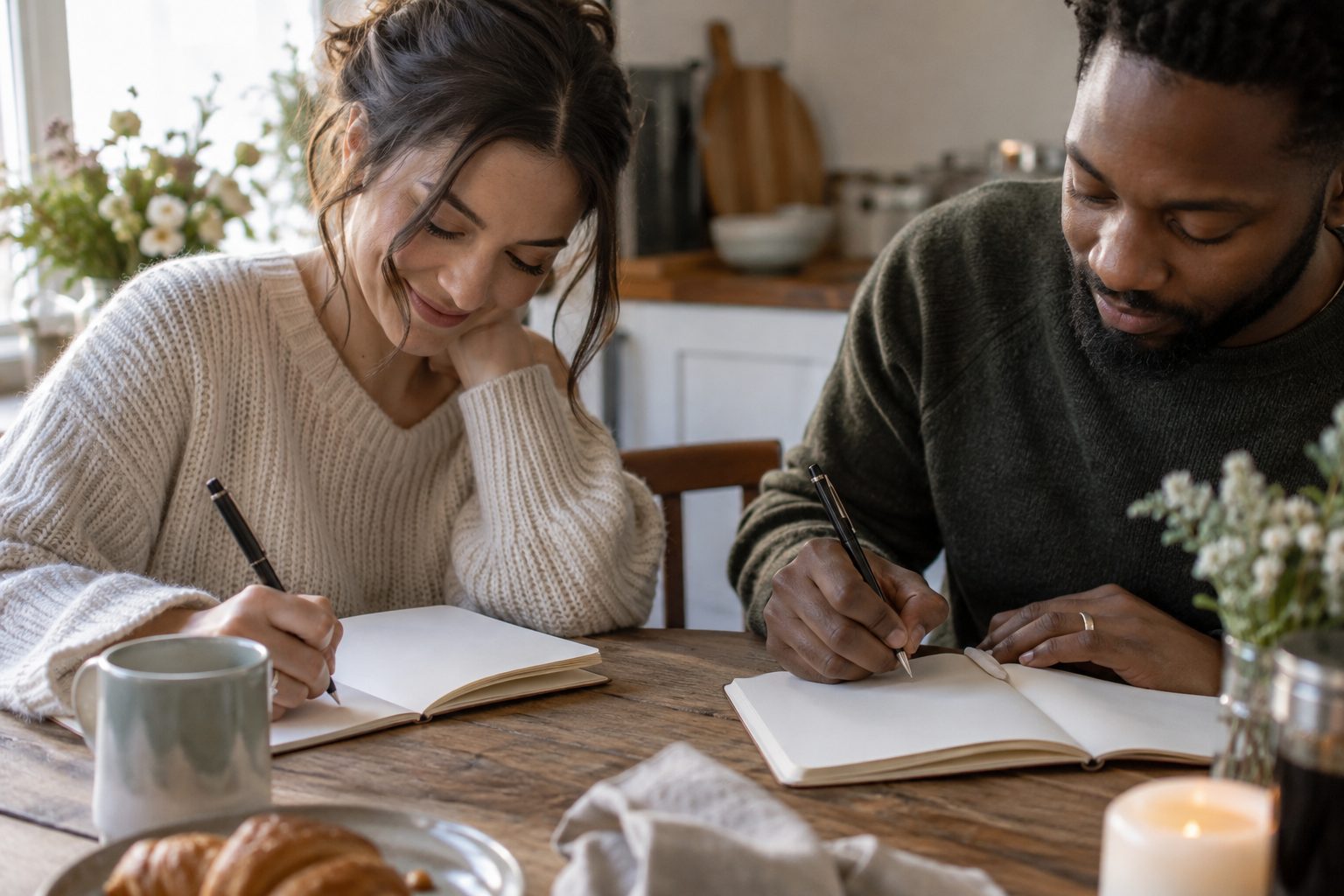
The best vows sound like you speaking to your partner. Start with a few true details and promises you can keep, then read them aloud until they feel natural.
Quick answer
Write down why you choose your partner, one or two memories and a few promises you really mean. Use your speaking voice, not what you imagine a wedding script should sound like. Read it aloud, cut anything that needs a long explanation and, if useful, agree a similar length together. Check where personal vows fit beside any legally required words.
Know what the ceremony allows
Before writing, ask the person conducting the ceremony whether personal vows are permitted, when they happen and whether they need to see the text in advance. In a civil marriage in England and Wales, legal declarations and vows have required wording; personal promises can be an additional element if the registrar agrees. Religious and other authorised ceremonies may have their own form. Don't assume a film scene is a legal template.
Ask how the words will be delivered: facing each other, repeating after the officiant or reading from a card. This affects sentence length and whether you need a microphone. If one of you would rather not speak at length, you can still create a meaningful exchange without forcing symmetrical performances.
Collect details before writing sentences
Make a private list of the qualities you appreciate, ordinary things you share and moments that changed how you understood your relationship. The details need not be grand. A promise to make tea when the other person is exhausted can reveal more than a borrowed line about everlasting adventure.
Choose details guests can understand without a private backstory. Leave out a joke that embarrasses someone or reveals a difficulty they did not choose to share. You are speaking to your partner in front of witnesses, not giving a speech about them.
Use a simple structure
One useful structure is: “This is what I notice about you; this is what our life together has taught me; these are the promises I make.” That creates a beginning, middle and future without sounding formulaic. Write a rough version quickly before editing individual words. Perfectionism often produces formal phrases that neither of you would ever say aloud.
Keep the number of promises manageable. Three clear commitments are easier to hear than a list of twenty. Mix the large with the everyday, but be careful about absolute claims you can't control. Promising to listen, apologise or make decisions together is more believable than promising that life will never be hard.
Find a comfortable length
Ask your officiant how long the vow section can reasonably take. When you read aloud, pauses and emotion slow the pace. A page that looks short on a screen can feel much longer in a quiet room. Time the draft out loud at a gentle speed and leave room to breathe. If the two of you want similar lengths, compare approximate speaking times rather than counting identical words.
Short vows can be powerful. If one partner enjoys writing and the other doesn't, agree a shared framework and let each voice remain individual. Equality in the ceremony doesn't require matching adjectives.
Edit for the ear
Read every line aloud and mark the places you stumble. Shorten winding sentences, let go of quotations you would never say and keep a rhyme only if it feels true. A private nickname might be lovely; a joke that drowns out the next promise may be better saved for later.
Ask a trusted person to listen only if that would help, and tell them what feedback you want: clarity, length or tone. Too many editors can turn personal words into a committee document. Keep a clean final copy in large type with space between lines.
Plan the practical delivery
Choose a card, booklet or paper that is easy to hold; a phone screen can lock or glare at the wrong moment. Give a backup copy to the officiant or a trusted person if you're comfortable. Practice once or twice at normal volume, not until the words feel rehearsed into flatness. It's entirely fine to look at your partner and then back at the page.
If you become emotional, pause. Guests understand. A glass of water and a moment of silence are not failures. Ask your officiant beforehand how they will help if you lose your place, so you can focus on what you mean rather than on avoiding a mistake.
Keep the promise after the day
Save the final words somewhere you can find them later. They may become more meaningful after ordinary years together than they were on the wedding morning. You don't have to publish them online or let a photographer photograph the page if you prefer privacy.
You do not need to prove you are a brilliant writer. Let your partner recognise you and hear the future you intend to work on together. That is plenty.
Sources and references
Keep planning
Keep planning
Related knowledge.
Explore the Planning Hub
Open resource →Ceremony PlanningWedding Order of Service: What to Include and How to Write It
An order of service should help guests follow along, not make them study a minute-by-minute script. Confirm the final sequence with your officiant before you print.
Read article →Ceremony PlanningHow to Choose Wedding Readings That Mean Something
Choose a reading that belongs in your ceremony and feels good spoken aloud. One thoughtful passage can do more than a stack of famous romantic extracts.
Read article →Ceremony PlanningHumanist Weddings in the UK: Which Ceremonies Are Legal?
A humanist ceremony may be deeply personal, but it is not legally identical across the UK. Check the rules where you will marry and the particular celebrant’s authorisation.
Read article →