Wedding Etiquette
Wedding Party Outfits: Who Pays and How to Keep It Fair
There is no single UK rule about who pays for wedding-party clothes. Agree the outfit, full cost and freedom to choose before anyone accepts the role.
Quick answer
Work out what you hope attendants will wear and what you can pay before inviting them. Some couples cover it; others ask people to use something they own or contribute. Give an honest total including alterations, shoes, hair, makeup and travel. Let someone discuss another option or decline without embarrassment.
Define the role before the outfit
Ask what you want attendants to do: stand in the ceremony, help with guests, give a speech or simply spend time with you. The role shouldn't silently become unpaid event work. Tell people about important time commitments, including fittings, rehearsal and travel, when you invite them. That lets them accept with a clear picture rather than discovering costs later.
A wedding party can include any genders and relationships. Choose a name and structure that suits your people; a matched set of outfits is optional.
Agree the money in plain language
If you select a specific garment, be clear whether you'll pay, contribute or expect the wearer to buy it. Include alterations, shoes, accessories, delivery and return costs for hired items. Don't quote only the base dress or suit price. If the budget is tight, allow a wider colour or style brief so people can use clothing they own.
Different households have different finances. Avoid asking someone to disclose a private hardship to justify a lower-cost option. Offer a workable choice from the start and let people speak to you privately.
Give real choice about fit
One cut or fabric may not work for every body. A shared colour palette with different shapes can still look coherent while letting people sit and move comfortably. Check sizes, alteration time and returns before ordering for a group.
Don't make weight change a condition of participating. A person who feels uncomfortable in the chosen outfit may appreciate an alternative role or a different garment, not reassurance that they should simply endure it for photographs.
Think about hair and makeup separately
If you require a particular professional style, clarify who pays and how long it will take. Some attendants may prefer to do their own hair or makeup; others may not want any. A shared getting-ready schedule should reflect genuine services booked, not an assumption that everyone needs the same preparation.
The wedding morning is not the best time to settle payment or style disagreements. Check choices and timing in advance, and let people know whether a trial is available or necessary.
Plan for travel and changing
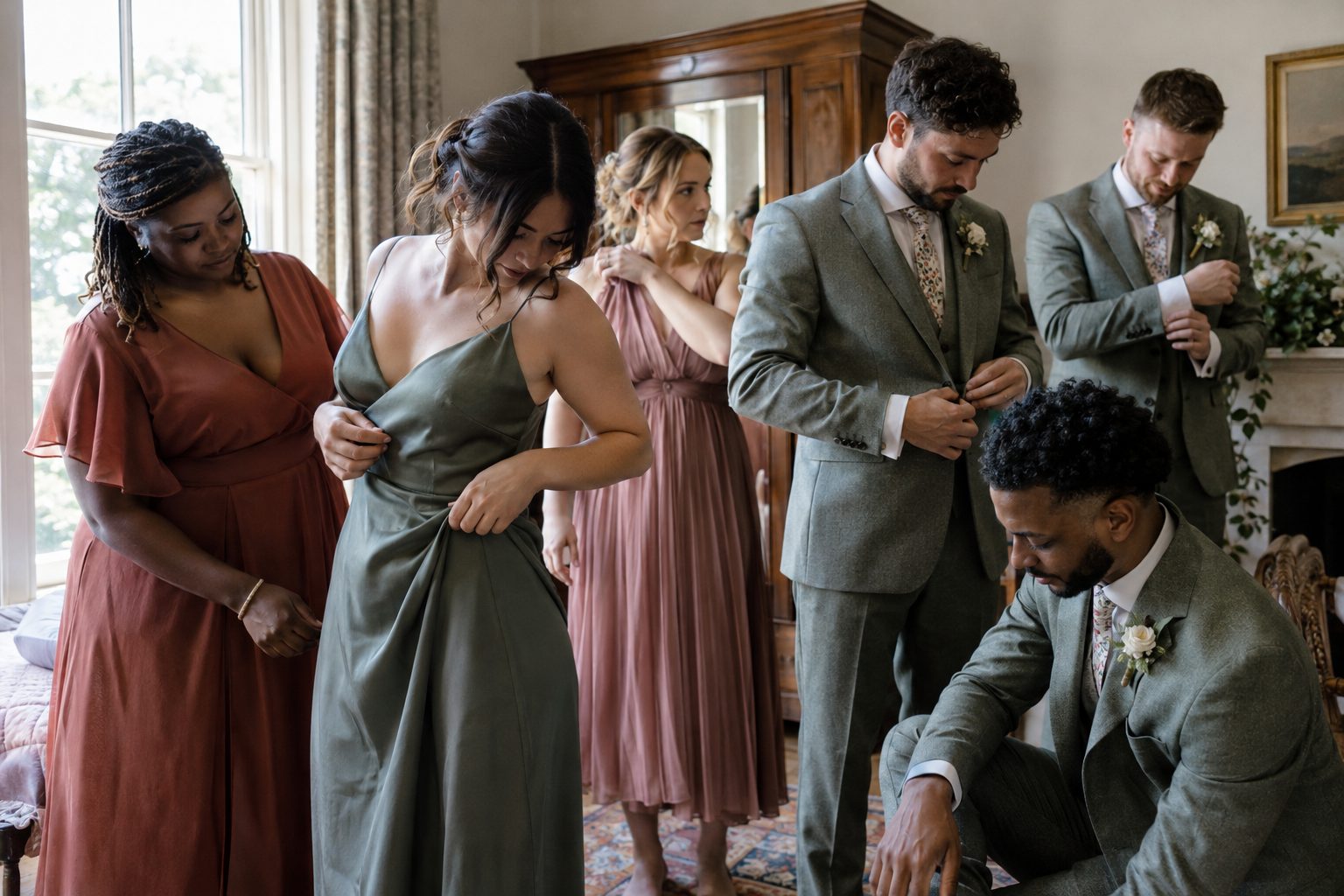
A garment may need transport, steaming or a place to change. Check whether the venue has enough room and privacy for the group. If people travel the day before, consider whether the required outfit can be carried safely or needs delivery. A remote wedding can make a modest outfit feel expensive once accommodation and time off work are added.
Give attendants the same venue and travel information as other guests. If they need to arrive early for photographs, say when and whether there will be food.
Handle changes without blame
People may become pregnant, change sizes, develop an access need or need to step back from the role. Choose outfits and contracts with some flexibility, and respond kindly if circumstances change. Hired suits and ordered dresses can have strict deadlines; know those before making a decision that affects somebody else.
If you need to change the colour or style after people have paid, offer to cover any resulting cost or keep the original choice where possible. A wedding aesthetic is not a reason to leave a friend with an unusable purchase.
Keep the relationship bigger than the look
A wedding party is made of people you value, not matching pieces of a photograph. Put their comfort and consent into the plan, especially where money or time is involved. They may help you enormously simply by being present and kind.
Agree expectations early, write the practical details in one message and thank people for the role they choose to take. Fairness here is not a universal rule; it's an honest conversation before anyone spends.
Put expectations in one friendly message
Tell each person what you provide, what they can choose and what shoes, alterations, hair or travel may cost them. Invite a private reply if that is difficult. For a highly specific outfit they would never otherwise buy, consider paying more or offering flexibility. Give realistic order dates and respect different sizes and access needs. Clear expectations are kinder to friendships than a surprise bill.
Keep planning
Keep planning
Related knowledge.
Explore the Planning Hub
Open resource →Wedding EtiquetteWedding Gift Lists, Cash Funds and Honeymoon Funds Explained
Gift guidance can be helpful without becoming an obligation. Offer genuine choices, explain any fund simply and make it easy for guests to celebrate with you without giving anything.
Read article →Wedding EtiquetteDo You Have to Invite Plus-Ones to Your Wedding?
No, you do not have to offer every guest a plus-one. A fair, clearly explained guest-list approach is kinder than leaving people to guess from the invitation.
Read article →