Photography & Video
Questions to Ask a Wedding Videographer Before You Book
A wedding film needs good sound and thoughtful editing as much as lovely pictures. Watch complete work and understand how your day will be recorded before you book.
Quick answer
Watch full films, not just trailers. Ask who will attend, how many cameras they use and how they capture ceremony and speech audio. Confirm the films and lengths you will receive, music licensing, delivery date, backups, illness cover and privacy choices. Find out how the videographer works beside your photographer and venue team.
Watch full films, not only showreels
A short montage demonstrates highlights but not narrative, audio quality or pacing across a whole film. Ask for examples with similar ceremony, light and venue conditions.
Notice whether vows and speeches remain intelligible, camera movement feels comfortable and the editing lets moments breathe. Choose a style you'll want to revisit, not only one that performs well in a short social clip.
Clarify the film package
List coverage hours, number of operators and cameras, teaser, highlight film, ceremony or speeches edits, vertical clips, revisions and delivery method. Terms such as “feature film” have no universal duration.
If you want raw footage, ask whether it is available, what that means in this workflow and what it costs. Unedited clips may have incomplete sound or awkward transitions; they are not another version of the finished film.
Ask specifically about sound
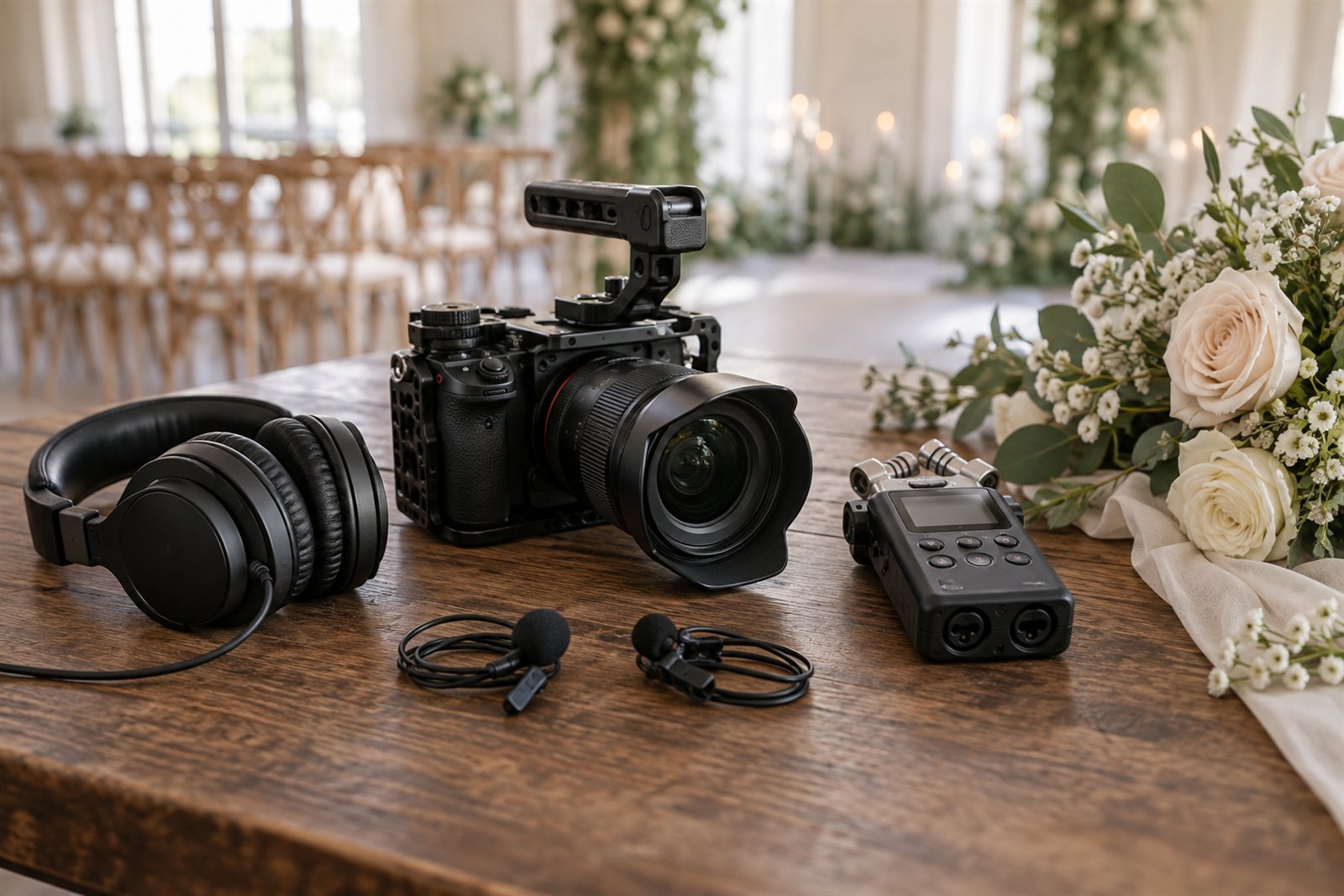
Good audio usually requires more than a camera microphone. Ask how vows, readings, speeches and live music are captured, what backup recording exists and whether the venue or celebrant restricts microphone placement.
Tell speakers they may be asked to wear or stand near equipment. The videographer should handle recordings discreetly and agree connections with the sound provider.
Plan teamwork and footprint
Photography and video often need the same sightlines and portrait time. Ask how the videographer collaborates, whether they use lighting or tripods and what setup space is required.
Share ceremony rules and venue restrictions. A quiet, unobtrusive approach still needs advance access and a realistic position.
Understand music and usage rights
A film shared online needs music that is licensed for that use. Ask where tracks come from and whether you choose from a licensed catalogue. Your favourite commercial song may not be available legally, however perfectly it fits the first dance.
Read permissions for portfolio and social sharing. If you require privacy, agree it before booking and understand whether third-party music or gallery platforms are involved.
Check resilience and delivery
Ask about backup cameras, audio recorders, media handling, file copies and cover for illness. Check realistic editing time and how updates are communicated if delivery changes.
When the films arrive, download them and keep independent backups. Streaming links shouldn't be treated as permanent storage unless the contract says so.
Make sure film belongs in your day
Talk about how much directed movement or staged audio the style requires. Some couples enjoy creative sequences; others want minimal interruption. Neither is wrong, but expectations must match.
Choose people whose filming style respects your guests, ceremony and timetable. You want the film to preserve the day, not the whole day to revolve around making the film.
Keep planning
Keep planning
Related knowledge.
Explore the Planning Hub
Open resource →Photography & VideoWhat to Put on a Wedding Photography Shot List
A short shot list should protect the people and moments you cannot recreate. Give your photographer priorities and time to notice the rest of the day.
Read article →Photography & VideoQuestions to Ask a Wedding Photographer Before You Book
A beautiful portfolio is a starting point. Find out how your photographer will cover your particular day, work with the people in it and look after the images afterwards.
Read article →Photography & VideoHow Long Do Wedding Photographs Really Take?
Make room for the photographs you care about without turning your wedding into one long photoshoot. Here is how to plan groups, portraits, travel and changing light realistically.
Read article →