Photography & Video
What to Put on a Wedding Photography Shot List
A short shot list should protect the people and moments you cannot recreate. Give your photographer priorities and time to notice the rest of the day.
Quick answer
List essential family groups, people your photographer might not recognise and meaningful details that could disappear. Agree time and locations before the wedding and appoint someone to gather people. Do not script every candid moment; you hired a photographer for their eye as well as their camera. Keep the list focused on what is irreplaceable.
Start with the photographer’s approach
Ask how your photographer usually plans a wedding and what information helps them. A documentary photographer may need names and family context more than a long pose list. Someone offering formal portraits may want a precise group sequence. Look through a full gallery together so your expectations match the style you booked.
A shot list doesn't replace the contract. Check coverage hours, number of photographers, locations and any limits on images or delivery. Then use the list to guide the time you have actually paid for.
Keep family groups short and named
Write each essential combination with real names rather than “both sides”. Note who may need to sit, who has limited mobility and any relationships requiring sensitivity. Start with the largest group, release people who are no longer needed and keep a helper with the list. The photographer should be making photographs, not searching the bar for an uncle.
Ask for a realistic duration based on the location and number of groups. More combinations mean less time at the drinks reception or fewer couple portraits. If a photograph is only mildly desirable, consider leaving it to the natural flow of the day.
Name moments that are genuinely easy to miss
A handmade item, a distant guest, a private cultural ritual or a room before it changes may deserve a note. Explain why it matters and when it happens. Ask participants before requesting a photograph of a private moment.
Avoid listing obvious events such as “ceremony” and “first dance” unless there is a special angle or constraint. The useful information is the unusual timing, location or person the photographer wouldn't know about otherwise.
Connect the list to the timetable
Share ceremony start, travel, meal, speech and sunset information. Leave enough time for movement between rooms and for guests to enjoy the day. A list of thirty group photographs can't be squeezed into ten minutes by writing “quick photos” in the schedule. Ask the photographer which groups can be made more efficient without making the process rushed.
If the weather changes, know the indoor group-photo location. Check light and space with the venue; a narrow corridor may fit two people but not three generations. Put the backup location in the run sheet.
Think about privacy and consent
Tell the photographer about guests who shouldn't appear in public marketing, children whose parents request privacy or a part of the ceremony that shouldn't be photographed. Ask how galleries are shared and whether the contract permits portfolio use. A personal image request should be documented before the wedding, not negotiated after it appears online.
No photographer can guarantee every spontaneous interaction or guess a private boundary. Share your priorities and agree how requests from other guests will be handled.
Brief a helper, not a committee
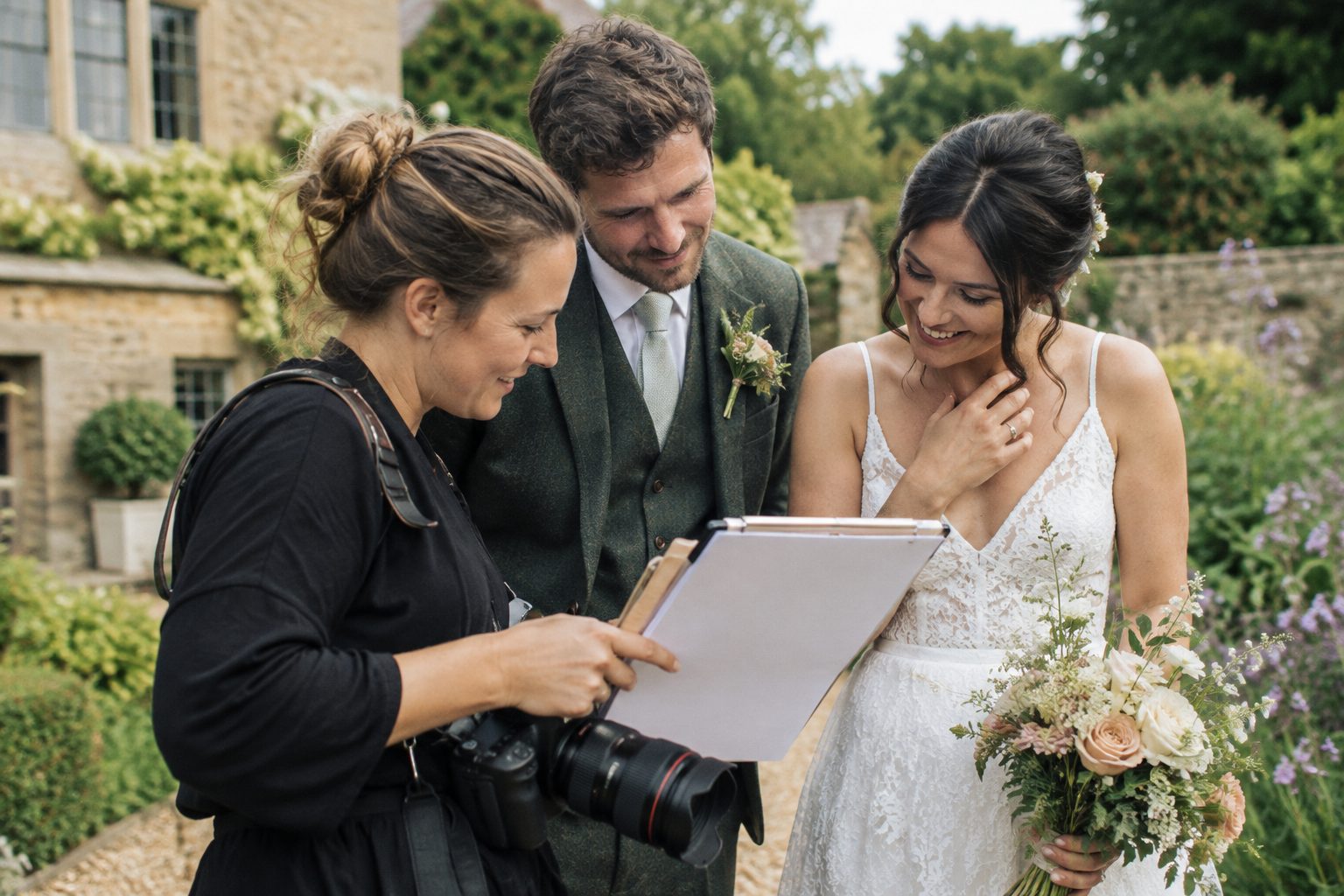
Choose one or two people who know the guests and can gather them politely. Give them the list and location before the ceremony. If many relatives are directing photographs, the photographer may lose time and miss moments you value more. Tell the helper that the final call on timing rests with the photographer and couple’s agreed plan.
Have someone keep essential items nearby if you want rings, invitations or clothing details photographed. A photographer can work creatively with what is present, but shouldn't have to hunt for a missing box.
Leave space for surprise
A wedding is not a studio production. The strongest photographs may be a laugh, a quiet conversation or a small gesture nobody could have scheduled. Keep the required list short enough that your photographer can look around. Ask for honest advice when a request conflicts with available time or light.
A good shot list ends with confidence: the people and moments that matter most are known, and the professional you hired can do the rest.
Separate essential moments from inspiration
Name the people and moments you would regret missing. Mood boards can explain style but cannot promise a copy of another couple’s photograph. Ask how many family groups fit the available time, choose a helper to gather them and share mobility or sensory needs privately. A brief list gives room for the unscripted moments too.
Keep planning
Keep planning
Related knowledge.
Explore the Planning Hub
Open resource →Photography & VideoQuestions to Ask a Wedding Photographer Before You Book
A beautiful portfolio is a starting point. Find out how your photographer will cover your particular day, work with the people in it and look after the images afterwards.
Read article →Photography & VideoQuestions to Ask a Wedding Videographer Before You Book
A wedding film needs good sound and thoughtful editing as much as lovely pictures. Watch complete work and understand how your day will be recorded before you book.
Read article →Photography & VideoHow Long Do Wedding Photographs Really Take?
Make room for the photographs you care about without turning your wedding into one long photoshoot. Here is how to plan groups, portraits, travel and changing light realistically.
Read article →