Weather Planning
What Happens If It Rains on Your Wedding Day?
Rain may change the route, not the reason everyone is there. Agree a real indoor plan and a decision time so a grey forecast does not run your wedding.
Quick answer
Choose an indoor ceremony and reception setup you would genuinely be happy to use. Agree who calls the weather plan and when, check covered routes for guests and ask your photographer about both indoor and brief outdoor options. Layers and umbrellas can help, but you do not need to rebuild the day every time the forecast changes.
Inspect the indoor plan properly
See the actual wet-weather room with the expected guest count and ceremony setup. Check seating, sightlines, sound, lighting, accessibility and what happens to furniture already arranged for the meal.
An indoor backup is not real if it's too small or requires an impossible turnaround. Ask the venue to explain staffing and the latest safe changeover time.
Protect the guest journey
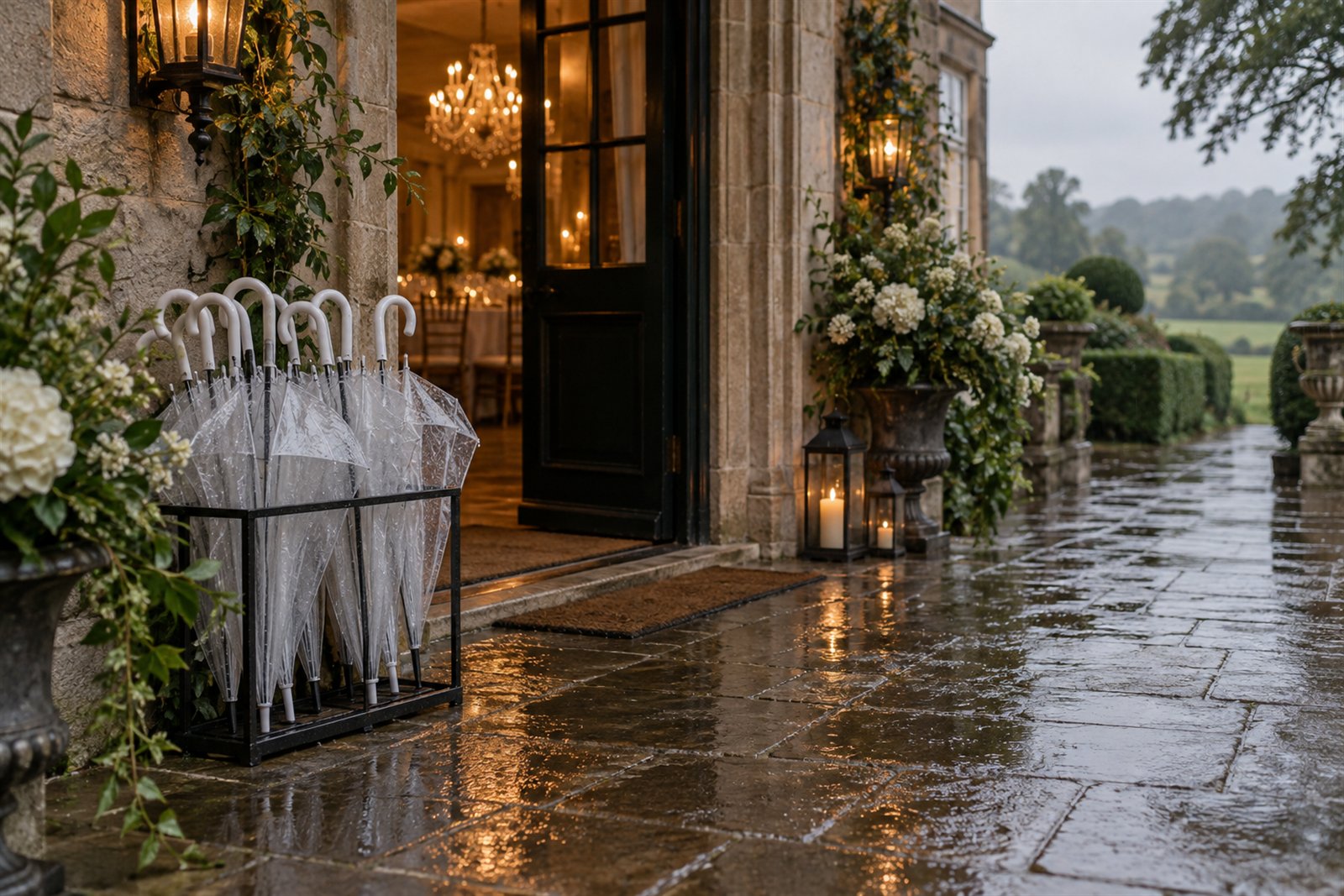
Map arrival, parking, ceremony, drinks, toilets and transport under cover. Provide non-slip mats, coat storage and seating rather than relying on guests to carry umbrellas all day.
Tell guests if they may cross grass or walk between buildings, so they can choose shoes and layers. Ask anyone with access needs whether the wet-weather route works for them.
Plan photographs for both conditions
Ask the photographer to identify attractive indoor light, sheltered exteriors and a short list of outdoor images that can happen safely in a break. Clear umbrellas can help, but they are not compulsory props.
Keep expectations flexible. Wet surfaces and softer light can look beautiful, while preserving warm, dry guests is more important than reproducing a sunny inspiration image.
Look after clothing and flowers
Choose someone to carry hems, a towel and spare footwear between locations. Test whether umbrellas shed water onto delicate outfits and provide a dry place to leave them.
Your florist can say which bouquets or installations will cope with damp weather. Heavy structures and electrical décor are jobs for the supplier and venue to move, not an enthusiastic relative with an umbrella.
Build extra travel time
Rain slows roads, parking, unloading and walking. Add a modest buffer and keep transport contacts with the coordinator. For rural sites, ask whether any route or field parking closes after heavy rain.
If severe weather affects safety or travel warnings, follow official and venue guidance. A wedding plan should never encourage guests or suppliers to take unsafe journeys.
Let the day be the day
Once the operational decisions are made, stop monitoring every shower. The ceremony, conversations, meal and music still happen, and guests usually take their emotional cue from the couple and team.
A good plan does not guarantee blue skies. It gives everyone shelter, clear choices and permission to enjoy the day you get.
Keep planning
Keep planning