Venues
Barn, Hotel or Marquee Wedding? How to Choose the Right Setting
A barn, hotel and marquee can each make a lovely wedding, but they ask different things of you. Compare the people, facilities and contingency work behind the photographs.
Quick answer
There is no best venue format for everyone. A hotel may include staff, rooms and a weatherproof reception; a barn may offer character with more coordination; a marquee can be flexible but needs a detailed site plan. Check who supplies toilets, power, staffing and late transport. Choose the format whose cost and organisational work suit you.
Start with the practical shape of the day
Before comparing venue types, decide the approximate guest count, ceremony route, meal service and finish time. A seated wedding breakfast needs a different footprint from a standing reception. Note whether guests will travel between sites, need overnight accommodation or rely on accessible transport. This makes it easier to compare a hotel ballroom with a barn or field setup on equal terms.
Ask every venue for a plan showing ceremony, drinks, dining, toilets, quiet space, staff routes and bad-weather circulation. If a proposal only looks convincing in a photograph of empty tables, it's not yet a working plan.
What a hotel can simplify
Hotels often have catering staff, kitchen, toilets, heating, parking and bedrooms already operating. That can reduce the number of separate contracts and help guests who don't want to travel after the evening. Ask which rooms are private, whether another event will share entrances and what the bedroom allocation really commits you to buying.
A hotel package can make decisions easier while limiting others. Ask about menus, drinks, supplier access, setup hours and which room the quote actually covers. If the same room hosts ceremony and reception, find out how the changeover works.
What a barn can offer
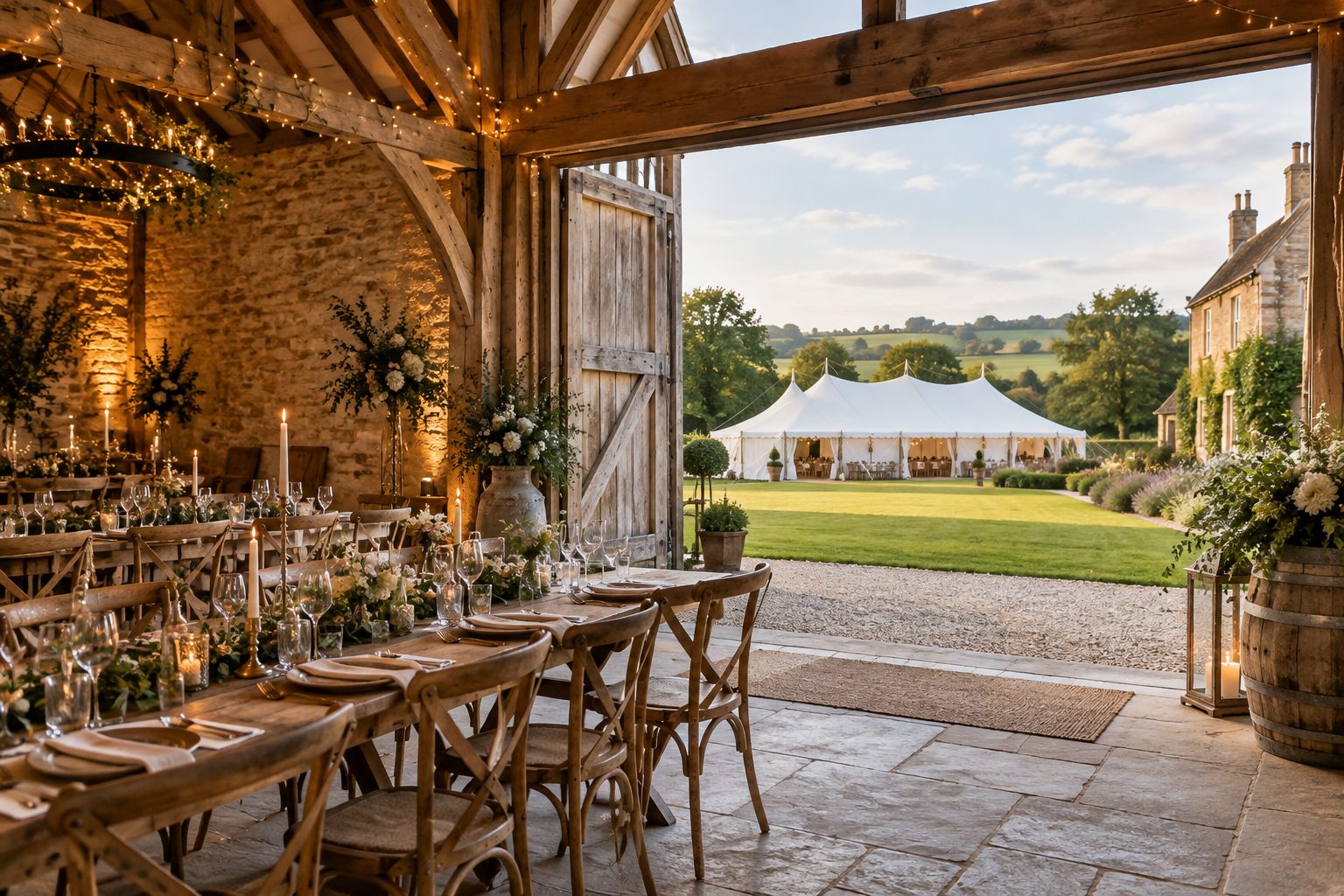
A barn can provide a strong sense of place and an adaptable room, but the word barn covers very different levels of service. One site may have a full kitchen and experienced event team; another may be a dry-hire space with only basic electricity. Ask who cleans, heats, lights and resets it, and whether catering, furniture and sound equipment are included.
Inspect surfaces, parking and access in weather you might realistically encounter. Stone floors, gravel and steps can affect comfort and mobility; remote locations can affect taxis and supplier delivery. Character is a real advantage when the operating plan is equally convincing.
What a marquee requires
A marquee can create a reception space in a meaningful location and let you shape the layout. It's also a temporary building, not simply a tent added to an existing venue. Get a site survey for level ground, vehicle access, drainage, wind exposure and safe installation. Check whether the site owner permits the event and what insurance and reinstatement obligations apply.
Cost the floor, heating or ventilation, lighting, generator, power distribution, toilets, water, kitchen tent, waste removal, security and furniture. Identify who coordinates these suppliers and who takes the call if weather affects installation. A marquee quote that omits infrastructure can't be compared with a staffed hotel package.
Ask where the legal ceremony fits
A beautiful reception site is not automatically approved for a legal marriage. England and Wales have approved-premises and outdoor-area rules; Scotland and Northern Ireland use different arrangements. An independent celebrant’s ceremony may be meaningful without being the legal marriage. Confirm the exact location and authorised person with the relevant authority before paying.
You can still choose a barn or marquee reception even if the legal ceremony is elsewhere. Make the journey, guest arrival and timing explicit so that the format doesn't create a stressful gap.
Look beyond the headline hire price
Put all three options into one comparison sheet: hire, food, drink, staff, furniture, power, toilets, accommodation, travel, setup and end-of-night collection. Add a contingency for uncertain items rather than treating a preliminary quote as final. Ask for VAT, service charges and minimum spend to be clear in writing.
Time has a cost too. A highly flexible space can mean more decisions and more contracts. If you enjoy coordinating suppliers, that may be worthwhile. If you want the venue team to own most handovers, a comprehensive package may be better value even when its headline price is higher.
Choose the work you want to take on
Meet the person who would manage the actual wedding, not only the sales tour. Ask how they handle a late caterer, unexpected rain, a power fault or guests who need a quieter room. A reliable answer names a person and a backup process rather than promising that problems never happen.
Choose once you know what each supplier will do, where guests will be comfortable and how the wet-weather version works. Then enjoy your chosen setting for its strengths rather than wishing it behaved like another kind of venue.
Sources and references
Keep planning
Keep planning
Related knowledge.
Wedding Venue Questions Checklist
Open resource →VenuesHow to Choose a Wedding Venue in the UK
The prettiest room is not necessarily the right venue. Follow the guest journey, compare complete costs and choose a place that can comfortably deliver the day you want.
Read article →VenuesHow Much Does a Wedding Venue Cost in the UK?
Venue prices are hard to compare until you know what each package buys. Bridebook’s 2026 average of £6,040 excludes catering, so use a full-day quote for your own date and guest numbers.
Read article →Venues50 Smart Questions to Ask a Wedding Venue
Take these 50 questions to your serious venue viewings. They will help you compare more than the photographs: timings, food, access, weather plans, restrictions and the full cost.
Read article →