Wedding Planning
How to Plan a Multicultural Wedding That Honours Both Families
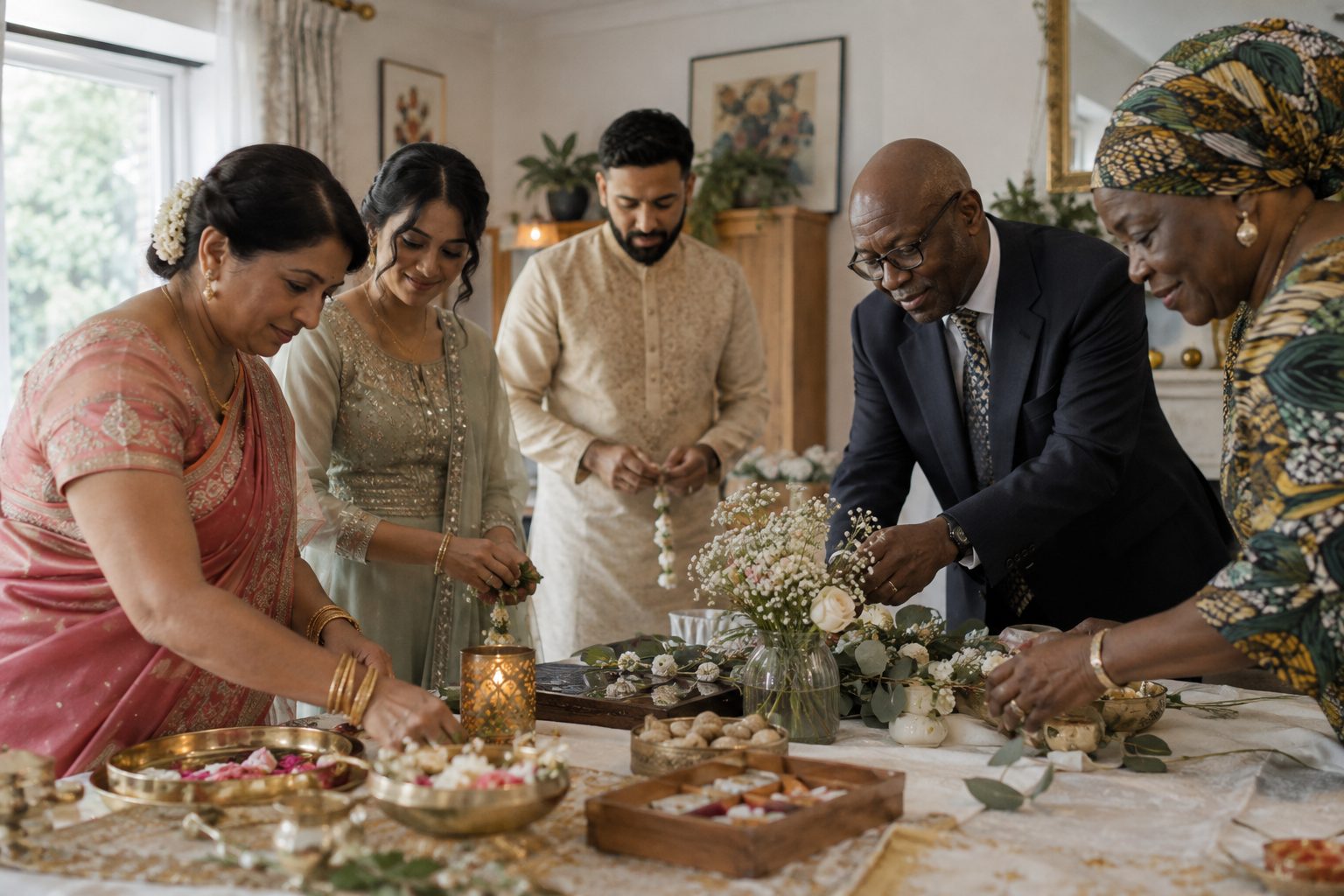
Build a wedding that feels recognisable to both of you. Listen to family knowledge, choose traditions with intention and explain unfamiliar moments without making anyone represent a whole culture.
Quick answer
Start with each other: which practices matter to you, and why? Invite family knowledge without promising every suggestion a place. Plan the ceremony and reception so guests can understand and join in comfortably while respecting religious or cultural boundaries. Check the legal marriage separately; a meaningful traditional ceremony may not complete the legal steps where you live.
Avoid treating either tradition as a package
Families within the same faith or culture can celebrate very differently. Ask each other what you actually grew up with, what you would like to keep and what you would prefer to leave behind. Don't assume one partner is responsible for a whole community’s expectations. Write down the purpose of each element: blessing, hospitality, family introduction, music, dress, food or a private ritual.
This makes compromises more thoughtful. You may preserve a short ceremony moment because it matters deeply to a parent, while declining a large reception custom that neither of you wants. The aim is not a mathematical half-and-half; it's a day that both people can recognise as theirs.
Have the difficult conversations early
Talk about religion, alcohol, food, modesty, language, gendered roles and the size of each guest group before paying for a venue or caterer. Some expectations affect the structure of the day, not just decoration. Ask which decisions are yours alone and where you're willing to invite family advice. A clear answer now is kinder than an apparent yes that becomes impossible later.
When relatives disagree, speak as a couple. Thank them for caring, explain your choice and do not ask one family to negotiate with the other. If a financial contribution has conditions, discuss those before accepting it, not after deposits are paid.
Check the legal ceremony route
A cultural, religious or celebrant-led event can be important without necessarily being the legal marriage under the rules where it happens. England and Wales, Scotland and Northern Ireland have different ceremony and officiant arrangements. Check the authorised person, location, notice and documents with the relevant registration authority before describing any element as legally binding.
If you have two ceremonies, allow both enough time and explain the sequence to suppliers. There is no need to label one “real” and the other “symbolic” in front of guests if that wording feels hurtful; you can simply describe what will happen while being accurate about the legal step.
Help guests follow without becoming a lecturer
A short programme note, a sentence from the officiant or a bilingual sign can make a ritual easier to understand. Explain what guests are invited to do, whether participation is optional and roughly how long a sequence lasts. Avoid turning the ceremony into a display of cultural facts for an audience. Guests usually need practical cues more than a history lesson.
Arrange translation or interpretation where it would help close family follow meaningful words. Test microphones and sightlines. If language appears in invitations, have a fluent person proof it for tone as well as spelling. A literal machine translation can make a warm invitation sound formal or confusing.
Design food and hospitality around real people
Ask the caterer about religious practice, allergies and vegetarian or vegan food as distinct needs. If you want two cuisines, choose a format your kitchen and budget can do well: a balanced menu, separate courses or evening food. A token dish that cannot be served safely helps nobody.
Think about fasting periods, prayer space, alcohol-free choices, seating and older guests’ comfort. Offer information privately rather than asking guests to explain themselves on a public RSVP list. Hospitality is more than the menu: it's the ability to know where to go and feel at ease.
Choose suppliers who will listen
Ask photographers, musicians, hair and makeup artists and coordinators about relevant experience, but look for curiosity and care rather than a portfolio of people who “look like” you. Explain the moments that must not be missed, how long preparations genuinely take and any boundaries around photographing prayer or private family interactions.
Give the coordinator one agreed running order and a small number of contacts. If two families give conflicting instructions on the day, the supplier team should know whose decision controls. That is a practical protection for everyone, not a rejection of family involvement.
Leave room for yourselves
The day can celebrate heritage without making either of you a symbol. Choose time together away from the programme, and consider a quiet pause before or after a demanding ceremony. If a custom doesn't feel right, you may adapt it or omit it, even if other couples have done it.
At the end of planning, ask whether the day feels welcoming and true to both people making the commitment. That matters more than how many traditions made the running order.
Sources and references
Keep planning
Keep planning
Related knowledge.
Explore the Planning Hub
Open resource →Wedding PlanningDIY Wedding Decorations: What Is Worth Making Yourself?
Make the details you will enjoy making and can set up safely. Count time, storage and venue rules as well as materials before turning a nice idea into a production line.
Read article →Wedding PlanningSummer Weddings in the UK: Heat, Light and Guest Comfort
Long summer days are lovely, but guests still need shade, water and somewhere to go if it rains. Plan for the weather people will experience, not the photograph you hope for.
Read article →Wedding PlanningWinter Weddings in the UK: A Practical Planning Guide
Winter gives you atmosphere if you plan for daylight, warm spaces and travel from the start. Build the wedding around the season instead of hoping for snow.
Read article →