Ceremony Planning
Outdoor Weddings in the UK: Ceremony Rules, Weather and Plan B
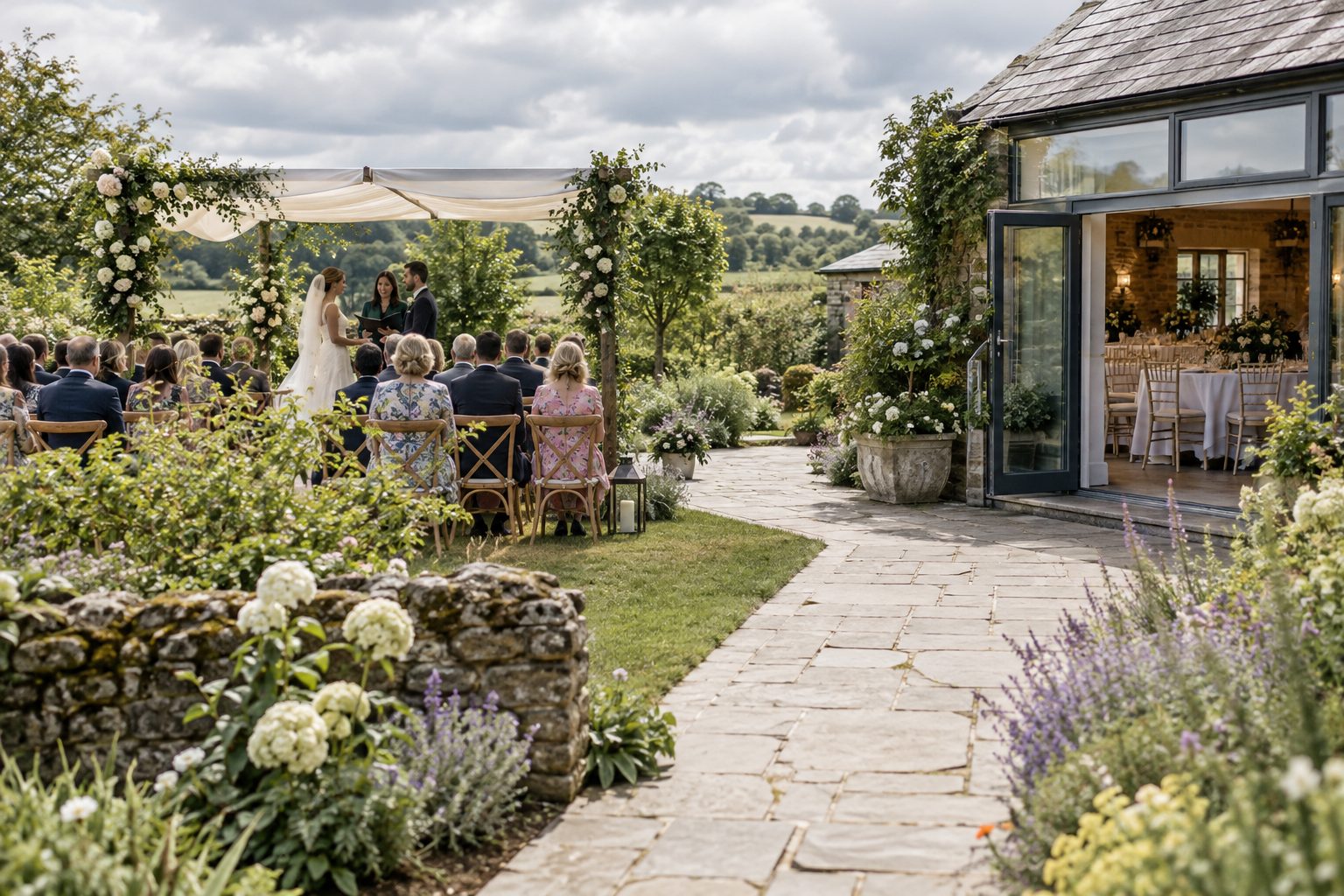
For an outdoor wedding, plan the legal ceremony, guest comfort and indoor alternative together. A reliable plan B lets you enjoy the forecast instead of being ruled by it.
Quick answer
First ask whether the exact outdoor spot can host the legal ceremony where you are marrying. A lovely lawn is not automatically authorised. Then make two complete plans for the same guests: outside and comfortably inside. Agree who makes the weather call and when. Protect routes, sound, seating, shade, water and equipment as carefully as the photograph.
Separate the legal question from the visual idea
Marriage rules differ across the UK. In England and Wales, a civil marriage at approved premises may use a linked outdoor area within the approved grounds, subject to that venue’s approval and arrangements with the registrar. A freestanding field or any garden you like is not automatically a legal ceremony site. Scotland and Northern Ireland have different routes, including authorised celebrants in certain circumstances. Ask the local registration authority about your exact plan.
If you want an outdoor celebration that is not itself the legal marriage, plan the legal ceremony separately and describe the two events honestly to yourselves and your suppliers. The celebrant can still make the outdoor gathering personal and significant. Check the date, location and officiant before printing invitations.
Inspect the ground, not just the view
Walk the route from parking and drop-off to seating, toilets and dining. Grass can be uneven or muddy, gravel difficult for some mobility aids, and a long walk tiring for guests. Ask about stable paths, step-free alternatives, seating with back support and a place to withdraw from noise. Guests shouldn't have to explain a disability publicly to use an accessible route.
Visit at the time of day you hope to marry if you can. Sun, wind and traffic noise feel different from a sunset photograph. Ask the venue where speakers, microphones and musicians can work safely.
Make the indoor version real
See the actual indoor ceremony space at your full guest count. Where will seats go, how will the wedding party enter and what happens to floral installations and sound equipment? Ask if the room is also needed for dining and how the turnover would work. The alternative should be a ceremony you would still be happy to have, not an apology for bad weather.
Agree a weather decision deadline with the registrar or celebrant, venue and suppliers. Name the decision-maker and how guests will be told. Avoid leaving chairs outdoors until the last minute when rain is already moving in. If the indoor location changes the legal ceremony arrangements, confirm that with the relevant authority in advance.
Plan for more than rain
Wind can affect readings, sound, veils, candles and lightweight decorations. Heat can make formal clothing uncomfortable and expose guests to direct sun. Cold can arrive quickly after an afternoon ceremony. Provide shade or shelter, water, sensible seating and a short route to toilets. Ask guests to dress for the real ground and season without implying that comfort is their problem alone.
Have a clear wet-weather plan for the whole guest journey, not only the vows. Think about queues at the entrance, where umbrellas are stored, whether photographs move indoors and how a drinks reception will fit. A covered ceremony with a muddy approach is not a complete Plan B.
Check power, sound and safety
Have the venue or production supplier plan safe power and weather protection for sound and lighting. Test whether the back row can hear ordinary speech. Check neighbour and licence limits before booking amplified music. Cables, pegs and temporary structures need competent hands, not a morning-of improvisation.
Check access for emergency vehicles and what the venue does if severe weather makes an area unsafe. This is not a reason to fear outdoor weddings; it's the same sensible operational thinking that makes guests relax when the day arrives.
Brief guests and suppliers precisely
Invitations and the wedding website can say that the ceremony is planned outdoors, whether part of the route is on grass and what the indoor alternative is. Give guests a private way to ask about access needs. If the ceremony is legally elsewhere, don't let wording suggest that the outdoor celebration is the only formal event.
Give every supplier the two location plans and the decision time. The florist needs to know what can move, the photographer needs to know indoor light, and the caterer needs to know when guests will reach the reception. A short written briefing prevents contradictory assumptions.
Keep the reason you chose outdoors
Choose one or two outdoor features that matter most: the landscape, an informal gathering, a particular tree or the ability for guests to spend time in fresh air. Build the practical plan around those priorities. Trying to recreate an indoor ballroom outside can be expensive and less comfortable than either option done well.
If the weather changes, the marriage is still yours. A comfortable indoor room, clear guest directions and suppliers with the same plan will save far more of the day than hoping the clouds will move.
Sources and references
Keep planning
Keep planning
Related knowledge.
Explore the Planning Hub
Open resource →Ceremony PlanningWedding Order of Service: What to Include and How to Write It
An order of service should help guests follow along, not make them study a minute-by-minute script. Confirm the final sequence with your officiant before you print.
Read article →Ceremony PlanningHow to Choose Wedding Readings That Mean Something
Choose a reading that belongs in your ceremony and feels good spoken aloud. One thoughtful passage can do more than a stack of famous romantic extracts.
Read article →Ceremony PlanningHow to Write Wedding Vows That Sound Like You
The best vows sound like you speaking to your partner. Start with a few true details and promises you can keep, then read them aloud until they feel natural.
Read article →